
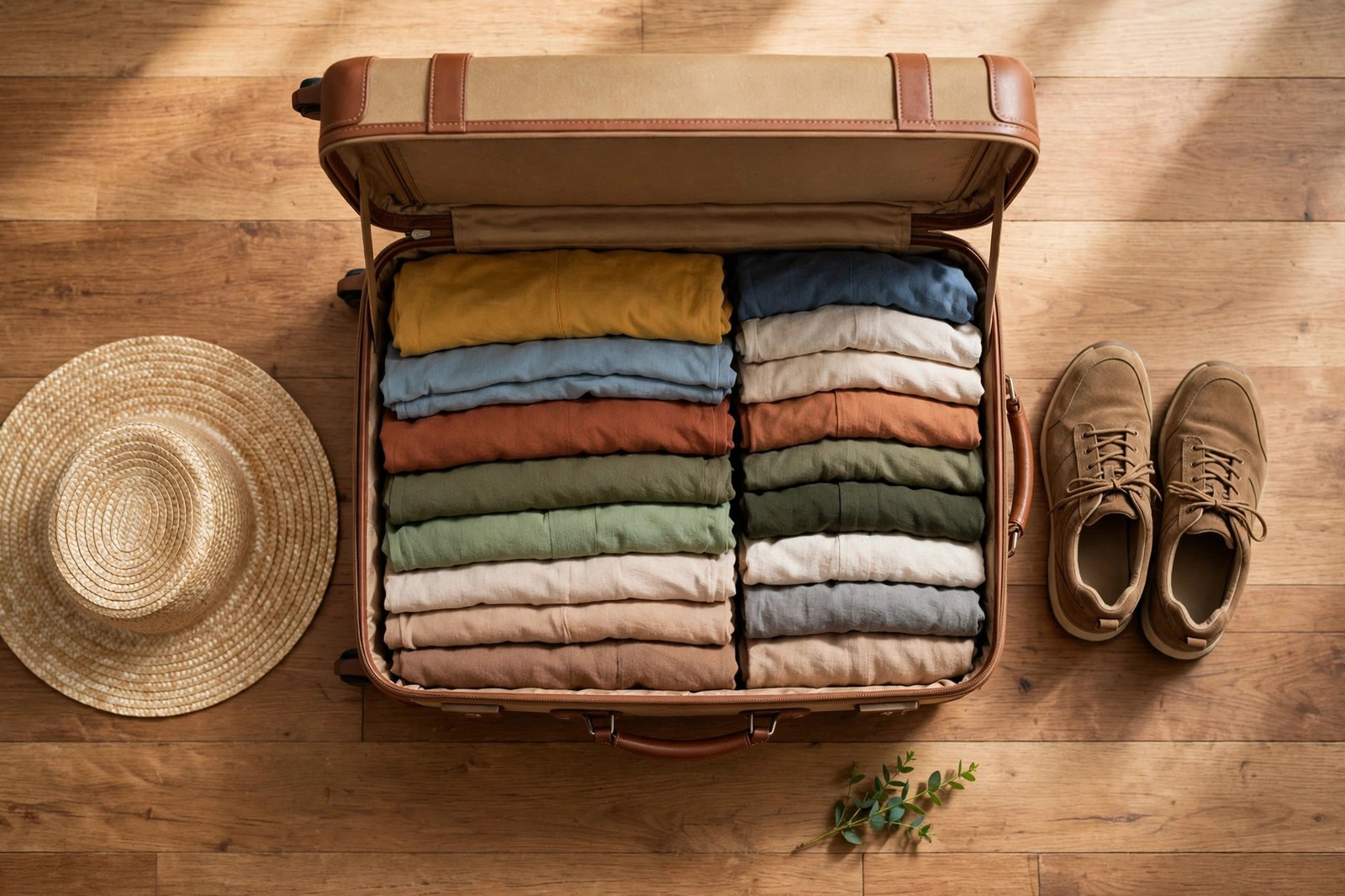
One bag, many countries
Packing for a trip across several countries — and possibly several climates — is a real challenge. The secret is versatility: pack items that mix, match, layer, and work across different settings and cultures.
Resist the urge to prepare for every scenario. You can buy almost anything you forget, and dragging a heavy bag through multiple airports and train stations quickly becomes miserable.
The smart multi-country packing formula
- Choose a color palette so everything mixes and matches.
- Layer for climate — versatile layers beat bulky single-purpose items.
- Pack culturally adaptable clothing — items that cover shoulders and knees for religious sites.
- Limit shoes to two or three versatile pairs.
- Bring a universal adapter and a portable charger.
- Use packing cubes to stay organized across destinations.
Respect local dress norms
Different countries have different expectations for dress. What's fine on a beach in one country may be inappropriate in a temple or conservative region in another. Research your destinations' norms in our Country Guides and pack accordingly.
A lightweight scarf is the ultimate multi-purpose item — it covers shoulders at religious sites, adds warmth, and dresses up an outfit. Pack light, dress respectfully, and you'll move through many cultures with ease.
The layering system that handles every climate
Multi-country trips often mean multi-climate trips — cool evenings in the mountains, humid afternoons in the tropics, air-conditioned everything in between. The answer is not packing for each climate; it is a layering system where a few versatile pieces combine into many outfits. Think in three layers: a moisture-wicking base (merino wool t-shirts are the gold standard — they resist odor for days), an insulating mid-layer (a packable down or fleece jacket that compresses to nothing), and a light waterproof shell. With those three, you are comfortable from roughly 5°C to 30°C.
Adopt a laundry rhythm instead of packing two weeks of clothes: four to five days' worth, washed mid-trip. Sink laundry with a universal soap bar works anywhere; many guesthouses offer cheap laundry services. Choose a color palette where everything matches everything (navy, gray, and one accent color is foolproof), and wear your bulkiest items on travel days. Shoes are the classic overpacking trap — one comfortable walking pair plus one versatile sandal or flat covers nearly every itinerary. For budget planning alongside packing, our Travel Budget Calculator helps you estimate the full trip cost, and our budget travel guide shows where the savings hide.
Documents, money, and the health kit
The unglamorous stuff is what ruins trips when it goes wrong. Passports first: many countries require six months of validity beyond your travel dates — check this months ahead, not weeks. Keep digital copies of your passport, visas, insurance, and bookings in cloud storage and a paper copy separate from the originals. For money, carry two different cards (Visa and Mastercard, ideally) from different banks, plus a modest amount of local currency for arrival; cards with no foreign transaction fees save real money over a long trip. Our foreign currency guide breaks down the options.
Your health kit should be boring and complete: any prescriptions in original packaging with a copy of the prescription, a small first-aid kit (bandages, antiseptic, blister pads — your feet will thank you), basic painkillers, anti-diarrheal tablets, rehydration salts, and any personal essentials. Check whether your destinations require vaccinations or malaria prophylaxis well in advance — some need weeks of lead time. Travel insurance is non-negotiable for multi-country trips: medical evacuation from the wrong place can cost more than the entire vacation. Read the policy's adventure-activity exclusions if you plan to hike, dive, or ride scooters. More on staying safe in our travel safety guide.
Pack for the plane, not just the destination
Long travel days between countries deserve their own kit. A good neck pillow, earplugs or noise-canceling earbuds, an eye mask, and a refillable water bottle transform a miserable red-eye into merely a long nap. Compression socks help on flights over four hours. Keep essentials in your personal item, not the overhead bin: passport, medications, phone charger and power bank, a change of underwear, and anything you would cry over losing — because checked bags occasionally take their own vacations.
Use transit time to fight jet lag before it starts. Shift your sleep schedule by an hour or two toward your destination's time zone in the days before departure. On the plane, set your watch to destination time immediately and act accordingly — sleep if it is night there, stay awake if it is day. Hydrate aggressively (cabin air is brutally dry), go easy on alcohol, and get sunlight as soon as you land; daylight is the strongest signal for resetting your body clock. Our jet lag guide has the full protocol. Arrive at your first destination with a light first day planned — no ambitious sightseeing before you have slept properly.
Pack a dedicated arrival kit and keep it accessible: whatever you need for the first twelve hours in a new country goes in one pouch — passport copies, local currency, the hotel address in the local language, a pen for arrival forms, basic toiletries, a change of clothes, chargers, and any medication. When you land exhausted at midnight in a country whose language you do not speak, you will not be digging through a main bag in the airport — everything critical is in one place. Experienced multi-country travelers swear this single habit eliminates most arrival stress. Refill and repack the kit each travel day; it takes five minutes and pays for itself the first time your checked bag takes a different vacation than you do.