
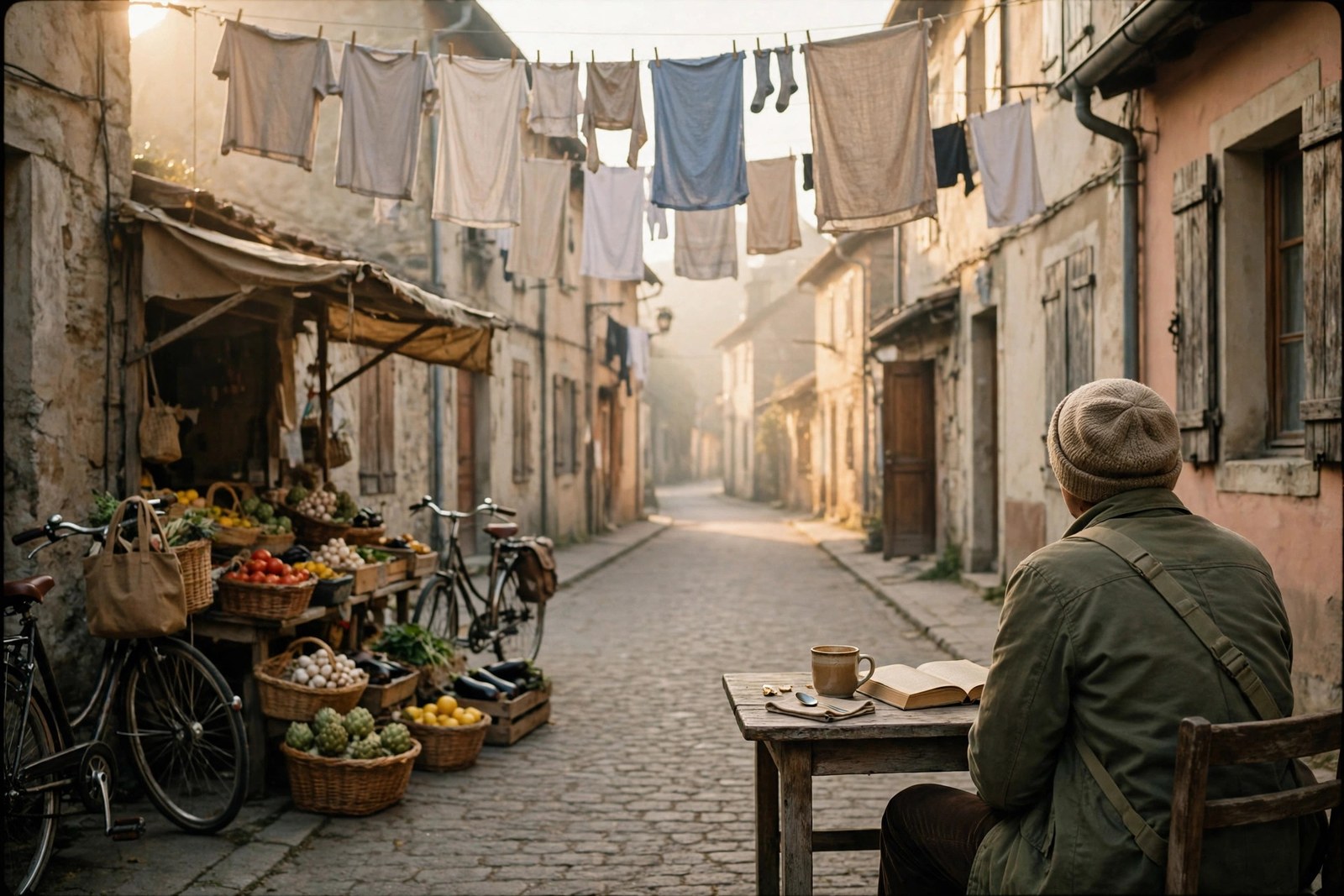
Less rushing, more living
Slow travel is a mindset that prioritizes depth over breadth — staying longer in fewer places, building routines, and genuinely connecting with a destination rather than racing to check sights off a list.
Instead of five cities in seven days, slow travel might mean two weeks in one town: shopping at the local market, befriending the café owner, and learning the rhythm of daily life.
Why slow travel is worth it
- Deeper connection — you experience real local life, not just highlights.
- Lower costs — fewer transport days and weekly accommodation rates save money.
- Less stress — no frantic schedule or constant packing and repacking.
- Real relationships — staying longer lets you befriend locals.
- Better language practice — immersion makes phrases stick.
- More sustainable — less transport means a lighter footprint.
How to travel slowly
Pick one base and explore outward. Rent an apartment instead of hopping hotels. Establish small routines — a regular café, a morning walk — that make you feel at home. Learn the language basics with our Language Helper and talk to locals.
Slow travel rewards curiosity. Read our guide on finding authentic local experiences to make the most of staying put and going deep.
Choose your base like a local, not a tourist
Where you stay determines what kind of trip you have. Tourist districts are convenient but insulated — everyone around you is also passing through, prices are inflated, and the neighborhood empties of real life after dark. Slow travelers choose residential neighborhoods instead: the area where locals actually live, shop, and argue about parking. You will pay less, eat better, and start recognizing faces within days — the shopkeeper who learns your order, the neighbor who nods hello. That recognition is the beginning of belonging.
Practically, this means renting an apartment for a week or more rather than hopping hotels. A kitchen changes everything: shopping at local markets, cooking with regional ingredients, and eating on your own schedule. Look for places with washing machines (packing light becomes easy), good natural light (you will spend real time there), and a neighborhood with daily life within walking distance — a bakery, a park, a café. Read reviews for noise and safety rather than luxury. And introduce yourself to neighbors; in many cultures, newcomers who greet people are welcomed far faster than those who stay invisible. For keeping costs manageable over longer stays, our budget travel guide and Travel Budget Calculator help you plan realistically.
Build a weekly rhythm
Tourists have itineraries; slow travelers have rhythms. The shift is psychological: instead of asking "what should I see today?", you start asking "what do I do on Tuesdays?" Find the weekly market and become a regular. Claim a corner table at a café and work or read there most mornings. Join a recurring class — cooking, dance, language, pottery — where the same faces appear each week. Rhythms do something itineraries cannot: they convert a place from a destination into a temporary home.
This is also how you meet people. The first visit to the market you are a customer; by the fourth, you are a regular, and regulars get conversations, recommendations, and invitations. Say yes to the rhythms offered to you: the neighbor's Sunday lunch, the local festival, the evening promenade. Keep one day a week deliberately unscheduled — rhythm needs breathing room, and the best slow-travel memories come from unplanned detours. And document lightly: a short daily journal entry captures what photos cannot — how the place felt as it became familiar. That record becomes precious, because slow travel's real souvenir is not what you saw but who you briefly became there.
Go deep on one thing
Every place rewards obsession. Pick one lens for your stay and follow it deeply: the food culture, the architecture, a traditional craft, the music scene, the natural environment. Take a cooking course from a local chef rather than ten restaurant meals. Learn the basics of the regional craft — pottery, weaving, woodwork — from someone who has done it for decades. Follow one historical thread through museums, neighborhoods, and conversations. Depth creates the stories you will tell for years; breadth creates a blur of photos you will never revisit.
Going deep also opens doors that sightseeing cannot. Practitioners love sincere interest: the baker who shows you the oven, the musician who invites you to rehearsal, the historian who walks you through their archive. Ask good questions, show up more than once, and offer something in return — help with English, a skill you have, genuine appreciation. This is cultural curiosity as a practice, not a posture, and it is the heart of authentic local experiences. You will leave knowing one thing truly rather than many things thinly — and that one true thing will change how you see everywhere else you ever go.
A practical note for remote workers: slow travel and working online are a natural match, but check the rules. Many countries now offer digital nomad visas for stays of six to twelve months — far simpler than the gray area of working on a tourist visa. Even without one, a month-long stay with a proper workspace beats a week of laptop-on-bed. Prioritize reliable wifi (ask hosts for a speed test screenshot before booking), a real chair, and a coworking space nearby for routine and human contact. Keep work hours fixed so the place does not become just another office with a better view — the point is to live somewhere, not merely work from it. Done right, a slow-travel work month delivers the deepest version of a place: you stop being a visitor and start being a neighbor.