
Budget travel is about smart choices, not sacrifice
Traveling on a budget doesn't mean missing out — it means spending where it matters and saving where it doesn't. Some of the most memorable travel experiences (a sunset, a local market, a conversation with a stranger) cost nothing at all.
The biggest costs are usually flights and accommodation. Master those two, and the rest of your budget stretches remarkably far. Start by estimating your trip with our Travel Budget Calculator.
Where to save the most
- Be flexible with dates — flying mid-week and in shoulder season is far cheaper.
- Use fare comparison tools and set price alerts for your route.
- Stay in hostels, guesthouses, or rentals instead of hotels.
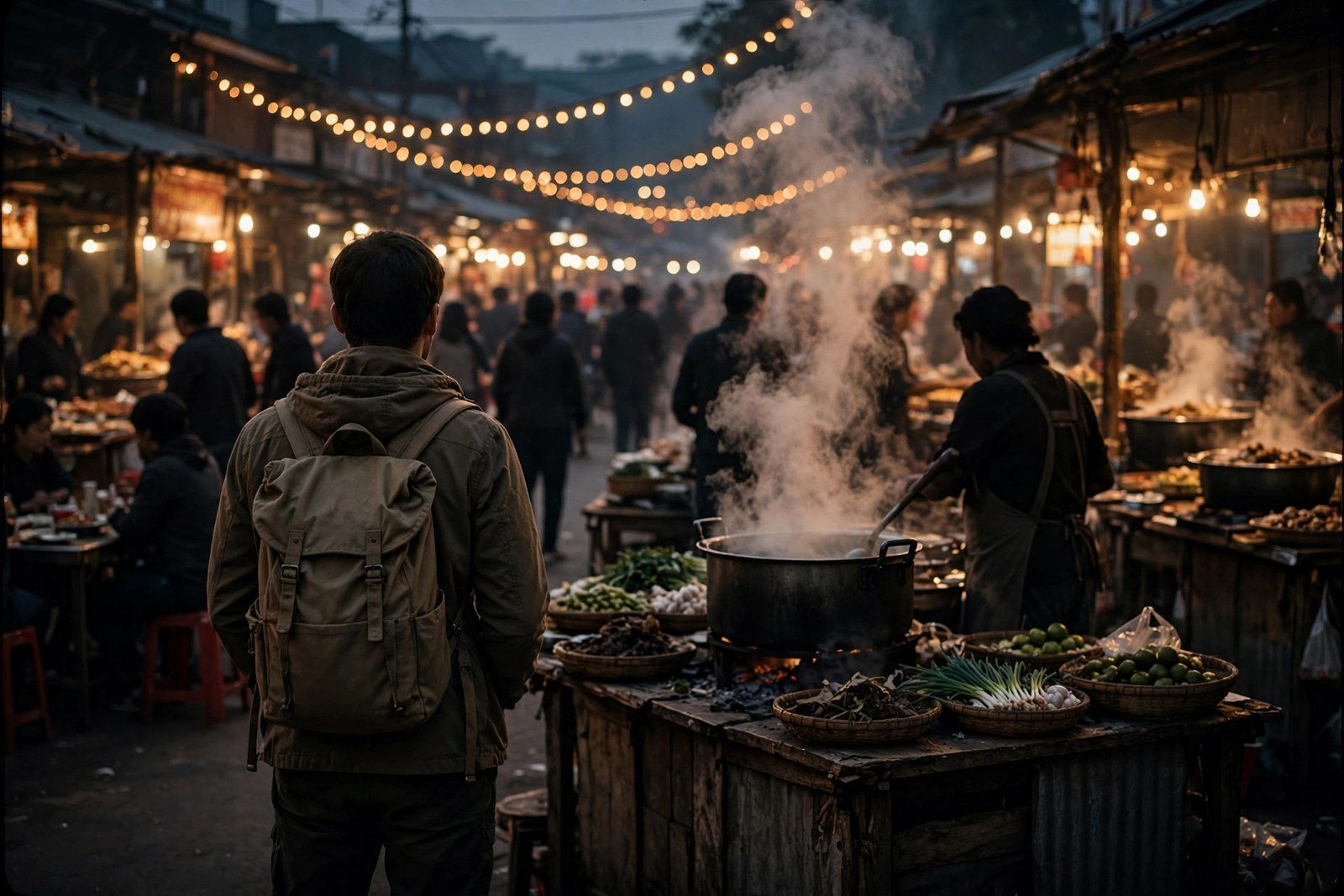
- Eat where locals eat — street food and markets are cheap and authentic.
- Use public transit instead of taxis.
- Travel slower — staying longer in fewer places cuts transport costs.
Spend on what creates memories
Once you've trimmed the big costs, invest in experiences you'll remember: a cooking class, a guided hike, a local festival. These often cost less than you'd expect and create the stories that make a trip meaningful.
Many of the best experiences are free — wandering old neighborhoods, visiting public parks and markets, attending community events. Read our guide on finding authentic local experiences to travel richly on any budget.
Master the two big expenses
Flights and accommodation typically consume 50–70% of a trip budget, so this is where strategy pays most. For flights, flexibility is the master key: shifting your departure by even a day or two can change the price dramatically, and flying mid-week is reliably cheaper than weekends. Set price alerts weeks ahead and pounce when the fare dips — then stop looking, because fare anxiety ruins more trips than high prices do. Consider nearby alternate airports; a short train ride from a secondary airport often saves more than it costs.
For accommodation, match the lodging to the trip phase. In expensive cities, hostels with private rooms offer hotel-like privacy at a fraction of the price, plus kitchens that cut food costs. For stays of a week or more, apartment rentals usually beat nightly hotel rates and let you live like a local — grocery shopping in a foreign market is a cultural experience in itself. In cheaper regions, family-run guesthouses deliver warmth and local knowledge that no chain hotel can match. Whatever you choose, read recent reviews for the unglamorous details: noise, hot water, and Wi-Fi reliability matter more than lobby aesthetics.
The daily budget system that actually works
Vague intentions ("I'll try to spend less") fail; systems succeed. Before you go, use our Travel Budget Calculator to set a daily target, then split it into three envelopes — real or mental: sleep, eat, do. When the "eat" envelope runs low, you picnic; when "do" runs low, you walk instead of tour. This keeps trade-offs conscious rather than anxious.
Track spending for the first three days only — that's enough to calibrate your instincts to local prices without turning the trip into accounting. Memorize three anchor prices on day one: a coffee, a casual meal, and a short taxi ride. With those anchors, you can instantly sense whether anything is fairly priced. And always keep a 15% buffer for the unplanned: the spontaneous cooking class, the ferry to the island you hadn't heard of. The buffer is not waste — it is the budget line item for joy.
Eat well for less in any country
Food is where budget travelers either save brilliantly or bleed money, and the difference is rarely about spending less — it's about spending locally. The rule is simple: eat where the workers eat. The lunch spot packed with office workers at noon, the night market stall with a line of families, the bakery where the bread sells out by 9 a.m. — these are quality signals no review site can fake. Street food is not a compromise; in Bangkok, Mexico City, Istanbul, and countless other cities, it is the cuisine at its best.
Time your meals strategically. In many countries, lunch menus offer the same kitchen at half the dinner price — Spain's menú del día, Japan's teishoku sets, France's formule midi. Grocery stores and markets cover breakfasts and snacks for a fraction of café prices, and a picnic in a beautiful spot beats a mediocre restaurant every time. Learn to compliment food in the local language — our Language Helper has the phrases — because genuine appreciation often earns you the off-menu recommendation or the extra taste.
Free and cheap experiences worth planning around
- Free walking tours — tip-based, guide-passionate, and the fastest orientation to any city. Go on day one.
- Museum free days — most major museums have weekly free hours; plan your itinerary around them.
- Public parks, viewpoints, and waterfronts — the best scenery in most cities costs nothing.
- Religious and civic architecture — cathedrals, mosques, temples, and markets are usually free and culturally rich. Dress and behave respectfully.
- Local events calendars — festivals, concerts in parks, and neighborhood celebrations are often free; check community boards and local listings.
- Hiking and nature — trails are free, and the view from the top has no ticket price.
Common budget traps
The most expensive mistake is the "cheap flight, expensive trip" — a bargain fare to a pricey destination where everything else costs triple. Always estimate the total trip before booking the flight. Next is the souvenir trap: mementos bought in tourist zones are overpriced and forgettable. Buy one meaningful thing from an artisan, or better, collect experiences — a recipe learned, a phrase mastered. Finally, beware false economy: the 5 a.m. flight with three layovers that ruins two days, or the hostel so far from everything that transit eats your savings. The cheapest option is the one that preserves your energy and time, not just your wallet.
For inspiration on spending wisely, read our guide to finding authentic local experiences — the most memorable things are usually the least expensive.
Sample budgets: what trips actually cost
Abstract advice helps less than concrete numbers, so here are realistic daily budget sketches — not promises, but planning anchors you can adjust. Southeast Asia (Thailand, Vietnam): a comfortable backpacker day runs on hostel dorms, street food, and local transit, with occasional splurges on experiences like a cooking class. Mid-range travelers in boutique guesthouses eating at nice local restaurants spend moderately more; luxury is available but unnecessary — the street food rivals the fine dining.
Southern Europe (Portugal, Spain, Greece): shoulder-season travel keeps costs sane. Hostels and budget hotels, menú del día lunches, and free evening promenades make for rich days at moderate cost. Summer in peak coastal towns is the budget-killer — go in May or October instead.
Japan: the reputation for expense is outdated for careful travelers. Business hotels, convenience-store breakfasts (genuinely excellent), ramen shops, and rail passes make Japan surprisingly manageable. The splurge-worthy items — a ryokan night, a tea ceremony — are worth saving for precisely because everything else can be done affordably.
Use these as starting points, then personalize with our Travel Budget Calculator and the relevant Country Guide.
Money-saving travel hacks from the road
- Travel overnight — night buses and trains convert a hotel night into transit, saving both money and daytime hours.
- Cook one meal a day — even in cheap countries, a hostel kitchen breakfast stretches the budget noticeably over weeks.
- Drink the local drink — imported wine in Buenos Aires or cocktails in Bangkok carry heavy markups; the local beer, wine, or spirit is cheaper and more authentic.
- Walk the first day — skip the taxi from the airport when transit exists; you'll orient yourself faster and save the first of many small wins.
- Buy intercity tickets early — trains in Europe and buses in Latin America reward advance purchase steeply.
- Travel with a water bottle and snacks — tourist-zone convenience pricing is a quiet budget drain.