
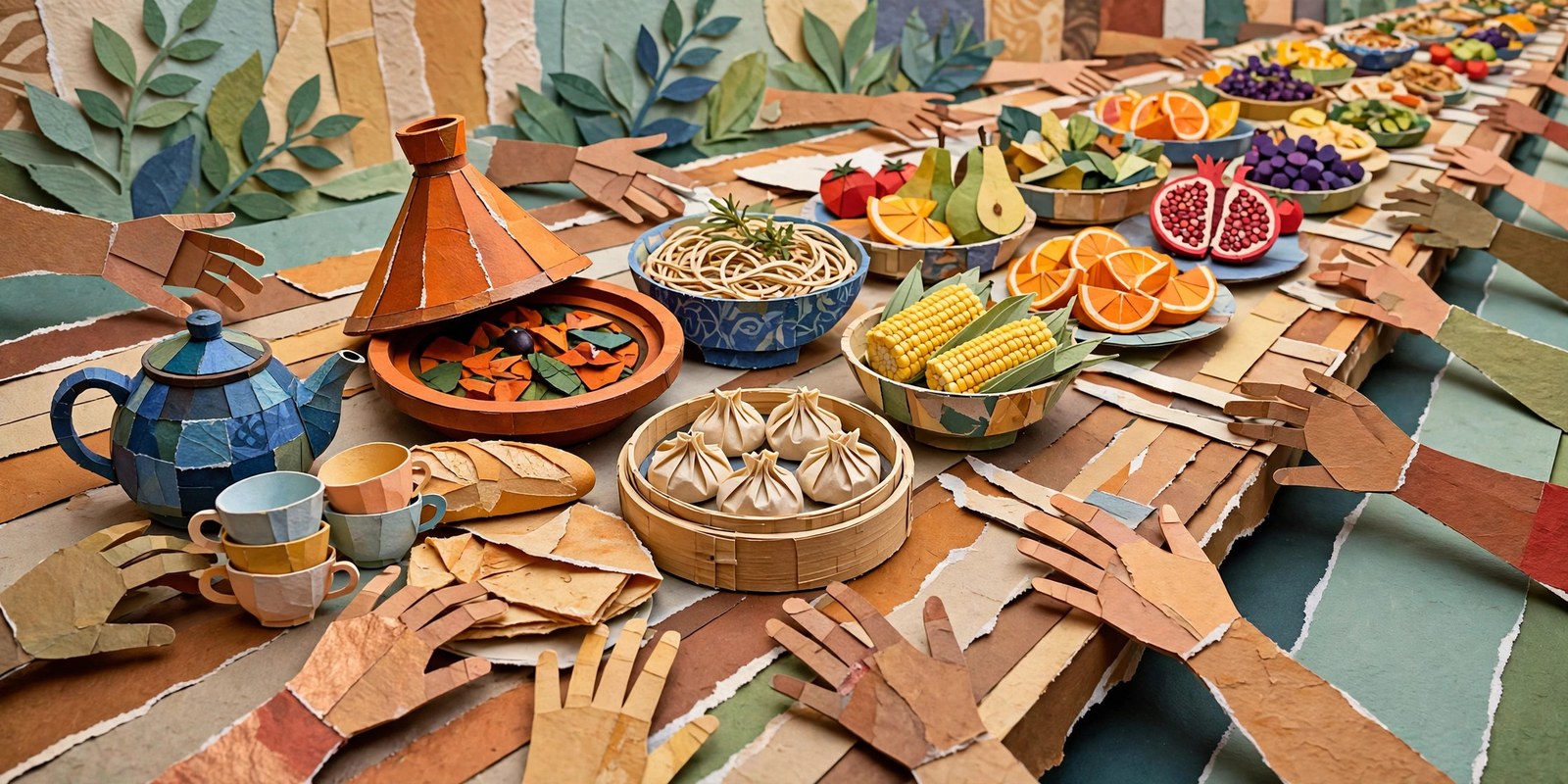
Food is how the world connects
Across every culture, sharing food is one of the deepest expressions of hospitality, love, and community. Meals mark celebrations, seal friendships, and welcome strangers. To understand a culture, share its table.
Food traditions carry history and identity — and offer travelers one of the most accessible, joyful ways to connect.
Shared food traditions around the world
- Family-style dining — communal dishes shared from the center, common across Asia and the Mediterranean.
- Tea and coffee rituals — from Japanese tea ceremony to Ethiopian coffee ceremony.
- Feasts and festivals — food at the heart of nearly every celebration.
- Bread as welcome — breaking bread together as a symbol of trust worldwide.
- Street food culture — vibrant social hubs in many countries.
Connect through the table
As a traveler or new friend, accepting and sharing food is one of the fastest ways to build connection. Try what's offered, ask about dishes and their meaning, and learn to compliment food in the local language.
Explore tea and coffee rituals in our guide on cultural drink rituals, learn table manners, and read our Dining & Table Manners lesson. A shared meal needs no translation.
Food rituals that reveal a culture
Japan: the tea ceremony (chanoyu) is hospitality as art — every gesture prescribed, every moment deliberate. But everyday food rituals matter equally: saying itadakimasu before eating (gratitude to all who made the meal possible), holding the bowl close, never passing food chopstick-to-chopstick. Convenience-store food is excellent and unpretentious — some of Japan's best eating is its most casual.
Ethiopia: the coffee ceremony is a cornerstone of social life — green beans roasted, ground, and brewed before guests in a ritual that can last hours. Meals are communal: injera (sourdough flatbread) serves as plate and utensil, and feeding another person by hand (gursha) is an act of love and respect. To refuse is to refuse affection.
France: the meal is sacred time. Lunch is unhurried, dinner is an event, and eating at a desk is faintly tragic. Bread has rules (on the table, torn not cut), cheese comes before dessert, and the apéro — pre-dinner drinks with nibbles — is a cherished institution. The French don't eat to fuel; they eat to live.
Mexico: food is celebration and memory intertwined. Day of the Dead altars bear the deceased's favorite dishes; tamales mark Christmas and Candelaria; the taco — infinitely varied by region — is both daily bread and cultural icon. Meals are long, loud, and loving. Accept seconds; it's a compliment to the cook.
India: food carries deep religious and regional meaning — vegetarian traditions, fasting calendars, the Ayurvedic logic of "hot" and "cold" foods. Eating with the right hand, sharing from common dishes, and the elaborate hospitality toward guests ("atithi devo bhava" — the guest is god) make every meal a cultural lesson. Our India guide has more.
How to explore food culture respectfully
- Eat where locals eat, at local hours. The lunch rush at noon in Spain or the night market at dusk in Taiwan — timing is part of the tradition.
- Ask about the story. "What's the history of this dish?" opens conversations that menus never will. Cooks are often the proudest cultural ambassadors.
- Try before you judge. Commit to one bite of everything offered (allergies aside). The foods that challenge you teach you the most.
- Learn the table manners. Our dining etiquette lesson covers chopsticks, hands, and cutlery across cultures — five minutes of reading prevents real offense.
- Take a cooking class from a home cook. Market tour plus home kitchen beats any restaurant demonstration — you learn the dish and the life around it.
- Bring it home. Recreate one dish after your trip. Cooking it for friends extends the cultural exchange and keeps the memory alive in the most delicious way.
Food as a bridge
When words fail, food speaks. The traveler who accepts an offered meal accepts the giver; the guest who asks for a recipe honors the cook; the friend who learns to make your dish says "you matter" in the most tangible way. In conflict zones and divided cities, shared meals have seeded reconciliations that negotiations couldn't. This is not sentimentality — it's anthropology: humans have bonded over food for millennia because eating together is trust made visible.
So make food central to your cultural exploration. Plan trips around harvests and food festivals. Budget for the cooking class over the souvenir. And when someone offers you something unfamiliar, remember: the strange dish is an invitation. Accept it — our guide to tea and coffee rituals is a delicious place to start understanding how deeply a simple cup can connect us.
Festivals where food takes center stage
Thanksgiving (USA): the rare holiday defined entirely by a meal — turkey, stuffing, and the particular chaos of family cooking together. Whatever its contested history, the modern ritual is gratitude expressed through abundance and gathering.
Lunar New Year (China, Vietnam, Korea): foods are wishes made edible — dumplings shaped like gold ingots for wealth, long noodles for long life, fish for surplus. The reunion dinner on New Year's Eve is the year's most important meal; to miss it is unthinkable.
Ramadan iftars (Muslim world): the sunset meal breaking the daily fast is both spiritual and deeply social — dates and water first (following tradition), then feasts shared with family, neighbors, and often strangers. Mosques and communities host public iftars; generosity is the month's theme.
Oktoberfest (Germany): beer, pretzels, roast chicken, and communal tables — Bavarian food culture at joyful full volume. It's touristy and traditional simultaneously, which is exactly the point: some traditions thrive because they're shared widely.
La Tomatina (Spain): the world's biggest food fight — pure playful chaos that reminds us food traditions need not be solemn to be meaningful. Joy is a tradition too.
Dietary traditions and what they teach
Religious and philosophical food rules — kosher, halal, vegetarianism, fasting — are among humanity's oldest cultural technologies, encoding ethics, identity, and community into daily eating. Understanding them (even without following them) builds profound respect: when you know why your host keeps kosher or fasts at Ramadan, you stop seeing restriction and start seeing devotion.
Practical respect: ask about dietary needs when hosting across cultures — and take the answers seriously. Don't make it weird: the vegetarian guest isn't judging your steak; the fasting colleague isn't asking you to skip lunch. Learn the basics of major traditions: no pork or alcohol for observant Muslims, no meat-dairy mixing for kosher observers, beef avoided by many Hindus. Getting this right signals care that transcends the meal.
Bringing food traditions home
The deepest food travel souvenir is a recipe that becomes yours. After a trip: recreate one dish faithfully — source the real ingredients, follow the real method. Then adapt it to your kitchen and life; fusion born of genuine love is how food cultures have always evolved. Share the story when you serve it — where you learned it, who taught you, what it meant. Food with a story nourishes twice.
Consider hosting a "travel dinner" — cook dishes from your trips, invite friends, share the stories. It keeps your own memories vivid, spreads cultural appreciation, and turns your kitchen into a tiny embassy of everywhere you've been. Explore more edible culture in our guides to tea and coffee rituals and celebration foods at weddings — because every tradition, at its heart, is an invitation to the table.