
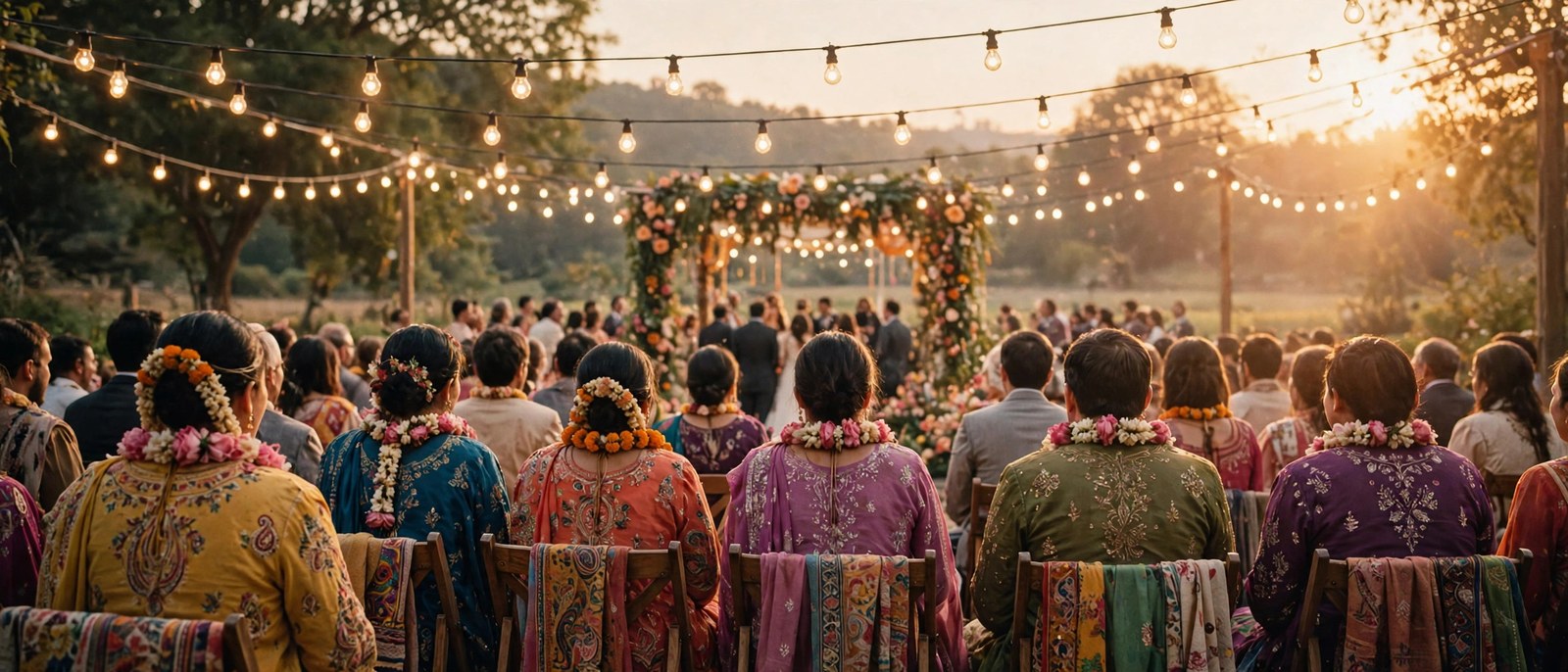
Love, celebrated a thousand ways
Weddings are universal celebrations of love and union, yet the traditions surrounding them are gloriously diverse. From colors to ceremonies to symbolic rituals, each culture's wedding customs reflect its deepest values and history.
Being invited to a wedding in another culture is a profound honor — and a window into the heart of that society.
Wedding traditions worldwide
- Colors — white symbolizes purity in the West, while red signifies luck and joy in China and India.
- Multi-day celebrations — many cultures celebrate over several days of ceremonies.
- Henna ceremonies — intricate body art in South Asian and Middle Eastern weddings.
- Tea ceremonies — honoring elders in Chinese weddings.
- Symbolic rituals — from breaking glass to jumping the broom to unity ceremonies.
Be a respectful wedding guest
If invited to a wedding abroad, research the customs: appropriate dress (avoid colors reserved for the couple or that signal mourning), gift expectations, and how to participate respectfully. When unsure, ask the hosts — they'll appreciate your care.
Check our gift-giving customs guide and the relevant Country Guide before attending. Witnessing how another culture celebrates love is one of travel's most moving experiences.
India: multi-day celebrations of color and ritual
Indian weddings are less an event than a season — celebrations often span three to five days, each with its own ceremonies, outfits, and emotional register. The mehndi ceremony opens the festivities: intricate henna patterns are applied to the bride's hands and feet amid music and dancing, and guests often get henna too. The sangeet is a night of performances by family and friends — think joyful, competitive, Bollywood-infused talent show. The baraat sees the groom arrive in procession, traditionally on horseback, dancing through the streets with his party.
The ceremony itself centers on rituals like the saptapadi — seven steps taken together around a sacred fire, each step a vow. As a guest, wear your brightest formal clothes (color is celebrated; avoid white, which is associated with funerals, and red, traditionally the bride's color). Expect to be fed magnificently and repeatedly. Do not be surprised by the scale — hundreds of guests is normal — or by being swept into dances. Participation is the compliment. Remove shoes where indicated, follow the lead of family members for rituals, and bring your stamina: you will need it.
East Asia, Africa, and beyond: tea, sake, and joyful noise
In Chinese weddings, the tea ceremony is the emotional heart: the couple kneels to serve tea to parents and elders, who respond with blessings and red envelopes (hongbao). It is a formal acknowledgment that two families are joining, and witnessing it is a privilege. Japanese weddings may include san-san-kudo — bride and groom exchanging sake cups in three sips each, symbolizing the union. Korean pyebaek has the couple bowing deeply to elders in traditional hanbok, catching dates and chestnuts thrown by parents as wishes for fertility.
Elsewhere: many African and African-diaspora weddings include jumping the broom — a tradition honoring ancestors and symbolizing the new household. Jewish weddings end with the groom breaking a glass, met with shouts of "Mazel tov!" — joy tempered with remembrance. Mexican weddings feature the lazo, a rosary or ribbon looped around the couple in a figure eight. German guests may witness Baumstamm sägen — the couple sawing a log together, their first teamwork test. Each tradition encodes what that culture believes marriage is: a family merger, a spiritual covenant, a community celebration. Our hospitality guide explores more of how cultures celebrate together.
Invited to a wedding abroad: the guest's playbook
Being invited to a wedding in another culture is one of travel's great honors — and it comes with homework. First, ask about expectations: dress code (formal? traditional? specific colors to wear or avoid?), gift customs (cash in an envelope? a registry? red envelopes for Chinese weddings — always crisp new bills, never amounts with the number four), and schedule (multi-day events require stamina planning). Asking is not rude; arriving ignorant is worse.
Second, participate fully. Eat what is served, join the dances you are pulled into, learn the key phrases (congratulations in the local language is essential). Do not treat the ceremony as a photoshoot — put the phone down during sacred moments, ask before photographing rituals, and never let your documentation disturb the event. Third, respect local timing and hierarchy: greet elders first, follow seating guidance, and understand that "the wedding starts at 3" may mean the guests' pre-events start at 3 in some cultures. Finally, follow up with thanks — a message to the couple and to whoever invited you. You were included in one of life's most intimate celebrations; honor that with your full, gracious presence. For gift customs generally, see our gift-giving guide.
Destination weddings deserve special mention, since they combine guest duties with travel. RSVP fast — the couple is counting heads for venues and catering across borders — and book your travel the moment you commit, because wedding-date flights and hotels only get pricier. Budget honestly: between travel, accommodation, outfits, and gifts, destination weddings are expensive, and it is kinder to decline early than to attend resentfully. If you go, arrive a day early to recover from travel; nobody wants to be the bleary guest. Participate in the full weekend of events, not just the ceremony — the welcome dinner and farewell brunch are where the real bonding happens. And remember: your presence is the gift they most wanted, which is why they invited you across the world.