
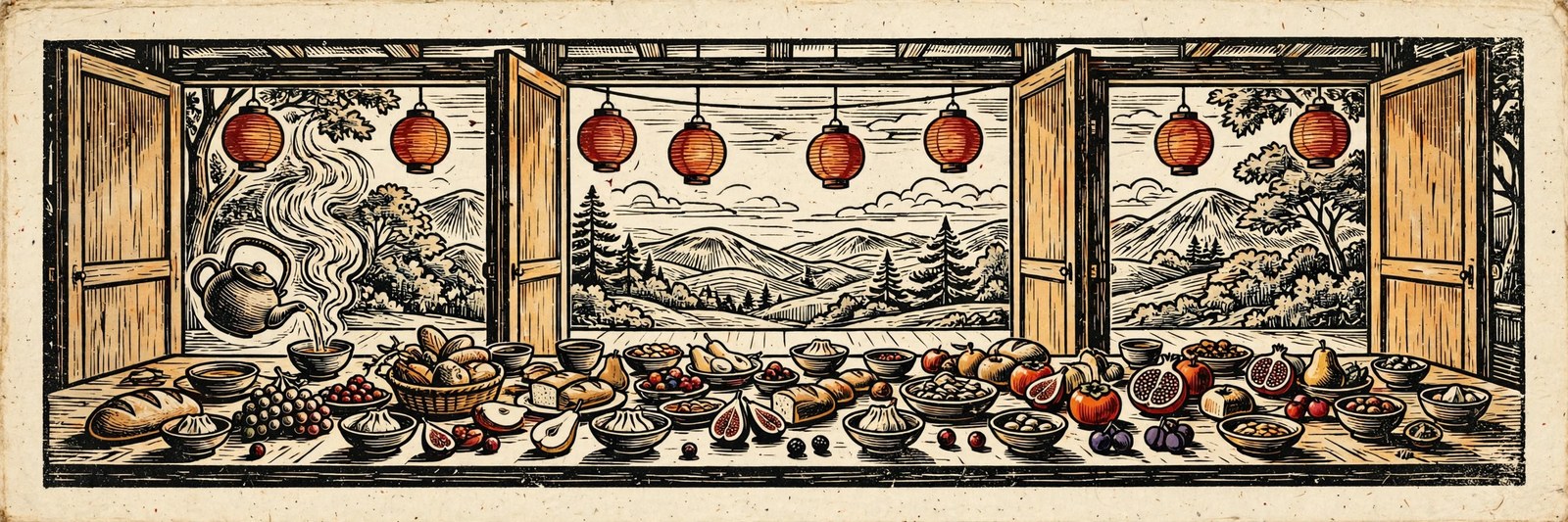
A universal value, expressed differently
Welcoming guests is a value shared by virtually every culture — but how hospitality is expressed varies beautifully around the world. Understanding these traditions helps you receive kindness gracefully and recognize the care behind it.
In many cultures, hospitality toward guests, even strangers, is a sacred duty and a point of deep pride.
Hospitality traditions worldwide
- Middle East & Central Asia — legendary generosity; guests are honored with food and tea, and refusal can offend.
- Japan — 'omotenashi,' anticipating guests' needs with meticulous, selfless care.
- Mediterranean cultures — abundant food and lively, lengthy meals.
- South Asia — 'the guest is god'; visitors treated with great reverence.
- Latin America — warm, family-style welcome and shared meals.
Receive hospitality gracefully
When you're on the receiving end, the kindest response is gracious acceptance. Refusing food or generosity can unintentionally hurt a host showing their care. Accept warmly, express sincere thanks, and reciprocate when you can.
Learn how to be a wonderful guest in our respectful guest guide and explore the Cross-Cultural Learning section to understand the customs behind the kindness. Hospitality is one of humanity's most beautiful shared traditions.
Hospitality traditions by region
Middle East — sacred duty: hospitality (diyafa) is a point of honor. Guests are offered the best of everything — food, seating, attention — and refusing is genuinely difficult for hosts to accept. Coffee rituals mark the rhythm: in Bedouin tradition, the host serves continuously until the guest wiggles the cup to signal enough. Expect generosity that can feel overwhelming; receive it with visible gratitude.
South Asia — the guest as god: "Atithi Devo Bhava" (the guest is equivalent to god) is lived, not just said. Hosts may serve elaborate meals, insist on seconds and thirds, and treat your comfort as their personal mission. Removing shoes at the door is standard. Bring sweets for the family; compliment the food specifically and sincerely.
East Asia — ritualized care: Japanese hospitality (omotenashi) anticipates needs before they're expressed — the towel, the tea, the perfect detail you didn't ask for. In China, the host orders abundantly (an empty table embarrasses), serves the best dishes to guests first, and may toast repeatedly. Accept with both hands; reciprocate toasts.
Latin America — warmth as welcome: hospitality is affectionate and immediate — embraces, abundant food, introductions to the whole family within minutes. The gathering matters more than the planning; drop by, stay long, eat plenty. Bringing something is appreciated but your presence is the real gift.
Africa — ubuntu in action: "I am because we are" — the philosophy that personhood is collective — expresses itself in hospitality that treats strangers as community. In many regions, turning away a visitor is unthinkable; what little there is, is shared. Receive such generosity with the gravity it deserves.
Europe — varied and heartfelt: Mediterranean hospitality runs warm and abundant (the Greek philoxenia, love of strangers, is ancient); Northern European hospitality is quieter but no less real — the invitation may be rarer, but once extended, it's wholehearted. Match the local register.
Being a great guest: the universal playbook
- Accept graciously: the first rule of receiving hospitality is receiving it. Excessive refusal insults the giver's generosity. Accept, thank specifically, and enjoy visibly.
- Bring something: never arrive empty-handed — food, flowers, or something from your home. Our gift-giving guide covers what's appropriate where.
- Help without taking over: offer to help ("Can I do anything?"), accept the answer gracefully, and find small useful things (clearing plates, entertaining kids).
- Respect house rules: shoes off, prayer times, quiet hours — observe and follow without being asked twice.
- Adapt to the table: eat what's served with enthusiasm, learn the local table manners (see our dining lesson), and pace yourself with the host.
- Follow up: the thank-you message, the returned invitation, the small gift later — hospitality completed in a circle becomes friendship.
Hosting across cultures
Hospitality flows both ways — eventually you'll host guests from other cultures. Ask about needs early: dietary restrictions, prayer space, sleeping arrangements, allergies. Asking signals care; guessing risks missing something important. Explain your household: every home has invisible rules (shoes, schedules, food norms) — make them visible kindly: "We usually eat around seven — come hungry!" Bridge the unfamiliar: if serving your cuisine to guests who've never tried it, explain dishes warmly and offer alternatives without fuss. Give them an out: cross-cultural guests may not know how to decline gracefully — build in easy exits ("No pressure at all, but we'd love...").
The deepest truth about hospitality is reciprocity across time: the kindness you receive as a guest teaches you how to give as a host, and the circle widens with every exchange. Our authentic experiences guide explores how these exchanges become the most meaningful part of travel.
Hospitality faux pas to avoid
- Refusing too firmly: in honor-based hospitality cultures, hard refusal of food or drink can genuinely wound. Accept at least a taste — "just a little" is the universal compromise phrase.
- Praising possessions excessively: in some cultures (parts of the Middle East, Pacific Islands), admiring something too enthusiastically obligates the host to give it to you. Admire warmly but briefly.
- Overstaying: reading departure cues matters everywhere. When the host starts clearing, yawning, or mentioning tomorrow's early start — that's your cue, graciously taken.
- Treating service as servitude: in cultures with domestic staff, guests who bark orders at staff embarrass their hosts. Be unfailingly polite to everyone in the household.
- Photographing without asking: homes are private spaces. Ask before photographing interiors, family members, or religious items — always.
- Bringing unannounced guests: never. In hospitality cultures, the host prepares specifically for you; extra people strain the plan and the honor.
- Discussing payment: offering to "pay for" things in a hospitality context can insult — the host's generosity isn't a transaction. Reciprocate with invitations and gifts, not cash.
The hospitality mindset for travelers
Beyond rules, there's a posture that unlocks hospitality everywhere: be receive-able. Travelers who radiate openness — unhurried, curious, visibly delighted — get invited in; those who radiate efficiency and guardedness don't. Slow down. Make eye contact. Ask questions. Accept the tea. The invitation to the family dinner doesn't go to the most interesting traveler — it goes to the most interested one.
Learn the local "yes": hospitality often arrives disguised — "you should try my mother's cooking" is an invitation; "this neighborhood is famous for..." is an offer to show you. Recognizing these soft invitations (high-context cultures specialize in them) and accepting warmly is a master skill. When in doubt, respond with enthusiasm and let the host calibrate: "I'd love that — only if it's no trouble!"
Pay it forward visibly: the traveler who receives hospitality and then extends it — hosting a dinner back home, connecting hosts with future travelers, sending the photos you promised — keeps the great chain of welcome unbroken. Hospitality is humanity's oldest social network, and every grateful guest is a node that strengthens it.
When hospitality overwhelms
Honest note: intense hospitality can exhaust — the fifth feast, the constant attention, the inability to have a quiet moment. This is normal, not ungrateful. Build in recovery: schedule solo time (a morning walk, an afternoon café) without guilt. Communicate gently: "I need a little rest this afternoon so I can enjoy tonight fully" is honest and flattering. Remember the intent: the overwhelming generosity comes from genuine care — receiving it graciously, even when tired, honors that care. And someday, when you're the host fussing over your guests, you'll understand completely — and do exactly the same thing.