
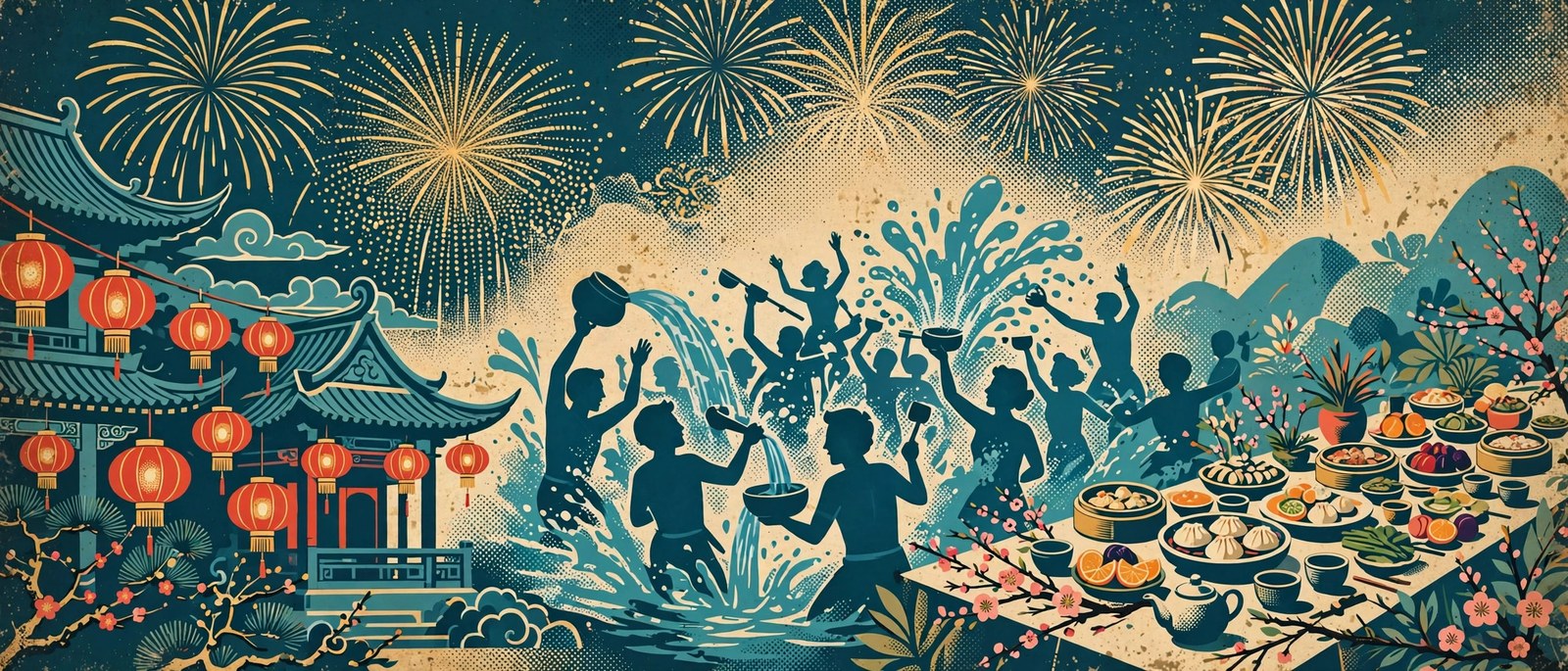
Many calendars, many new years
While much of the world rings in the new year on January 1, many cultures celebrate on entirely different dates, following lunar or other calendars. Each celebration carries its own rich traditions, foods, and meanings.
Understanding these diverse celebrations is a window into how different cultures mark renewal, family, and hope.
New year celebrations worldwide
- Lunar New Year (East & Southeast Asia) — family reunions, red envelopes, feasts, lasting days.
- Nowruz (Persian New Year) — the spring equinox, celebrated across Central Asia and the Middle East.
- Songkran (Thailand) — the Thai new year marked by joyful water festivals in April.
- Rosh Hashanah (Jewish New Year) — reflection, renewal, and symbolic foods.
- Diwali — marks the new year in some Hindu traditions.
Celebrate and connect
If you have friends from other cultures, learning about and acknowledging their new year is a thoughtful way to connect. A simple 'Happy Lunar New Year' or 'Nowruz Mubarak' shows you see and value their traditions.
Explore the cultures behind these celebrations in our Country Guides, and use our Conversation Starter Generator to ask friends about their own new year traditions. Every culture's renewal is worth celebrating.
Lunar New Year: the world's great homecoming
For well over a billion people, the new year arrives with the lunar calendar — most famously as Chinese New Year (Spring Festival), and similarly as Seollal in Korea and Tết in Vietnam. It is less a party than a homecoming: the world's largest annual human migration happens as people travel to be with family. Homes are cleaned beforehand to sweep away bad luck, reunion dinners bring generations together, and red envelopes (hongbao) pass from elders to the young with wishes for prosperity.
If you are invited to join, understand what you are stepping into: this is family time, intimate and meaningful. Bring a small gift — fruit, sweets, or something from your own culture — and offer it with both hands. Wear something bright; red and gold are celebratory colors, while white and black are associated with mourning and best avoided. Expect spectacular food, possibly fireworks, and warmth that can be overwhelming in the best way. A few phrases go a long way: "Xīnnián kuàilè" (Happy New Year in Mandarin) will earn you genuine smiles. And pace yourself — celebrations often span days, with different customs for each. Our gift-giving customs guide has more on presenting gifts respectfully.
More new years worth knowing
The lunar new year is just the beginning. Nowruz, the Persian new year on the spring equinox, is celebrated across Iran, Central Asia, and beyond with a haft-seen table of seven symbolic items, thorough spring cleaning, and thirteen days of visiting family and friends. Diwali, the Hindu festival of lights in autumn, marks the new year for many communities with oil lamps, sweets, and fireworks symbolizing light over darkness. Rosh Hashanah, the Jewish new year in early autumn, is a reflective holiday of prayer, apples with honey, and the sounding of the shofar. In Thailand, Songkran in April turns the traditional new year into a joyful nationwide water festival — and a chance to pay respect to elders.
What unites them is more interesting than what divides them: renewal, family, food, and hope. Each tradition answers the same human need — to mark time passing and begin again — in its own beautiful language. You do not need to memorize them all; just knowing they exist makes you a more thoughtful global citizen. When you encounter one, curiosity is the right response. Our world festivals guide covers more celebrations worth experiencing firsthand, and our Country Guides add cultural context for the places behind them.
How to honor a friend's new year (without making it about you)
When a friend celebrates a new year you do not share, the kindest move is simple: acknowledge it. A message on the day — "Happy Lunar New Year! Hope you have a wonderful reunion dinner with your family" — shows you see and respect what matters to them. Learn the proper greeting for their tradition rather than defaulting to "Happy New Year" in January; the effort signals genuine care. Ask about their plans with curiosity, not tourism: "What does your family usually do?" beats "What's the crazy food you eat?"
If you are invited to participate, say yes when you can — and then follow your friend's lead on everything. Ask about dress, gifts, and etiquette beforehand; nobody minds the questions, and everyone minds the faux pas. Avoid treating sacred or family traditions as exotic content for your social media — ask before photographing, and keep the focus on being present rather than documenting. Afterward, a thank-you note mentioning something specific you enjoyed cements the memory. These small acts of recognition are exactly how cross-cultural friendships deepen: not through grand gestures, but through showing up for what matters to the other person. For more on navigating cultural differences gracefully, see our guide to handling cultural misunderstandings.
Want to go deeper than reading? Host your own multicultural New Year’s Eve. Invite friends from different backgrounds and ask each to bring one New Year tradition — a dish, a ritual, a song. You will end up eating twelve grapes at midnight, smashing a plate, sharing lentils, and making noise at the door, all in one evening. It is chaotic, delicious, and genuinely moving: everyone’s heritage gets honored, and the new year starts with the feeling that the world’s hopes are not so different. Keep it simple — the traditions are the entertainment — and end the night by having each guest share one hope for the coming year. You will understand, in your bones, why humanity has never stopped inventing ways to say: this year, we begin again.