
A few words open many doors
You don't need fluency to make a real impact. Learning even a handful of words — hello, thank you, please — signals respect and effort that locals everywhere deeply appreciate. It's often the difference between being treated as a tourist and being welcomed warmly.
Language carries culture. Attempting someone's language, however imperfectly, says 'I see you and I value your world.' That message lands powerfully.
What a little language earns you
- Warmer treatment — locals respond generously to visitors who try.
- Better experiences — small talk leads to recommendations and connections.
- Easier navigation — basic phrases help with directions, food, and shopping.
- Deeper respect — effort honors the culture you're visiting.
- Confidence — a few phrases reduce travel anxiety.
Start with the essentials
Focus on the 'magic words': hello, thank you, please, excuse me, and yes/no. Add numbers and 'how much?' for shopping. Our Language Helper gives you these essentials with pronunciation in ten major languages.
Don't worry about perfection — locals appreciate the attempt far more than the accent. Read why you should embrace language mistakes to learn without fear.
Ten words change how the world treats you
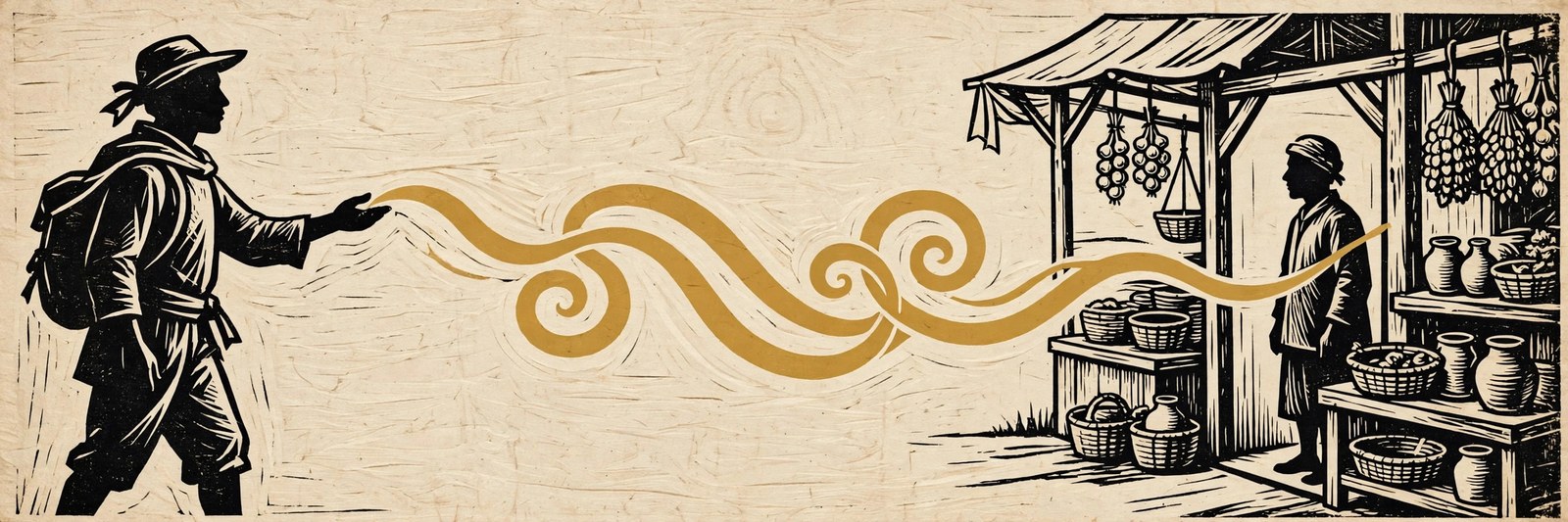
Consider two travelers in the same market. One points and says "how much?" in English, louder when not understood. The other smiles and says the greeting, asks the price in the local language, thanks the vendor warmly — then switches to English for the rest. Same purchase, utterly different interaction. The second traveler gets the real price, the story behind the craft, and sometimes an invitation to tea. The difference was ten words and the respect they signaled.
This pattern repeats everywhere. The taxi driver who becomes a tour guide after you greet him properly. The restaurant owner who brings the off-menu dish for the guest who said "delicious" in her language. The border official whose sternness melts at a correct, cheerful greeting. None of these people expected fluency — they responded to effort, because effort says: I know I am a guest here, and I am glad to be one. Our guide to greetings around the world gives you the highest-leverage words for 10 languages, and essential traveler phrases covers the practical set.
Your brain, your confidence, and your connections benefit too
Beyond the social magic, learning even a little language changes you. Many learners report that wrestling with a new language sharpens their attention — you start noticing sounds, patterns, and nonverbal cues you previously filtered out. The humility of being a beginner is itself a gift: stumbling through basic phrases in a market teaches you more about grace under imperfection than any self-help book. And each small success — the first joke you understand, the first directions you follow — builds a confidence that transfers far beyond language.
There is also a subtler effect: language learning rewires how you see your own language. English speakers who learn that other languages have no exact word for "privacy," or that some languages grammatically require you to specify how you know something, start questioning assumptions they never knew they had. Even a few dozen words crack open this perspective. You do not need to become bilingual to think a little more bilingually — and that shift in perspective is one of the most valuable souvenirs any traveler can bring home. For turning a phrasebook start into real progress, see our guide to remembering vocabulary.
How to start today: the twenty-minute method
Forget apps, courses, and textbooks for now. Here is the minimal method that actually gets words into your mouth. Step one (5 minutes): pick your ten — hello, goodbye, please, thank you, excuse me, yes, no, how much, where is the bathroom, delicious. Write them with phonetic pronunciation, not just spelling. Step two (10 minutes): find audio — a free phrase video, a translation app's speaker button, our Language Helper tool — and repeat each phrase aloud until it feels natural in your mouth. Aloud is non-negotiable; silent reading builds zero speaking ability.
Step three (5 minutes): rehearse the three interactions you will definitely have — greeting someone, ordering food or asking a price, and thanking them. Say the whole tiny exchange out loud, playing both parts. Then use them within 48 hours, even if your trip is months away: greet a restaurant server, thank a shopkeeper, practice on a language-exchange partner. Words used are words kept; words merely studied evaporate. That is the entire method — twenty minutes to a warmer welcome anywhere on Earth. Avoid the common traps with our language learning mistakes guide, and you are already ahead of most travelers.
And here is the quiet bonus nobody mentions: once you start, you will want to continue. A few words lead to a phrasebook, a phrasebook to an app, an app to a conversation — every polyglot started with exactly what you are doing today. The door you open with ten words tends to stay open.
If you have children, your ten words do double duty. Kids absorb the lesson that the world does not owe them English — and they absorb it fastest by watching you stumble cheerfully through a greeting rather than hearing a lecture about respect. Teach them the hello, thank you, and delicious before the trip, and let them deploy them; shopkeepers melt for a child’s careful “doumo arigatou,” and your kids will remember the pride of that moment for years. You are not just smoothing your own trip — you are raising travelers instead of tourists. The few words you learn today become the example they follow tomorrow, in every country they ever visit.