
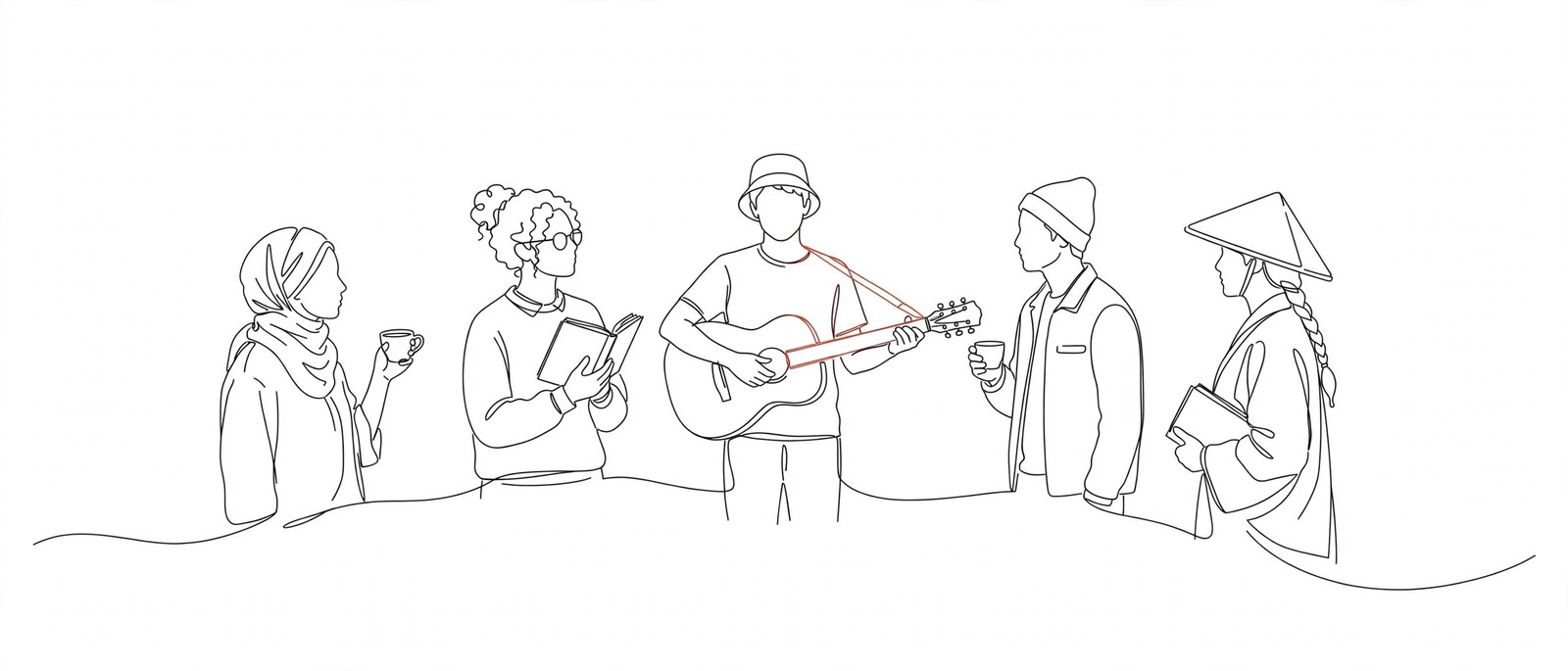
International friendships enrich your life
Friends from other countries open windows into new cultures, perspectives, and ways of living. These friendships make the world feel smaller and more connected — and they're more accessible than ever, online and in person.
Building genuine cross-cultural friendships takes the same things any friendship does: shared interest, genuine curiosity, and consistent effort — plus a little cultural awareness.
Where to meet people from other countries
- Language exchange platforms — bond over learning each other's languages.
- Interest-based communities — online groups around shared hobbies.
- Travel — hostels, tours, and local events.
- International events and cultural festivals in your city.
- Volunteering or studying abroad — shared purpose builds bonds.
- Pen pal programs — see our safe pen pal guide.
Build genuine connections
Show real curiosity about their culture and life, share your own openly, and be patient as trust grows. Use our Conversation Starter Generator to move beyond small talk, and learn about their background in our Country Guides.
Stay safe with online connections, coordinate across time zones with our Time Zone Planner, and read how to build trust across cultures. Genuine effort transcends any border.
Start with shared interests, not small talk
The fastest friendships form around shared activities, not forced mingling. Think about your own closest friends: you probably met most of them doing something — working, studying, playing, volunteering — rather than at an event explicitly designed for meeting people. The same principle applies internationally. A cooking class, a hiking group, a language exchange, a volunteer project, or a sports league gives you natural conversation material, repeated contact, and a shared experience to bond over. Small talk with a stranger is hard in any language; side-by-side activity removes the pressure to perform.
Be strategic about where you look. Universities and community centers in most cities run international programs, tandem language partnerships, and cultural workshops that attract exactly the mix of locals and newcomers you want to meet. Online, interest-based communities — from photography to board games to running clubs — often have local chapters with regular meetups. When you show up consistently to the same activity, familiarity does half the work: the third time someone sees your face, starting a conversation feels natural instead of bold. And if you are the newcomer in a new country, say yes to invitations for the first month even when you are tired — early momentum matters enormously.
Be the one who follows up
Here is an uncomfortable truth about adult friendship: most potential friendships die not from rejection but from nobody following up. You have a great conversation with someone, you both say "we should hang out sometime," and then neither of you does. The fix is simple but requires courage — be the person who sends the message. "I really enjoyed chatting about hiking yesterday — a few of us are doing the coastal trail Saturday if you want to join" is specific, low-pressure, and easy to say yes to.
Concrete invitations beat vague ones every time. "Let's get coffee sometime" puts the planning burden on the other person; "Are you free Thursday afternoon for coffee near the station?" makes saying yes effortless. If you are nervous, reframe it: you are not imposing, you are offering. Most people are delighted to be invited and simply would not have organized it themselves. Host small, easy gatherings — a potluck, a movie night, a walk — where guests can bring a friend; each gathering quietly expands your circle. And when someone invites you, accept when you can: reciprocity is the engine of new friendship. For help keeping conversations flowing once you are there, try our guide to great cross-cultural conversations.
Navigate cultural differences in friendship with curiosity
Friendship looks different everywhere, and the differences are rarely announced. In some cultures, friends drop by unannounced and share everything; in others, friendship builds slowly and personal space is guarded. Directness, humor, punctuality, gift-giving, how quickly first names are used — all of these vary, and misreading them can create friction that neither person understands. The classic mistake is interpreting a cultural norm as a personal signal: the friend who never initiates plans is not necessarily uninterested; in their culture, the newcomer or the guest may be expected to take the lead.
The antidote is curiosity without judgment. When something puzzles you, ask with genuine interest rather than assuming the worst: "I've noticed people here tend to plan weeks ahead — is that typical?" Most people love explaining their culture to someone who asks respectfully. Learn the basics of local social norms before you need them — our guide to building trust across cultures and our article on first impressions across cultures are good starting points. And extend the same grace you hope to receive: explain your own norms too. "Where I'm from, friends usually split the bill — is that okay here?" prevents the awkwardness that silence creates.
The step most people skip is the follow-up. Meeting people is only half the work; acquaintances become friends through deliberate, low-pressure repetition. After a good first conversation, suggest something specific and soon: “there is a food market Saturday — want to check it out together?” Vague “we should hang out sometime” dies in every culture. Then be the one who follows through — send the message, confirm the plan, show up on time. Two or three shared experiences convert a pleasant stranger into someone who texts you first. And accept the asymmetry of new friendship: in the beginning you may initiate more, and that is fine. Every deep friendship you have now started with someone being brave enough to suggest the second hangout.
Friendship grows from repeated, low-stakes contact
Almost nobody makes a lasting international friend from a single great conversation. The pattern that works — in language exchanges, expat groups, hobby communities and online forums alike — is repeated, low-stakes contact with the same people: the weekly class, the regular game, the standing study session. Repetition does the heavy lifting. It gives both sides low-pressure chances to be helpful, to remember small details, and to upgrade the connection at a pace that feels safe in any culture.
One safety note for friendships that start online. Enjoy the connection, but keep early contact on the platform where you met, be wary of anyone who quickly pushes for money, gifts or investment help, and know that online friendship and romance scams are common enough that the FBI runs a dedicated reporting centre for them, linked below. A genuine friend will never be offended by sensible caution.
Sources and further reading
- FBI Internet Crime Complaint Center (IC3) — where the FBI collects reports of online scams, including romance and friendship scams
- UNESCO — Global citizenship and peace education — how UNESCO frames global citizenship education and intercultural understanding