
Short answer: Energy and utility operators buy inspection robots to remove people from routine exposure — high-voltage substations, hydrocarbon areas, confined and elevated structures — and to turn occasional human rounds into frequent, recorded, comparable data. Legged robots lead where terrain is stairs and gravel, wheeled units where floors are flat, and drones where the asset is tall. The purchase succeeds or fails on the data loop behind the robot, not on the locomotion.
Substations and plant rounds
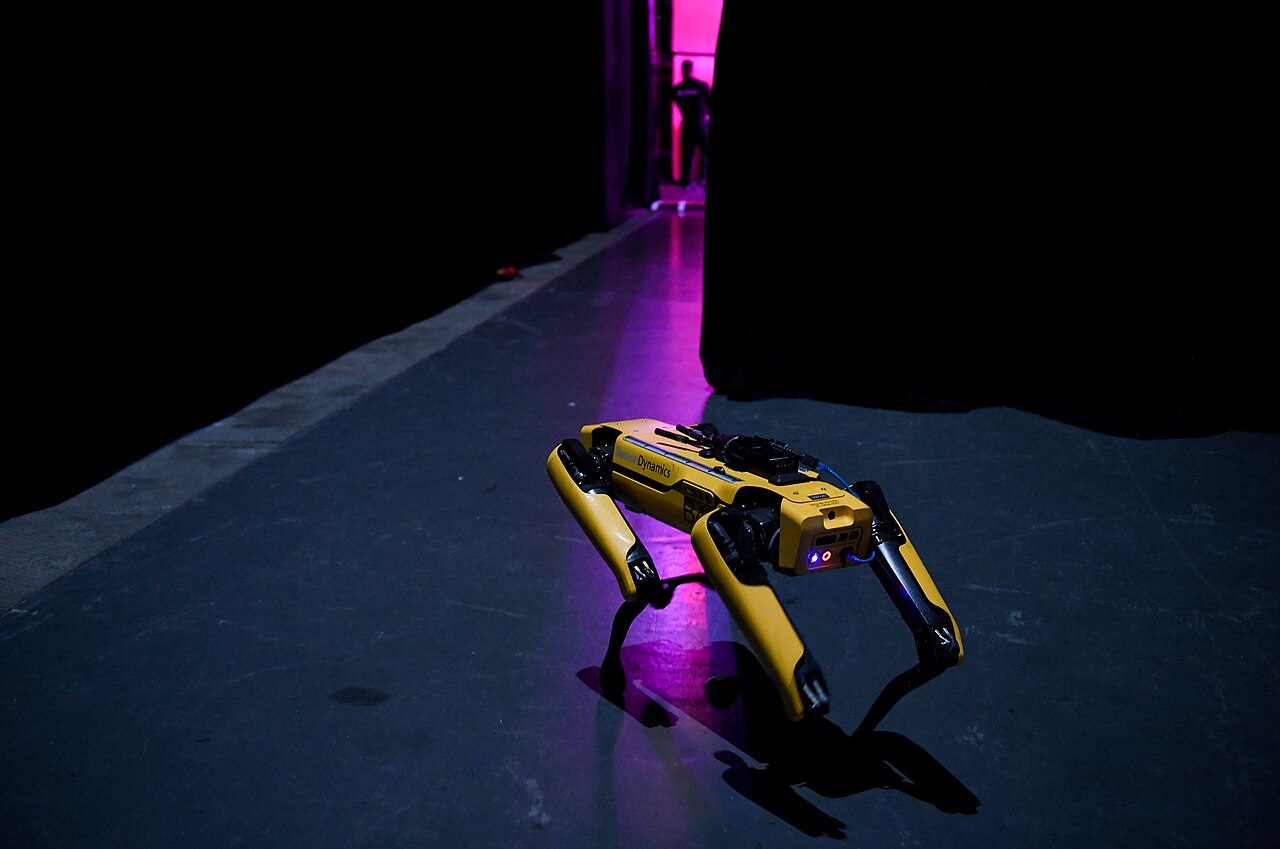
The reference workload is the inspection round: read the gauges, image the switchgear with a thermal camera, listen for abnormal sounds, check for leaks and corrosion, log everything against the asset register. Boston Dynamics built the public reference case for this work with Spot, whose deployments in power and industrial facilities are the category's most documented; ANYbotics positions its ANYmal line at the same work from the oil, gas and chemical side. Our dedicated comparison of the legged form factor, quadruped robots for inspection, covers when legs beat wheels in detail.
Explosive atmospheres change the specification
Oil and gas sites add the constraint that dominates everything else: equipment taken into classified (Ex) zones must be certified not to ignite the atmosphere. That is a property of a specific certified model and configuration, not of a product family — ANYbotics' development of ANYmal variants intended for potentially explosive atmospheres reflects how much engineering the certification takes. Buyers must verify the certificate against the zone classification of their own site, and treat any robot without one as a robot for non-classified areas only, whatever the brochure implies.
Pipelines, tanks and structures
Beyond rounds, inspection robots crawl where scaffolding used to go: in-pipe crawlers for lines that cannot be opened, magnetic crawlers on tank walls and ship hulls, and drones for flare stacks, cooling towers and transmission lines. These are different machines bought on different criteria — access geometry and sensor payload (ultrasonic thickness, visual, gas) matter more than autonomy level. What unites them with the legged platforms is the deliverable: a located, time-stamped defect record that a maintenance planner can act on.
Docks, connectivity and the unglamorous infrastructure
Inspection robots live or die on infrastructure nobody photographs. The route needs a dock where the robot charges and uploads data; large plants may need the robot to use lifts or automatic doors, which means integration with building systems, not just the robot vendor. Connectivity is thinnest exactly where inspection matters — inside steel structures, below grade, at the far end of a tank farm — so working deployments are designed store-and-forward: the robot completes its round offline, syncs at the dock, and flags urgent readings immediately when a link exists. Ask vendors to walk your actual route with a coverage survey before contract signature; discovering a dead zone at commissioning converts an autonomy project into a networking project on your budget.
The data loop is the product
A robot that walks a perfect round and produces an unreviewable video archive has automated nothing. Working deployments close the loop: readings are compared against thresholds and history, anomalies are flagged automatically, and exceptions arrive in the maintenance system as work orders with the evidence attached. Evaluate vendors on this chain — detection accuracy on your assets, false-alarm rate, integration with your asset-management software — with the same rigour as the hardware trial. The robot is the sensor carrier; the inspection programme is the system.
Buying checks for hazardous sites
Confirm certification for your zone classification, in writing, for the exact configuration quoted. Walk the intended route for the unglamorous obstacles: door sills, cable trays, grating, stairs with open risers, areas with no connectivity. Establish who responds when the robot stops mid-round at 3 a.m. — autonomous return-to-dock behaviour, remote operation, or a site visit. And price the full system: dock, sensors, software licences, integration and the connectivity the route needs, not the base platform alone.
Frequently asked questions
Why use a legged robot instead of fixed cameras for inspection?
Fixed cameras watch fixed points. A mobile robot carries several sensors — visual, thermal, acoustic, gas — to every asset on a route, including places cameras were never installed, and repeats the round identically so readings can be compared over time. Legs specifically earn their cost where the route includes stairs, gravel or grating that wheels cannot cross.
What sensors do energy inspection robots typically carry?
A visible-light camera with zoom, a thermal (infrared) camera for hotspots, microphones or acoustic imagers for leaks and partial discharge, and gas sensors matched to the site. The payload is configured per route; the platform's job is to bring the right sensor to the right asset repeatably.
Can any inspection robot work in an explosive atmosphere?
No. Only models certified for the site's zone classification may enter classified areas, and certification applies to an exact configuration. A non-certified robot — however rugged — stays outside Ex zones. Verify the certificate, not the marketing language.
How is the inspection data used after the round?
In a working deployment, readings are trended against history and thresholds, anomalies are flagged for review, and confirmed issues become maintenance work orders with the robot's images and measurements attached. If the vendor cannot show this chain, the robot is a camera on legs, not an inspection system.