
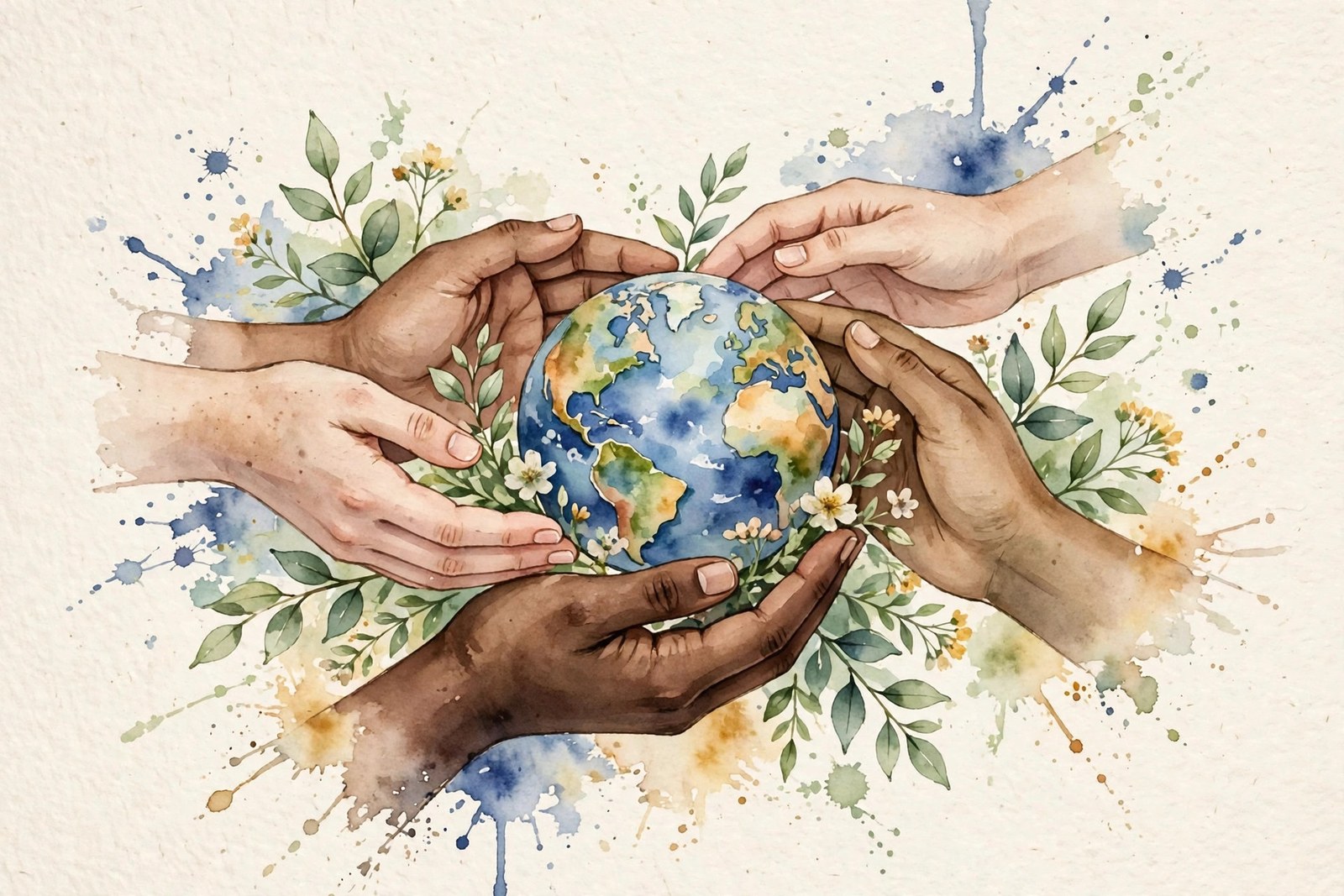
Global citizenship is a mindset
Being a global citizen doesn't require constant travel or living abroad. It's a mindset — caring about the wider world, respecting other cultures, and recognizing our shared humanity across borders.
In an interconnected world, this mindset matters more than ever. Small shifts in how we think and act ripple outward.
Habits of a global citizen
- Stay curious about other cultures, histories, and perspectives.
- Travel responsibly — respect local cultures, environments, and economies.
- Challenge stereotypes in yourself and others.
- Learn languages, even just a little, to connect across borders.
- Support local communities when you travel.
- Build cross-cultural friendships that broaden your worldview.
Start where you are
You don't need a passport to practice global citizenship. Read about other cultures, befriend people from different backgrounds in your own community, consume diverse media, and approach differences with empathy rather than judgment.
Explore our Cross-Cultural Learning lessons, build connections with our free tools, and read about why cultural curiosity is a superpower. The world needs more thoughtful, curious citizens.
What global citizenship looks like in daily life
Global citizenship is not a status you earn with passport stamps; it is a practice woven into ordinary days. It looks like the neighbor who learns how to pronounce a new colleague's name correctly instead of anglicizing it. It looks like the parent who stocks the bookshelf with stories from many cultures, or the shopper who reads the label and wonders about the hands that made the product. These are small acts, but they train the same muscle: the willingness to see the world from more than one vantage point.
Consider the dinner table. A global citizen at dinner asks where a dish comes from and listens to the answer — the migration story folded into a recipe, the reason a certain spice matters. Consider the news. A global citizen reads about a distant election and asks what it means for the people living through it, not just for markets or geopolitics. Consider disagreement. A global citizen can hold that another culture's norm feels strange while still granting it the dignity of making sense within its own context.
Five practices that build the mindset
- Follow one story across borders. Pick a global issue — climate adaptation, migration, food systems — and read about it from news sources in three different countries. The contrast in framing is itself an education.
- Learn the history they don't teach at home. Every country curates its past. Reading another nation's account of a shared historical event is one of the fastest ways to understand perspective.
- Make one cross-cultural friendship a priority. Not a contact — a friendship, with regular conversation. Shared meals, long walks, and honest questions do more than any course. Our Conversation Starter Generator can help break the ice.
- Consume culture in translation. Watch films with subtitles, read translated novels, listen to music in languages you don't understand. Art carries worldviews that essays cannot.
- Travel with a learner's posture. When you do travel, go as a student rather than a consumer. Our guide to experiencing culture authentically is a good starting point.
The hard parts nobody mentions
Global citizenship is uncomfortable by design. Truly engaging with other perspectives means encountering ideas that challenge your own — about family, fairness, faith, and freedom. The temptation is to sort every difference into "interesting" or "wrong." The discipline is to pause in the middle space and ask: what does this practice accomplish for the people who hold it? You do not have to adopt every view you encounter. But understanding must come before judgment, or it is just prejudice with better vocabulary.
There is also the humility of knowing you will get things wrong. You will mispronounce, misunderstand, and occasionally offend despite good intentions. Global citizens are not people who never err; they are people who apologize well, adjust, and keep going. Read our guide on handling cultural misunderstandings — it is essentially a manual for this exact skill.
From mindset to action
Mindset without action is just sentiment. The bridge is small, concrete commitments: supporting a local refugee resettlement organization, choosing fair-trade or ethically sourced goods when you can, writing to representatives about foreign policy you have actually researched, or mentoring a newcomer in your community. None of these require a plane ticket. They require the decision that the wider world is, in some measure, your business — because in an interconnected century, it is.
Start this week: have one conversation with someone whose background differs from yours, ask one genuine question about their experience, and really listen to the answer. Then do it again next week. Citizenship, global or otherwise, is built one interaction at a time.
Raising global citizens
If you are a parent or teacher, you have outsized influence here. Children absorb attitudes toward difference long before they can articulate them. The habits are simple: books and films from many cultures, food from many traditions at the table, friendships across backgrounds treated as normal rather than remarkable. When children hear adults speak about other cultures with curiosity rather than judgment, they internalize that posture for life.
For educators, even small classroom practices matter — a world map where students mark family origins, a "question of the week" about a different country, or pen-pal exchanges with schools abroad. Our guide to safe pen-pal exchanges can help set one up. You are not just teaching geography; you are teaching the reflex of curiosity.
Global citizenship at work
The workplace is where many adults first encounter sustained cultural difference. Global citizenship here means practical things: learning how colleagues from high-context cultures signal disagreement, not scheduling critical meetings on another culture's major holiday, and giving feedback in ways that land as intended. Our communication styles lesson is a useful primer. The professionals who thrive across cultures are rarely the most brilliant — they are the most adaptable.
A 30-day starter plan
Week one: read one article from this site's cross-cultural lessons each day and note one thing that surprised you. Week two: have two real conversations with people from different backgrounds — ask about a tradition they love. Week three: try one new cuisine, watch one foreign film with subtitles, and learn ten phrases in a new language with our Language Helper. Week four: do one concrete act — donate, volunteer, or write — that connects your mindset to the wider world. Thirty days won't make you a sage, but it will make the habit real.
The long view
Global citizenship compounds. Each conversation, each book, each trip adds a thread to your understanding, and over years those threads weave into genuine wisdom about how humans live. You will never "finish" — the world is too wide and too various. That is not a flaw in the project; it is the project. Stay curious, stay humble, and keep going.
And remember that global citizenship includes how you treat people at home. The newcomer in your neighborhood, the colleague who observes different holidays, the classmate navigating a second language — each is an opportunity to practice the same curiosity and respect you would offer abroad. The world is not only "out there"; it is also right here.
How the idea is defined by the people who teach it
Global citizenship is not just a travel mindset; it is also a formal field of education. UNESCO, the United Nations agency for education, runs a global citizenship and peace education programme that treats it as something learnable: understanding how local, national and global issues connect, respecting cultural diversity, and acting on shared problems rather than only observing them. That framing is useful because it turns a vague aspiration into teachable habits — media literacy, dialogue across difference, and knowledge of how the world actually works.
It also explains why this mindset shows up in ordinary life rather than at borders. A learner who has practised weighing another culture's viewpoint in a classroom does the same thing later in a workplace, a neighbourhood dispute, or a comment thread. The setting changes; the reflex is the same one this article's daily practices are trying to build.
Sources and further reading
- UNESCO — Global citizenship and peace education — how UNESCO frames global citizenship education and intercultural understanding
- UNESCO — What is intangible cultural heritage? — the definition of living heritage: practices, knowledge and skills communities pass on