
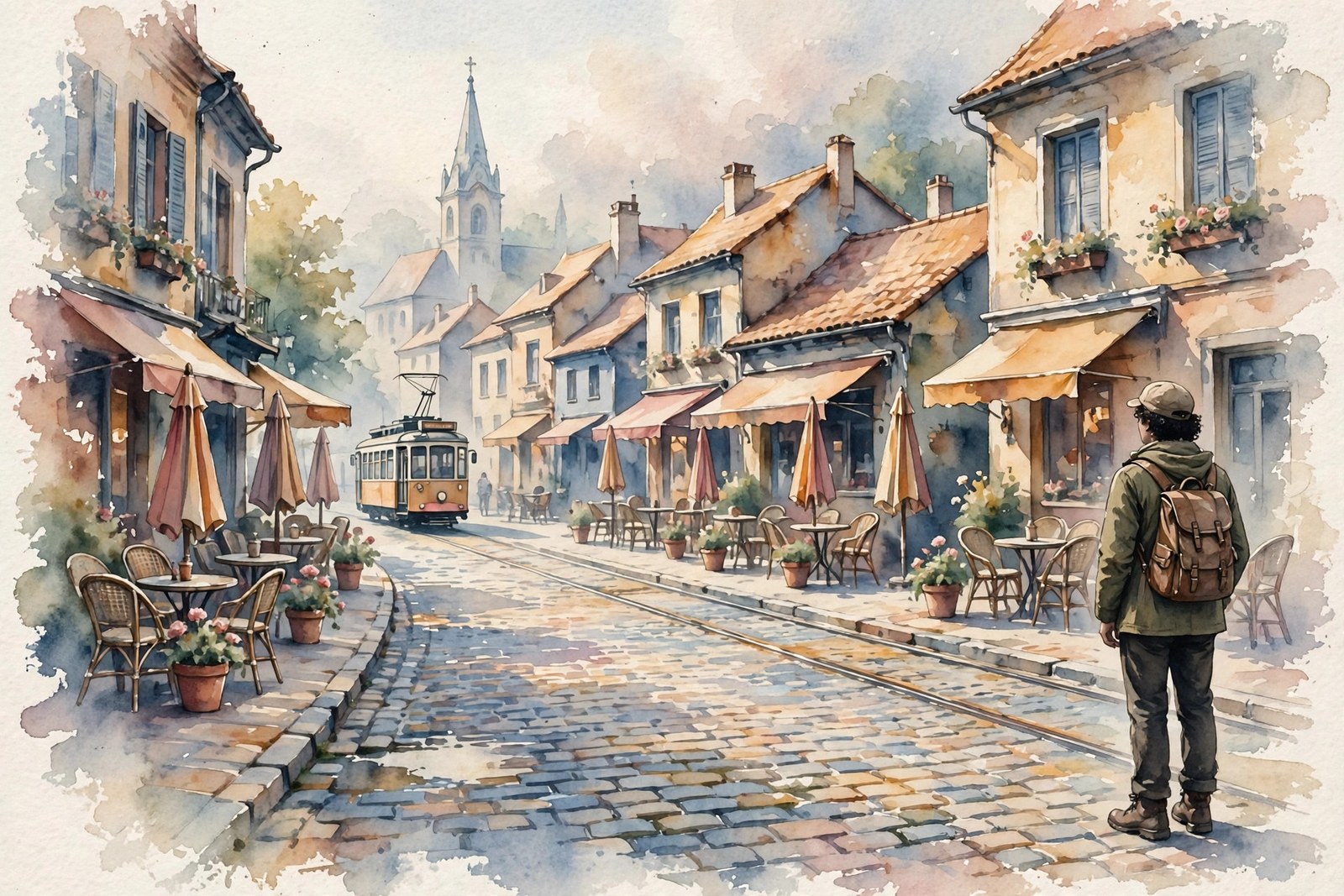
Europe rewards a little preparation
Europe packs dozens of countries, languages, and cultures into a relatively compact area, making it ideal for multi-country trips. But each country has its own customs, currency situations, and rhythms, so a little research pays off.
Trains connect much of the continent efficiently, and many countries share the euro — though not all. Knowing the basics helps you move smoothly between very different cultures.
Practical European travel tips
- Trains are excellent — often faster and more scenic than flying between nearby cities.
- Not all countries use the euro — check currencies with our Country Comparison Tool.
- Greet before you ask — a local 'hello' before requests is polite, especially in France.
- Tipping is modest — rounding up is common; large tips aren't expected.
- Shops may close midday and on Sundays in some countries.
- Validate transit tickets where required to avoid fines.
Embrace regional differences
Northern Europe tends to be more reserved and punctual; Southern Europe is often warmer, more social, and more relaxed about time. Neither is better — adapting to each makes your trip richer.
Read our guides to France, Italy, Spain, Germany, and the UK before you go, and learn about cultural differences in pace and lifestyle.
The Schengen shuffle: borders, visas, and logistics
Europe's border system confuses first-timers, but the core idea is simple: the Schengen Area (most EU countries plus a few neighbors) functions as one zone for short visits. The key rule is 90 days within any 180-day period — you can move freely between Schengen countries, but your total stay across all of them cannot exceed 90 days in a rolling 180-day window. The UK and Ireland are not in Schengen and have separate allowances, which surprises many travelers planning a grand tour.
Practical notes: carry your passport even on "borderless" travel — spot checks happen, and some countries legally require ID. Entry requirements are evolving, so check current rules before you go rather than relying on old blog posts; new electronic travel authorization systems are being introduced for visitors who previously needed no paperwork. Book accommodations with free cancellation while plans are fluid, and keep digital and paper copies of your passport, insurance, and bookings. If you are visiting non-Schengen neighbors (the UK, Ireland, the Balkans, Turkey), research each one's entry rules separately — they differ. Our multi-country packing guide and travel apps guide cover the logistics of moving between countries smoothly.
Dining culture: meals are events, not refueling
Nothing reveals Europe's regional diversity faster than dinner. In Spain, lunch is the main meal (2-4pm) and dinner rarely starts before 9pm — showing up at 6pm marks you instantly. In Italy, the multi-course structure (antipasto, primo, secondo, dolce) is a leisurely ritual, and asking for cheese on seafood pasta is a minor cultural crime. In France, meals are savored without rush; asking for the check requires catching the waiter's eye and miming a signature — bringing it unasked is considered rude. In Germany and Scandinavia, breakfast is substantial and dinner relatively light — the reverse of southern habits.
Tipping reflects this unhurried culture: service is typically included (service compris), and a few extra coins or rounding up is appreciation, not obligation — 5-10% at most for exceptional service. Café culture deserves special mention: the same coffee costs dramatically different amounts standing at the bar versus sitting at a table in Italy, lingering for hours over one drink is normal in France and Spain, and in Vienna the café is practically a second living room. Embrace the pace. The European meal is not slow service — it is the point of the evening. Our dining etiquette guide and food traditions guide prepare you for the table.
Getting around: trains, budget airlines, and the art of the city pass
Europe's transport is a superpower if you use it right. Trains are the romantic ideal and often the practical best: city-center to city-center, no security theater, scenery included. Book high-speed routes (Paris-Amsterdam, Madrid-Barcelona, Rome-Milan) in advance for the best fares — walk-up prices can triple. Rail passes pay off only on intensive itineraries; for most trips, point-to-point advance tickets are cheaper. Do the math for your specific route before buying any pass.
Budget airlines connect the continent for astonishingly low fares — with gotchas. The headline price excludes everything: baggage, seat selection, even printing your boarding pass on some carriers. Read the baggage rules obsessively (a few centimeters over can cost more than the ticket), and note that "Paris" might mean an airport an hour away. City passes bundle transit and attractions; they are worth it only if you will actually visit enough included sights — be honest with yourself. And do not overlook the simplest option: Europe's great cities reward walking above all. The best experiences — the hidden square, the perfect café, the street musician — happen between the planned stops. Budget the transport realistically with our Travel Budget Calculator and budget travel guide.
Plan around the Sunday shutdown. Across much of Europe — Germany, France, Austria, and beyond — shops close on Sundays by law or tradition, and in smaller towns Saturday afternoons go quiet too. First-timers who arrive Sunday evening to empty streets and shuttered supermarkets feel the trip has broken; it has not — you just met a culture that still protects a day of rest. Plan accordingly: stock snacks on Saturday, schedule museums and parks (which stay open) for Sunday, and embrace the slower rhythm — the long lunch, the promenade, the closed-up quiet that locals cherish. Check public holidays too, when the shutdown extends for days. Work with this rhythm instead of against it, and Sunday becomes one of your favorite days of the trip.