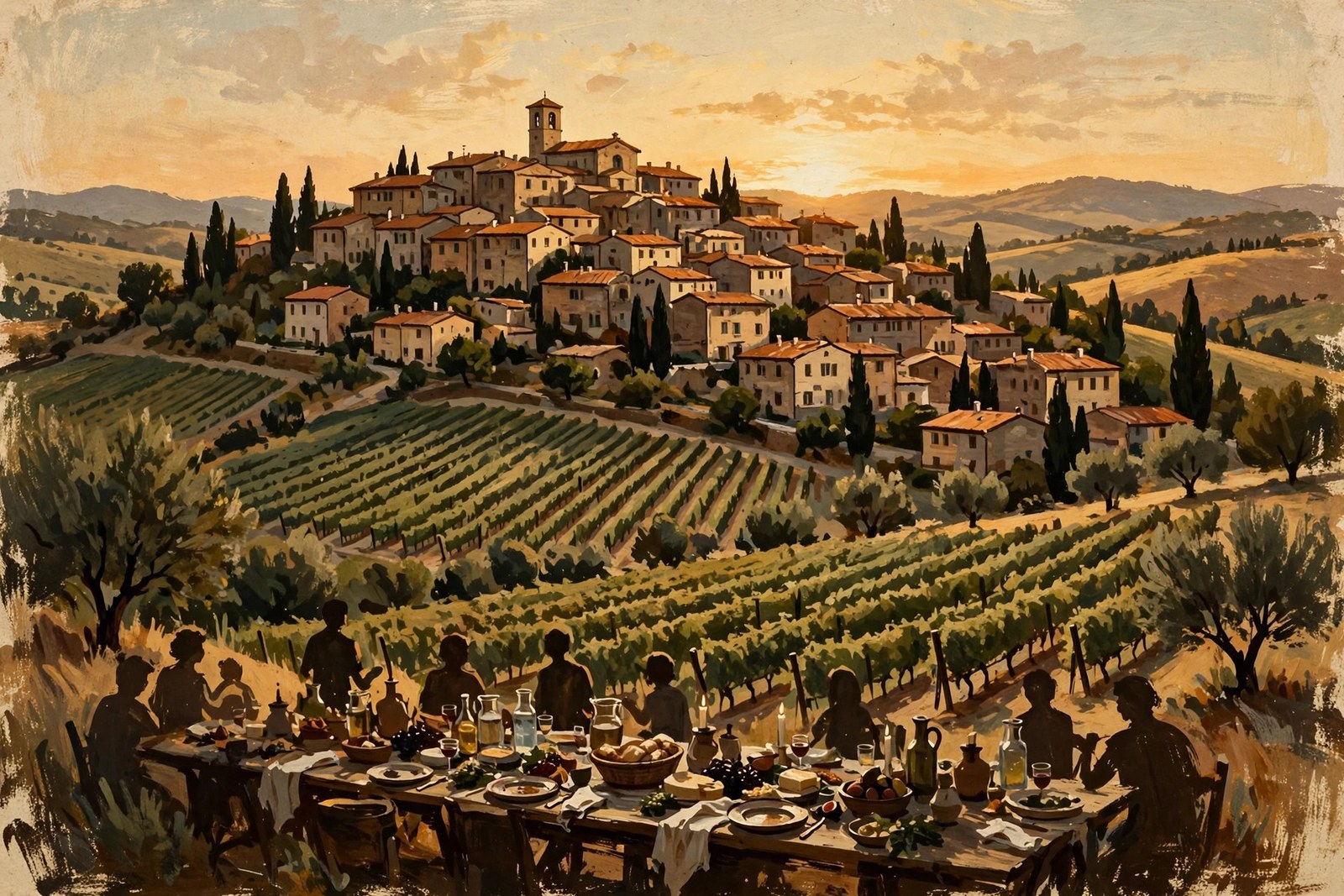
Cultural Notes & Etiquette
- Family is central, and meals are sacred social occasions. Expect warmth, animated conversation, and gestures.
- Dressing well ('la bella figura') reflects self-respect and is culturally important.
- Greetings are warm — handshakes, and cheek kisses among friends.
- Coffee culture has rules: cappuccino is a morning drink, espresso anytime.
- Relationships and personal connections often matter more than strict schedules.
Remember: these are general cultural observations to build awareness, not rigid rules. Every person in Italy is an individual shaped by region, generation, and personal experience. Lead with curiosity and respect.
Greetings & First Impressions
Among friends and family, cheek kissing (starting with the left cheek) is the warm standard greeting; in formal or first-time business settings, a handshake is appropriate. Time of day matters: buongiorno ("good day") is used until late afternoon, then buonasera ("good evening") takes over — using the wrong one marks you as a visitor instantly. Italians are expressive and warm; animated conversation and gestures are normal, not confrontational. See greetings around the world for comparisons.
Dining Customs
Italian meals follow a beloved structure: antipasto, primo (pasta or risotto), secondo (meat or fish), contorno, and dolce. A few customs to know: cappuccino is a morning drink — ordering one after lunch marks you as a tourist; never cut pasta with a knife (twirl it against the spoon or plate edge); and in formal settings, mopping up sauce with bread (fare la scarpetta) is home-style rather than restaurant behavior. Wait for "buon appetito" before beginning, and never rush — meals are social occasions.
Tipping Norms
A coperto (cover charge for bread and table service) is commonly added to restaurant bills, and some places include servizio (service charge) — check the bill before adding more. When no service charge appears, leaving a few euros or rounding up for good service is appreciated but not obligatory. Tipping is not expected at cafés when drinking standing at the bar.
Gift-Giving Notes
Bring wine, quality chocolates, or dessert when invited to dinner — and flowers in odd numbers for the host. Avoid yellow flowers (associated with jealousy) and chrysanthemums (funeral flowers). Gifts are usually opened when received. La bella figura — making a good impression — matters: thoughtful presentation of yourself and your gift counts. More ideas in our gift-giving etiquette guide.
Business vs Social Norms
Relationships come before transactions in Italian business culture; invest time in conversation and rapport before diving into business. Dress sharply — appearance is noticed and respected in professional and social life alike. Punctuality is expected in business (especially in the north), while social gatherings run on more flexible time. Animated discussion, even heated-sounding debate, is usually just enthusiasm.
Useful Italian Phrases
- Buongiorno / Buonasera — "Good day / Good evening"
- Grazie / Grazie mille — "Thank you / Thanks a lot"
- Per favore — "Please"
- Scusi / Mi scusi — "Excuse me" (informal / formal)
- Il conto, per favore — "The check, please"
- Dov'è il bagno? — "Where is the bathroom?"
Practice with our Language Helper or browse useful phrases for travelers.
Planning Around Italy's Calendar and Clock
When the country is busy or closed. Ferragosto on August 15 is the centre of a nationwide summer pause: many businesses close for the surrounding weeks, cities empty and coastal towns fill. Other national dates include Epiphany on January 6, Liberation Day on April 25, May 1, Republic Day on June 2, the Immaculate Conception on December 8, and Christmas and St Stephen's Day on December 25 and 26. Every city also closes for its patron saint's day, which differs from place to place; Rome's is June 29 and Milan's is December 7.
Working hours. Office hours are broadly 9:00 to 18:00, but outside the largest cities a long midday closure from roughly 1:00 pm to 4:00 pm is still common for shops, and some reopen into the early evening. Lunch is a real meal and a real break. Dinner is late, usually from 8:00 pm, and restaurants that are open at 6:00 pm are often serving tourists rather than locals.
Time difference, with an example. Italy uses Central European Time, UTC+1 in winter and UTC+2 in summer, so Rome is 9 hours ahead of California and 6 hours ahead of New York for most of the year. A worked example: if you want to reach a family in Florence after their dinner, around 9:30 pm their time, that is 12:30 pm in Los Angeles and 3:30 pm in New York, both easy. Reaching them during their working day from the West Coast means calling before 9:00 am Pacific. Check the spring and autumn clock-change weeks with the Time Zone Planner.
Money and tipping. Many restaurants add a coperto, a fixed per-person cover charge, and some add a service charge; where they do, further tipping is optional and a few euros rounded up is generous. Cards are widely accepted but small cafés and market stalls may prefer cash for small amounts.
Practical Do's and Don'ts
- Do dress well — Italians notice, and you will feel more at ease everywhere.
- Do validate train tickets before boarding regional trains to avoid fines.
- Don't order a cappuccino after a meal — have an espresso like the locals.
- Don't expect quick service as a slight; lingering is part of the culture — enjoy it.
Working with partners in Italy: relationships first, August in the calendar
Italian business runs on trust built between people, and the schedule bends around that fact. A first meeting that produces no signed document is not a failed meeting: it is the step that makes the second meeting productive. Foreign partners who push for terms before a counterpart has taken their measure often find the process slowing rather than accelerating. Expect conversation to range widely — region, food, family firms, football — before it narrows to business, and treat that range as due diligence being done on you, in the local style.
The calendar needs equal respect. August, built around the Ferragosto holiday in the middle of the month, is the traditional shutdown period: many small and mid-sized firms close for one to several weeks, and even large companies run reduced teams. A deadline that lands in mid-to-late August without explicit written confirmation is a deadline at risk. Ask in spring which exact weeks your partner closes, and mirror the question for the Christmas and Easter periods, when shorter slowdowns also occur.
Regional awareness rounds out the picture. Italy's industrial north and its centre and south differ in sector mix, pace, and formality, and counterparts are often proudly specific about their city or region — saying "our partners in Emilia-Romagna" lands better than a generic "our Italian partners". Lunch remains a real break in much of the country, and an invitation to eat together is a relationship signal worth accepting even when the agenda could have been an email. When you need dependable figures — on the economy, regions, or demographics — go to ISTAT, the national statistics institute, the Ministry of Labour and Social Policies, or the World Bank country page, and compare Italy with neighbouring markets using our Country Comparison Tool before you draw conclusions from a single statistic.
Sources and further reading