
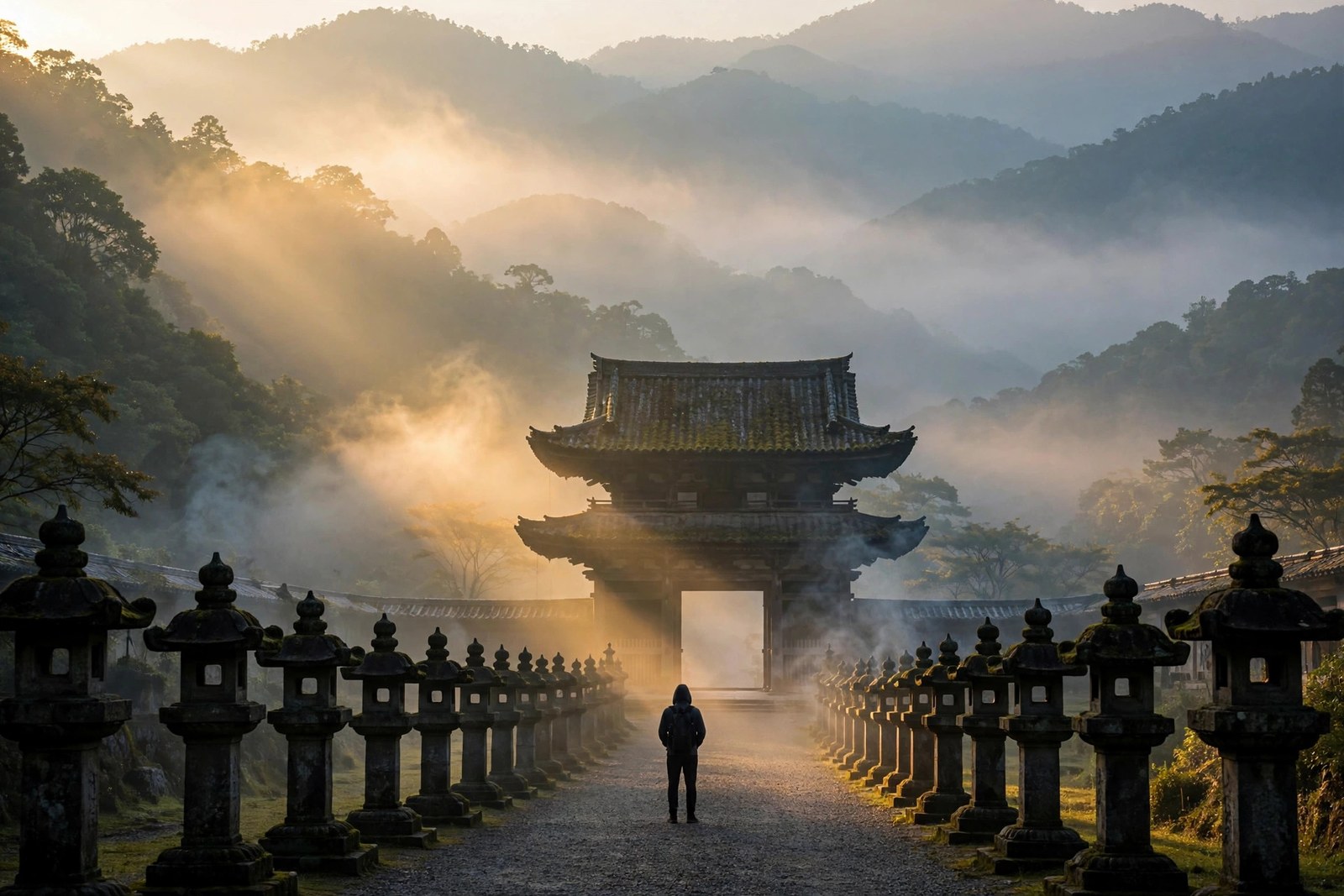
Asia is vast and wonderfully diverse
Asia isn't one culture — it spans dozens of countries with profoundly different languages, religions, cuisines, and customs. A trip to Japan feels nothing like a trip to India or Thailand. The first thing to know is to research each specific destination.
That said, some broad themes recur: respect for elders and hierarchy, the importance of 'face' and harmony, and rich traditions around food and hospitality.
Practical things to know
- Remove your shoes when entering homes and many temples.
- Dress modestly at religious sites — cover shoulders and knees.
- Learn the local greeting — a bow, a wai, or a namaste depending on the country.
- Carry cash — many places remain cash-preferred.
- Tipping varies — expected in some countries, unusual in others like Japan.
- Use both hands when giving or receiving items in many cultures.
Show respect and stay curious
Concepts like 'saving face' mean public criticism or visible anger can damage relationships. Stay calm, patient, and gracious. A warm smile and an effort to follow local customs go a long way everywhere in Asia.
Read the specific country guides — Japan, Thailand, South Korea, India, and Vietnam — before you go, and explore our Cross-Cultural Learning lessons for deeper understanding.
Sacred spaces: shoes, shoulders, and silence
Asia's temples, mosques, and shrines are among humanity's greatest treasures — and they all ask something of visitors. The nearly universal rule: remove your shoes before entering temples, mosques, and homes across much of Asia. Wear slip-on shoes and clean socks; you will be grateful a dozen times a day. Dress codes are real and enforced: cover shoulders and knees at religious sites (carry a lightweight scarf — it solves most situations), remove hats, and in mosques women typically cover their hair.
Behavior inside matters as much as dress. Keep your voice low, never point your feet at Buddha images or people (feet are considered the lowest, least clean body part across much of Asia), and do not touch anyone's head — including children's — as the head is considered sacred. Ask before photographing worshippers or ceremonies; some sites prohibit photography entirely. In Japan, observe the purification ritual at shrine entrances (rinse hands and mouth at the temizuya). In Thailand, stand respectfully for the royal anthem in cinemas. These are not obstacles to your visit — they are the visit, the living culture you came to experience. Our greetings guide covers how to show respect on arrival, and being a respectful guest extends these principles to homes.
Food as adventure: eat bravely, eat wisely
Asia rewards adventurous eaters beyond any other region — and the rules for eating well are simple. Follow the crowds: the busiest street stall is almost always the safest and tastiest, because high turnover means fresh food. Eat where the food is cooked in front of you, piping hot. This single rule lets you enjoy street food across Bangkok, Hanoi, Taipei, and Mumbai with confidence. Start gently if your stomach is unaccustomed — rich, spicy food three meals a day from day one is a recipe for regret.
Learn the local utensil basics before you need them: chopstick fundamentals (never stick them upright in rice, never pass food chopstick-to-chopstick — both evoke funeral rites), the spoon-and-fork combo of Thailand and the Philippines, eating with your right hand in India and the Middle East. Be honest about spice tolerance — "a little spicy, please" said with a smile works everywhere; macho posturing helps no one. Try everything once: the durian, the century egg, the live-octopus-adjacent dare your new friends propose. Some will be revelations, some will be stories. Both are worth it. Our food traditions guide and dining etiquette guide go deeper.
Bargaining, tipping, and money norms
Money etiquette varies enormously across Asia, and getting it wrong ranges from overpaying to offending. Bargaining: expected and enjoyed in markets across Southeast Asia, South Asia, and the Middle East — but never in malls, restaurants, or Japan and Korea, where price tags are final. Bargain with humor and a smile, settle around 60-70% of the opening price for tourist markets, and never haggle aggressively over pennies; walk away cheerfully if you cannot agree. Tipping: not customary in Japan, Korea, or China (and can confuse staff); modest in Southeast Asia (small change or 5-10% at nicer restaurants); more expected in tourist-heavy areas of Thailand and Bali.
Cash still rules in much of Asia — Japan, despite its high-tech image, remains surprisingly cash-heavy, as do markets everywhere. Carry enough local currency, but split it: some on you, some secured at your accommodation. Cards work in malls and hotels but not at street stalls. Learn the local price anchors quickly (what a street meal, a taxi ride, a bottle of water should cost) so you recognize when you are being quoted the tourist price. A currency converter app with offline mode is essential. Our foreign currency guide and multi-country packing guide cover the logistics in full.
Prepare for the super-app reality: in much of Asia, daily life runs through a handful of all-in-one apps — messaging, payments, ride-hailing, food delivery, and translation in one place. Visitors can use many of them with a foreign number, and doing so unlocks the local-priced, local-speed version of everything. Set these up before you go or on airport wifi: the dominant chat app for your destination, a translation app with offline packs and camera mode, and a maps app with offline regions. In countries where cash is fading fast, check whether visitors can use the local payment apps — policies change often. A phone set up the local way is the closest thing to a local guide in your pocket, and it costs nothing but twenty minutes of preparation.
Two official checks to make before you book anything
Asia is not one destination, and the two checks that matter most are country-specific and free. The U.S. Centers for Disease Control and Prevention maintains a Travelers' Health page for every destination, covering recommended vaccines, current health notices and practical risks such as food and water precautions; requirements differ sharply between, say, Japan and rural Thailand, so check your actual itinerary rather than the region. The U.S. State Department's country information pages are the companion check: visa and entry rules, local laws that differ from home — including medication restrictions that surprise many first-time visitors — and current safety conditions.
Do both checks before paying for flights, not after. A vaccine series can take weeks to complete, and an entry rule discovered at check-in is the most expensive kind. National tourism organisations, such as Japan's official tourism site below, are the third leg: reliable, current guidance on etiquette, transport and seasons from the country itself.
Sources and further reading
- CDC — Travelers' Health — destination-specific health notices and vaccine guidance from the U.S. Centers for Disease Control and Prevention
- U.S. Department of State — Country Information Pages — official entry requirements, safety information and local laws for every destination
- Japan National Tourism Organization — Japan's official tourism site, including etiquette and seasonal guidance