
Short answer: automotive manufacturing remains the deepest and most demanding market for industrial robots — the traditional strongholds of welding, painting and materials handling are mature, and the new purchasing energy is elsewhere: battery pack and electric-drive production lines created by the EV transition, flexible cells for tier suppliers, and, at the edges, publicly reported humanoid pilots in car plants. The robot population in car factories is not shrinking; its centre of gravity is moving from the body shop toward the battery line.
The established map: body, paint, assembly
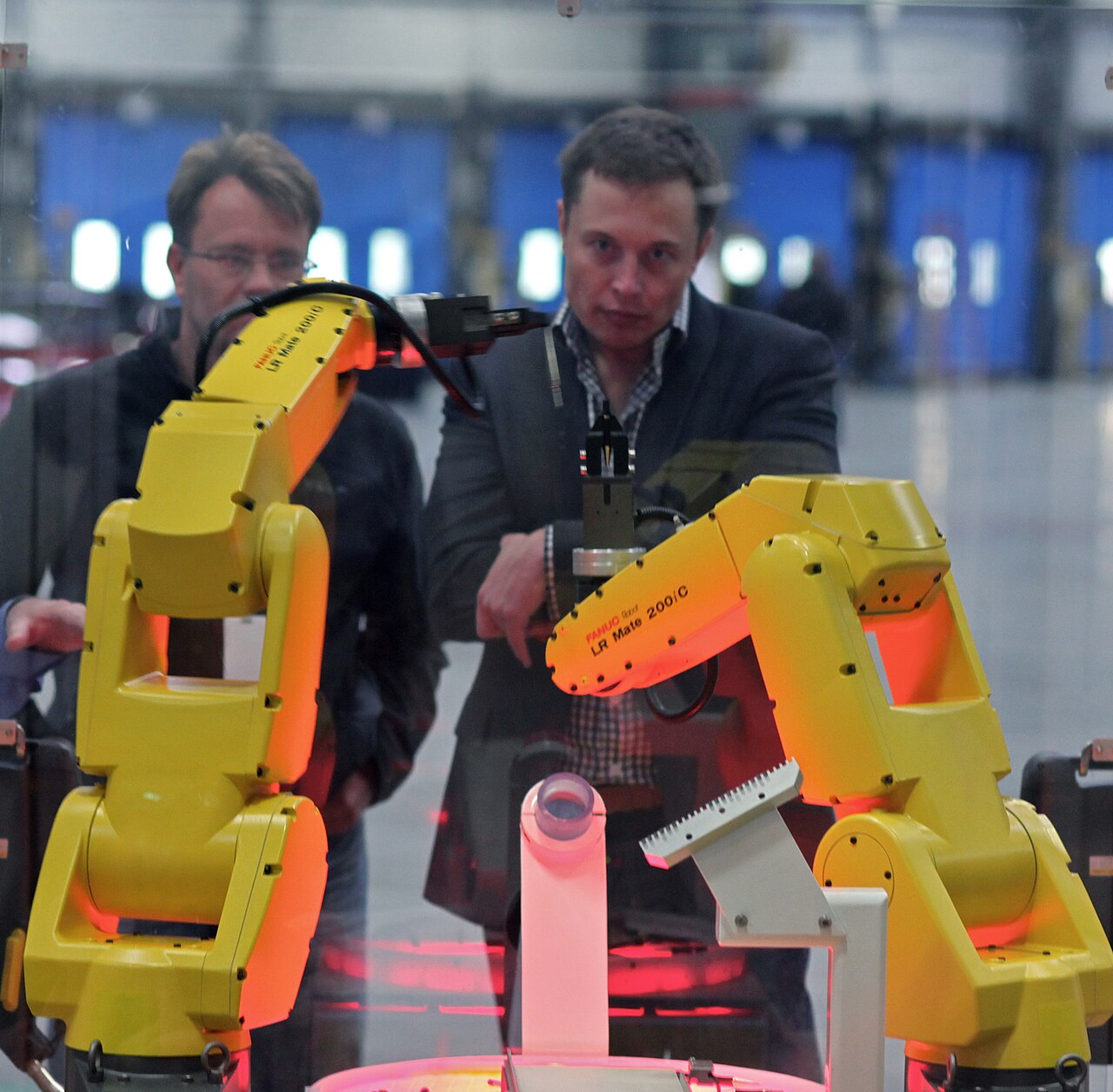
The classic automotive robot map is stable. Spot welding in the body shop is the historical heartland of makers such as KUKA and FANUC. Paint shops run sealed, specialised robots where consistency and explosion protection dominate. Final assembly uses robots more selectively — heavy assists, glazing, wheel and seat handling — because variety and soft materials punish rigid automation. Any supplier pitch that presents these areas as undiscovered territory should be treated with suspicion; the interesting question is always what is changing, and in automotive the change is the powertrain.

The EV shift: battery and e-drive lines
Electric vehicles delete engine and gearbox machining and add a different factory: cell handling, module and pack assembly, heavy pack lifting and positioning, leak and electrical testing, and e-motor production with its hairpin winding and precise stacking work. These lines bring new robot requirements — large-payload handling with high repeatability for packs, clean and careful handling for cells, and stringent traceability throughout. For component and integrator suppliers, this is where greenfield automotive money now concentrates, and it is a large part of why the directory's complete robots and platforms category keeps deepening around automotive-grade machines.
Humanoid pilots: why car plants went first
It is not an accident that the most discussed humanoid trial is in a car factory: Figure AI's Figure 02 has been publicly reported on trial at BMW's Spartanburg plant, on bounded parts-handling work. Car plants offer pilots what they need — high volumes of a few repeatable tasks, workstations built to human dimensions, strong safety systems, and engineers who measure everything. Our broader survey of humanoid robots in warehouses and factories puts that trial in context: real, supervised, and narrow — a measurement exercise, not a workforce.
The tier-supplier opportunity
Below the carmakers sits the larger, quieter market: thousands of tier-1 to tier-3 suppliers whose volumes are lower and part variety higher. Their automation pattern differs — collaborative robots, compact welding and machine-tending cells, vision-guided handling — and their buying process is more price- and payback-sensitive. For robot and component suppliers, this tier is where flexible, quickly deployed cells win, and where service proximity matters as much as specification. It is also the segment least visible in launch headlines and most visible in order books.
What this means for suppliers
For suppliers selling into automotive, the practical map redraws itself around three facts. First, the growth programmes are electrification programmes: battery handling, pack assembly and e-drive production are where new lines are funded, and they reward suppliers who can evidence traceability and electrical-safety competence, not just cycle time. Second, the carmakers' own trials — humanoids included — are run as measurements; suppliers who bring operating data rather than demonstrations get heard. Third, the tier base remains the volume business: flexible cells, fast changeover and nearby service win orders that never make press releases. Suppliers positioning for this market can map their competition and customers in the directory's robotics directory — 631 robotics companies across 35 countries as of 10 November 2026 — and state their automotive focus directly in a procurement request profile that buyers in the sector actually read.
The same logic applies at smaller scale. The supplier regions that built their names on conventional powertrain work — machining, stamping, fixtures — are repositioning around battery trays, e-motor housings and thermal components, and their automation needs follow: more inspection, more traceable joining, gentler handling of expensive parts. For equipment and integration suppliers, tracking where the carmakers and their tiers announce capacity is the cheapest market research in the industry, because in automotive, announced capacity is automation demand with a date on it.
Frequently asked questions
Which automotive processes use the most robots?
Body-shop welding remains the densest robot application — a modern body line uses large numbers of articulated arms for spot welding and handling. Painting is the second stronghold, with specialised sealed robots. Materials handling runs throughout. Final assembly uses fewer robots because part variety and soft materials are harder to automate. Battery pack and e-drive production for electric vehicles is the fastest-growing addition to that map.
Are humanoid robots building cars now?
Not in production terms. What exists are publicly reported pilots — most prominently Figure AI's Figure 02 trial at BMW's Spartanburg plant, on bounded tasks such as moving parts. These programmes measure whether a humanoid can hold a real task at a real cycle time under factory safety rules. That evidence matters, but no carmaker has announced humanoids as part of its production workforce.
How is EV production changing what robots car plants buy?
Electric vehicles remove engine and transmission machining and add battery and e-drive lines. That shifts demand toward large-payload, high-repeatability handling for battery packs, careful automated handling of cells and modules, electrical and leak testing automation, and precise processes such as hairpin stator production. It also raises the traceability bar: every pack operation is expected to be logged, which pulls vision and software deeper into the cell.
What automation do small auto-parts suppliers actually buy?
Typically compact, flexible equipment rather than body-shop scale systems: collaborative robots for machine tending and assembly assists, small robotic welding cells, and vision-guided handling — chosen for quick changeover between part variants and short payback. Service proximity and simple programming weigh heavily, because a tier supplier's engineering team is small and the line cannot wait a week for support.