
The short version: CoRL 2026, the tenth edition of the Conference on Robot Learning, runs November 9-12 in Austin, Texas. The main conference takes place November 9-11, followed by a full workshop day on November 12. Organizers received a record 2,094 submissions and accepted 687 papers. Three keynotes frame the field's central argument this year: whether robots should learn by building internal models of the world, or by absorbing ever-larger volumes of real-world demonstrations - and a 32-workshop program shows where the work is actually heading.
What CoRL is
The Conference on Robot Learning (CoRL) is an annual international conference focused on the intersection of robotics and machine learning, in the words of its own welcome page. It is the field's flagship venue: the place where university labs, industrial research groups and robotics startups present peer-reviewed work on how robots perceive, decide and act. Accepted papers appear in the Proceedings of Machine Learning Research (PMLR), and every accepted paper is presented in the poster sessions, with selected papers invited for oral spotlight presentations. The 2026 edition is the conference's tenth.
What sets CoRL apart from larger robotics meetings is its single-minded scope. General robotics conferences cover everything from mechanical design to field deployments; CoRL is about learning - the data, models and training methods that turn a robot from a programmed machine into one that improves from experience. That focus is why the conference has become a leading indicator for the commercial robotics industry: techniques that dominate CoRL programs tend to show up in products two to three years later.
The 2026 edition in numbers
The headline figures, as announced by the conference and its program chairs:
- Dates and format: November 9-12, 2026. Main conference November 9-11; workshops November 12.
- Submissions and acceptances: 2,094 submissions - a record for the conference - with 687 papers accepted.
- Venues: the conference is split across three Austin locations. The JW Marriott Austin hosts poster sessions, exhibits, lunch and breaks; the Hilton Austin hosts presentations and keynotes on days one and two; Bass Hall at the University of Texas at Austin hosts the reception and the day-three keynote.
- Workshops: 32 accepted workshops on the final day, covering everything from dexterous manipulation to surgical autonomy (we break the full list down in our workshop analysis).
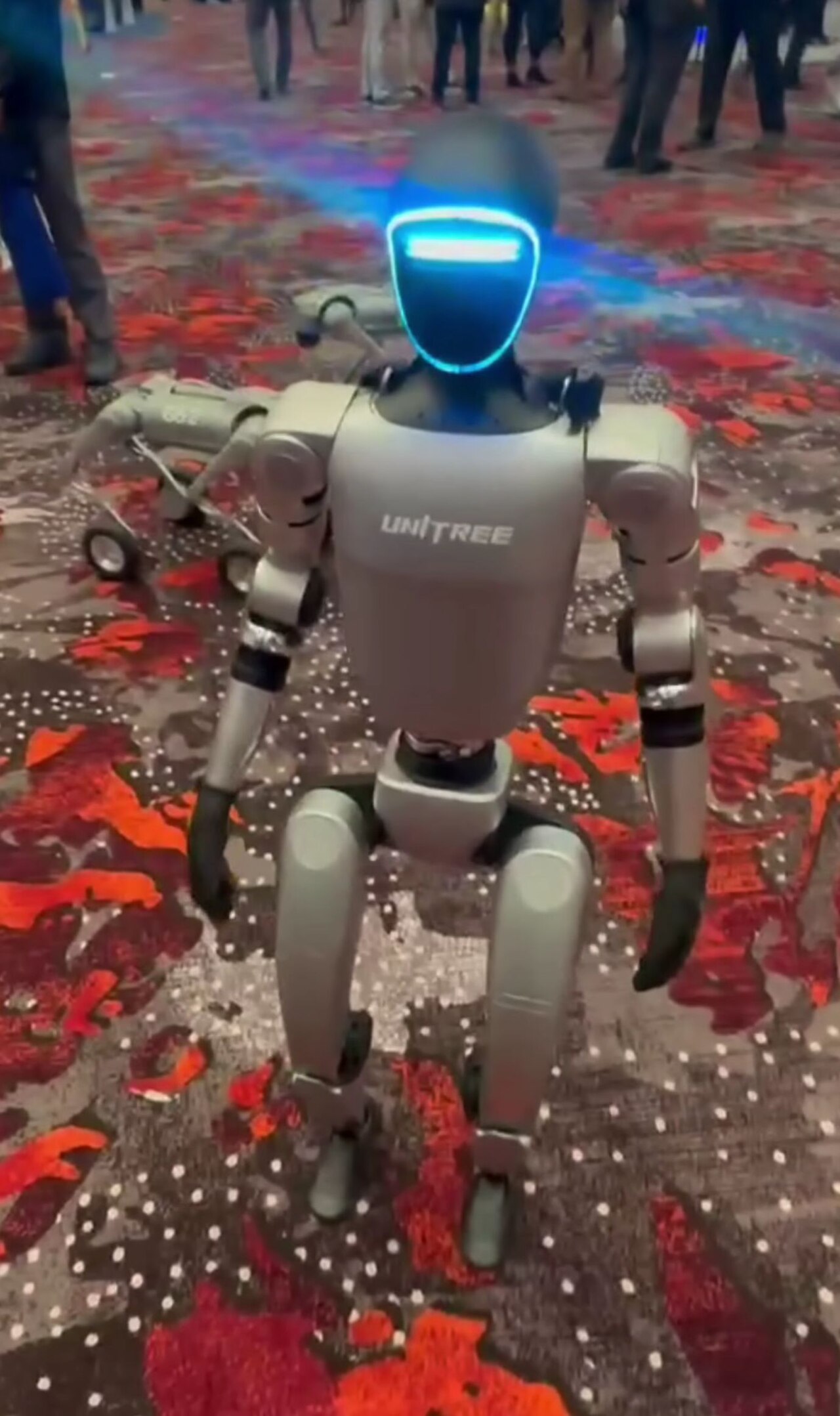
- Demos: a live demo program runs alongside the papers - robots performing tasks on the exhibition floor, not just results on slides.
The keynotes frame the field's argument
This year's keynote program is unusually pointed. Fei-Fei Li of Stanford University, founder CEO of World Labs, presents "Atlas: A Unified World Model for Generation and Reconstruction" - a case that robots need learned internal models of how the world looks and evolves. The second half of her session is a fireside chat with Lisa Su, Chair and CEO of AMD, a pairing that itself signals how closely robot learning now sits to the compute industry.
Russ Tedrake, the Toyota Professor at MIT and co-founder and CEO of Walden Robotics, gives the counterweight keynote, "Learning in the factories". Tedrake - formerly Senior Vice President of Large Behavior Models at the Toyota Research Institute - argues from deployment: Walden Robotics put its first robot into a live production environment two months after the company started in January 2026, and his talk examines how robot performance scales with real deployment data. We compare the two positions in depth in World Models vs. Behavior Models.
The third keynote, "Challenges to Realize Embodied AI" by Wolfram Burgard of the University of Technology Nuremberg, covers the ground both camps share: no sensor or actuator is perfect, so robots must handle uncertainty - combining probabilistic methods, deep learning and foundation models. The program also includes three early-career keynotes, among them Negar Mehr of UC Berkeley, and a special panel on paths to commercially viable generalist robots, hosted by Vincent Vanhoucke with panelists including Chelsea Finn, Pulkit Agrawal, Leslie Kaelbling, Marc Toussaint, Edward Johns and Yonatan Bisk.
What the program is about this year
Read as a whole, the 687 papers, three keynotes and 32 workshops cluster around a clear set of themes:
- Robot foundation models - large pretrained policies and the open problems around them: memory, efficiency for real-time control, and what makes a pretrained policy adaptable.
- World models - learned simulators of physical environments, including an entire workshop staged as a debate: "Do Robots Need World Models?"
- Data, and where it comes from - human-to-robot transfer, learning from human videos, learning from imperfect data and from corrections, and handheld data-collection devices.
- Dexterous manipulation - bimanual tool use, contact-rich tasks and fine-grained ways to measure manipulation skill beyond binary success.
- Simulation and transfer - GPU-accelerated simulation and sim-to-real methods aimed at field deployment, not just laboratory benchmarks.
- Robots among people and in regulated settings - human-centered robot learning, physical AI safety, agile human-robot interaction and a dedicated workshop on the path to surgical autonomy.
Why industry shows up
CoRL began as an academic meeting, but the sponsor roster on the official site now reads like an industry directory: Google DeepMind, NVIDIA, Meta, Tesla, Boston Dynamics, GM, AGIBOT, Franka Robotics, Unitree, OpenAI, Apple, Amazon and the Toyota Research Institute all appear as sponsors. Platform companies use the week for product news as well as recruiting - NVIDIA chose CoRL to launch GR00T 2, its open world action model for humanoids, and Isaac Lab 3.0, as we covered in Robotics Funding Daily. For buyers, the practical consequence is a shorter gap between research and product: the methods debated in Austin this week are the ones robotics vendors will be selling against within a few product cycles.
What to watch after Austin
Three questions will decide how much of CoRL 2026 becomes commercial reality. First, whether world models or behavior models - or the hybrid most labs quietly pursue - produce the first broadly reliable general-purpose robot policies. Second, whether the data problem gets cheaper: several workshops this year are devoted to learning from imperfect, corrected or human-video data rather than pristine demonstrations. Third, whether evaluation keeps pace: a field that grades itself on fine-grained capability, safety and deployment learning, rather than demo videos, is a field whose products buyers can trust. We track the companies working on all three in the GlobleMatch robotics directory.
Frequently asked questions
When and where is CoRL 2026?
CoRL 2026 runs November 9-12, 2026 in Austin, Texas, US. The main conference is November 9-11 and the workshops are on November 12, across the JW Marriott Austin, the Hilton Austin and Bass Hall at the University of Texas at Austin.
How many papers were accepted at CoRL 2026?
The conference received a record 2,094 submissions and accepted 687 papers, according to the program chairs' announcements. All accepted papers are presented in poster sessions, with selected papers given oral spotlight presentations.
What is CoRL?
The Conference on Robot Learning (CoRL) is an annual international conference on the intersection of robotics and machine learning. The 2026 edition in Austin is its tenth. Accepted papers are published in the Proceedings of Machine Learning Research.
Sources
- CoRL 2026 official site - dates, venues, sponsors: corl.org
- CoRL 2026 keynotes - speakers, talk titles and abstracts: corl.org/program/keynotes
- CoRL 2026 accepted workshops - the full list of 32: corl.org/program/workshops
- CoRL 2026 instructions for authors - PMLR proceedings, poster and spotlight format, tenth-edition proceedings line: corl.org
- Submission and acceptance figures - program chair announcements, via alphaXiv CoRL 2026 and Physical AI Lab
- Early-career keynotes and Berkeley participation: BAIR blog
- Keynote framing and the world-model vs. behavior-model debate: TechTimes