
The short version: robot learning is splitting into two research bets. World models teach a robot an internal model of how the physical world changes, so it can imagine outcomes and plan inside the model. Behavior models skip the internal simulator and train large policies directly on demonstrations, so perception maps to action end to end. At CoRL 2026 in Austin, the two positions headline the same keynote program - Fei-Fei Li presenting World Labs' Atlas world model, Russ Tedrake presenting factory-learned behavior models - and the honest reading of the program is that the field expects the answer to be a combination, priced and proven in deployment.
The two bets, defined
A world model is a learned model of the environment's dynamics: given the current state of a scene and a candidate action, it predicts what happens next. Modern versions are generative - they synthesize future video frames or reconstruct 3D scenes - and a robot can use them to plan (test actions in imagination before moving), to generate training data, or to evaluate policies without touching hardware. Fei-Fei Li's CoRL keynote defines the current state of the art: Atlas, from her company World Labs, is "an autoregressive frame generation model that unifies pixel generation and 3D scene reconstruction" - the model both imagines the scene and rebuilds it in 3D.
A behavior model is a policy trained by imitation: humans demonstrate tasks - by teleoperating robots, guiding them by hand, or wearing data-collection devices - and a large neural network learns the mapping from observations to actions. Russ Tedrake spent years leading this program as Senior Vice President of Large Behavior Models at the Toyota Research Institute before co-founding Walden Robotics in January 2026. His CoRL keynote, "Learning in the factories", asks "how do we make large models for manipulation useful in real applications, and what value can real-world deployments bring back to the models?"
The case for world models
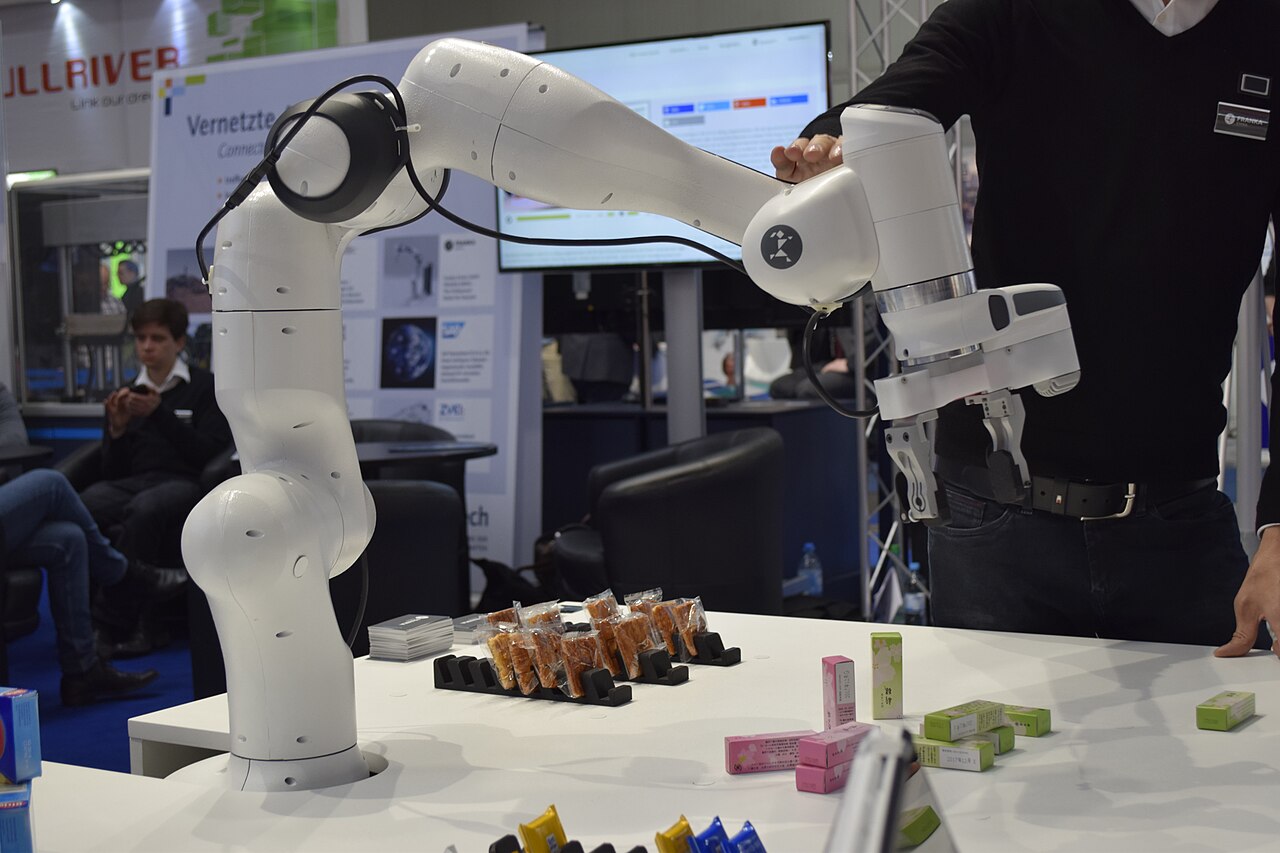
The world-model argument is about leverage. Real robot data is slow and expensive to collect; a good world model multiplies it. A robot that can imagine can rehearse thousands of variations of a task in simulation-like rollouts, probe rare and dangerous situations without risking hardware, and plan several steps ahead instead of reacting. World models also promise a path around the embodiment problem: video and 3D data exist at internet scale, while robot demonstration data does not, so a model that learns physics from video could transfer across robot bodies.
The CoRL 2026 program shows how much infrastructure is forming around the bet. Three of the 32 workshops are devoted to world models directly - "Bringing Physics Simulation and World Models Together for Robotic Manipulation", "Modeling Uncertainty in Robotic World Models" and "Grounded 4D Multimodal World Models for Autonomous Driving Decision Making" - and a fourth stages the argument itself: "Do Robots Need World Models? A Debate on Dynamics Learning, Planning, and End-to-End Robot Learning". Platform companies are shipping the idea: NVIDIA launched GR00T 2 at this conference under the label "open world action model", trained on data including 100,000 hours of open egocentric video, as we reported from The Robot Report's coverage.
The weaknesses are equally specific. A generative model can produce plausible-looking futures that are physically wrong - contact, friction and deformation are exactly where manipulation succeeds or fails, and they are the hardest dynamics to learn. Planning inside a flawed model compounds its errors. And evaluating a world model is itself unsolved: a beautiful imagined rollout is not evidence the real robot will succeed.
The case for behavior models
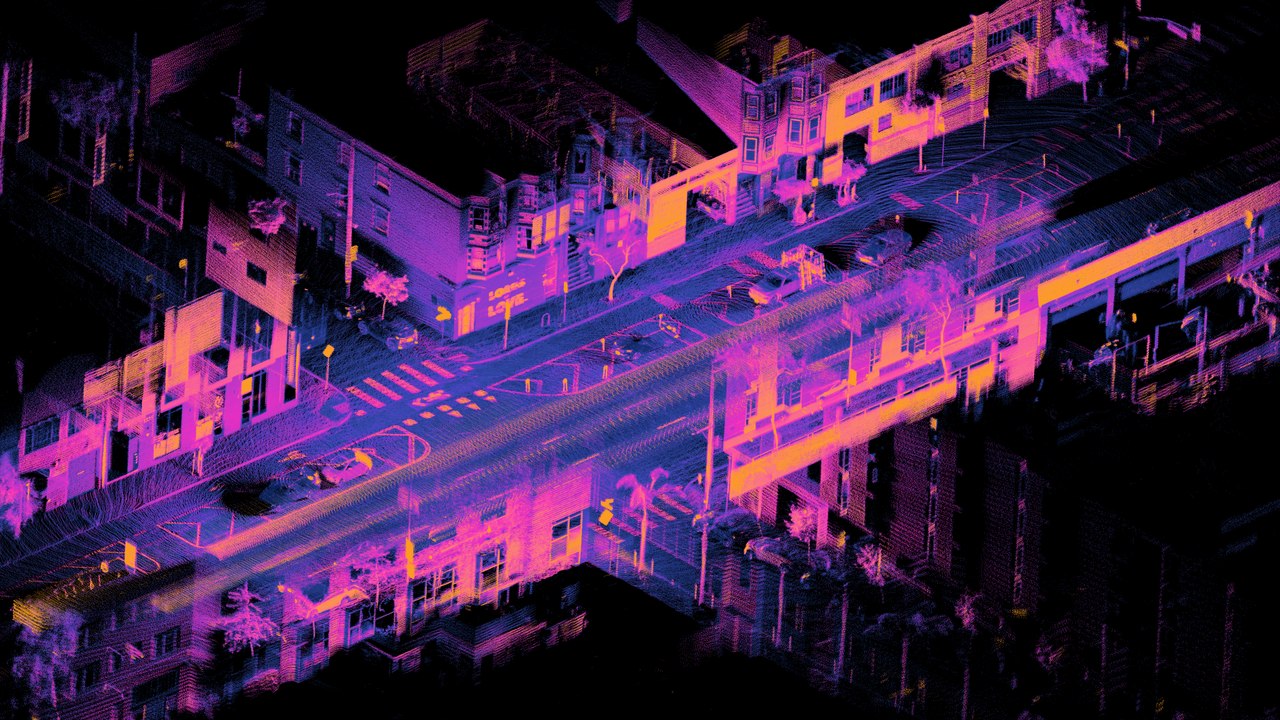
The behavior-model argument is about grounding. A policy trained on real demonstrations has learned from physics itself, not from a model's guess about physics - every friction, slip and compliance effect is in the data because it happened. And the approach has a scaling story of its own: fine-tuned large behavior models need far less task-specific data than training from scratch, with TechTimes reporting figures of 3-5x less task data for fine-tuned models in its CoRL preview. Tedrake's Walden Robotics adds the deployment loop: the company deployed its first robot into a live production environment two months after starting, on the conviction, in his keynote abstract's words, that "the best physical AI will be built via a continuous cycle of deployment and learning grounded in real work." Every shift a deployed robot works becomes training data no laboratory can synthesize.
The workshops back the data-centric reading of the field. "Scaling H2R" examines scaling laws and diversity in human-to-robot data; "From Human Videos to Dexterous Robot Capability" is a hands-on tutorial on turning human video into robot skill; "The UMI Olympics" benchmarks handheld data-collection devices; and two workshops - "Oops, I Erred", on learning from imperfect data, and "Learning from Corrections and Interventions" - start from the premise that demonstrations will be flawed and systems must learn anyway.
The weaknesses mirror the strengths. Demonstration data is the most expensive data in AI: it requires robots, operators and time, and it is bound to the specific robot and setting that collected it. A behavior model can interpolate brilliantly inside its data and fail silently outside it, and when it fails there is no internal model to interrogate about why. The factory flywheel is powerful precisely because it is narrow - its owner gets better at their tasks, in their facilities, on their robots.
Where the two camps actually meet
Read the full CoRL program and the debate looks less like a fork than a stack. The workshop "Sim-to-Real-to-Field" and the session on GPU-accelerated simulation for real-world policy learning exist to move policies between imagined and physical worlds. NVIDIA's own label - "world action model" - fuses the two terms into one product category. Wolfram Burgard's keynote argues for combining probabilistic methods, deep learning and foundation models rather than choosing one. And the special panel on commercially viable generalist robots, with Chelsea Finn, Pulkit Agrawal, Leslie Kaelbling and others, is framed around products, where the only metric that survives is whether the robot does the job.
The practical synthesis most serious teams describe is sequential: pretrain on the broadest data available (video, simulation, world models), fine-tune on real demonstrations for the target task, then keep learning from deployment. Which layer contributes most is the genuine open question - and it is an empirical one, which is why this year's program pairs the debate with workshops on fine-grained capability diagnostics ("Beyond Binary Success") and learning at deployment time ("Learn@Deploy").
What this means if you buy or fund robots
- Ask where the training data comes from. A vendor's data flywheel - demonstrations, deployment logs, simulation, video - is its real moat, and the answer predicts how fast it improves on your tasks.
- Ask how performance is measured. Binary demo success hides capability gaps; fine-grained task diagnostics and failure reporting are the sign of a team that knows its model's limits.
- Ask what happens after deployment. Systems designed to learn from corrections and interventions improve in your facility; frozen policies depreciate there.
- Discount any claim that one approach has already won. The people building both keynotes are still arguing the question in public, with data - that is what a healthy, pre-consensus field looks like.
Our directory tracks companies across both camps - embodied-AI model builders, humanoid makers and the component suppliers underneath them - in the GlobleMatch robotics directory. For the full conference picture, see CoRL 2026 in Austin, explained.
Frequently asked questions
What is a world model in robotics?
A world model is a learned model of how an environment changes over time. Given a scene and a possible action, it predicts what happens next - generating future frames or reconstructing 3D structure - so a robot can plan, rehearse tasks in imagination, or generate training data without running the physical robot.
What is a behavior model in robotics?
A behavior model is a robot policy trained by imitation on demonstrations: humans perform or guide tasks, and a large neural network learns to map observations directly to actions. Large behavior models are pretrained across many tasks and then fine-tuned with much smaller amounts of task-specific demonstration data.
Which approach is winning?
Neither has won. At CoRL 2026 the two approaches headline opposing keynotes, share workshop infrastructure (simulation, data, evaluation), and are combined in industry products such as NVIDIA's "world action model" framing. The field's working consensus is a stack: broad pretraining, real demonstration fine-tuning, and continued learning from deployment.
Sources
- CoRL 2026 keynotes - Li's Atlas abstract, Tedrake's "Learning in the factories" abstract and biography, Burgard keynote: corl.org/program/keynotes
- CoRL 2026 accepted workshops - world-model, data and evaluation workshop titles: corl.org/program/workshops
- Keynote framing, fine-tuned behavior-model data figures, and the AMD-World Labs context: TechTimes, November 9, 2026
- NVIDIA GR00T 2 and Isaac Lab 3.0 launch at CoRL: The Robot Report
- CoRL 2026 program overview - dates, venues, submission and acceptance figures: corl.org; Physical AI Lab