
GlobleMatch Global Launchpad · Featured Brand
Xinliji Vacuumglass Technology (北京新立基真空玻璃) — Vacuum Glass, Photovoltaic Vacuum Glass & Vacuum Windows
Headquartered in Beijing, Xinliji Vacuumglass Technology was founded by Professor Tang Jianzheng — the inventor of vacuum glass — and the core team of the former Beijing Vacuum Glass Technology Research Institute. Its glass insulates like a thermos flask: a heat-transfer coefficient as low as 0.4 W/m²K and 39 dB of sound insulation, in a pane about 10 mm thin.
Three product lines — vacuum glass, photovoltaic vacuum glass that also generates power, and vacuum window systems — serve energy-saving buildings, new-energy vehicles, high-speed rail, cruise ships and cold-chain appliances. The team behind Xinliji drafted China's vacuum glass standards and built the world's first vacuum glass production lines.

Vacuum glass works on the thermos-flask principle: a vacuum layer between two panes all but stops heat and sound — the technology Xinliji's founders invented and industrialized. (Brand image.)
From the Inventor's Lab to the Production Line
Xinliji Vacuumglass Technology was founded by Professor Tang Jianzheng, known as the father of vacuum glass, who led the main members of the original R&D team of the Beijing Vacuum Glass Technology Research Institute to build the company in Beijing, with its production base in Tangshan, Hebei Province. The team brings 20 years of experience in vacuum glass research, manufacturing and industrialization.
Today the company runs three core product lines — vacuum glass, photovoltaic vacuum glass, and vacuum doors and windows — at an annual production capacity of 30,000–50,000 square meters, holding more than 30 independent intellectual-property rights, including invention and utility-model patents. Its people drafted the Chinese vacuum glass standard JC/T 1079-2008 and the national standard GB/T 38586-2020, and designed and built the world's first four generations of vacuum glass production lines.
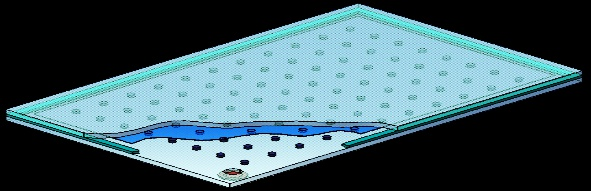
Inside a vacuum pane: two sheets of glass, a vacuum layer held apart by micro-supports, hermetic edge sealing and a Low-E coating. (Brand diagram.)
The applications reach well beyond buildings: flexible photovoltaic vacuum glass for electric vehicles, sound-insulating glass for high-speed rail and cruise ships, and anti-condensation glass for refrigerated display cabinets, wine cabinets and freezers — anywhere a transparent surface has to hold temperature and keep quiet.
Three Product Lines

Vacuum Glass
The flagship pane. At about 10 mm thick it reaches a heat-transfer coefficient of 0.5 W/m²K (down to 0.4 in the company's best specification) and weighted sound insulation of 39 dB — against 0.8 W/m²K and 33 dB for a 47 mm triple-glazed unit — while transmitting 80% of visible light and weighing 25 kg/m² instead of 40. Energy savings over insulating glass run above 40%, the tempered construction solves the safety problem of large panes, and the low heat transfer means no condensation in freezers and refrigerators.

Photovoltaic Vacuum Glass
Glass that generates power while it insulates. For vehicles, flexible photovoltaic vacuum glass (K value 0.7 W/m²K, 35 dB sound insulation, adjustable 10–70% transparency) serves as panoramic skylights, side windows and rear windshields — generating roughly 1–3 kWh a day to counter EV parking drain and range anxiety. For buildings, the photovoltaic vacuum glass (K value 0.6, 39 dB, about 1–2 kWh per square meter per day) turns curtain walls and sunrooms into power-generating, heat- and sound-insulating surfaces for BIPV and near-zero-energy buildings.
Vacuum Window Series
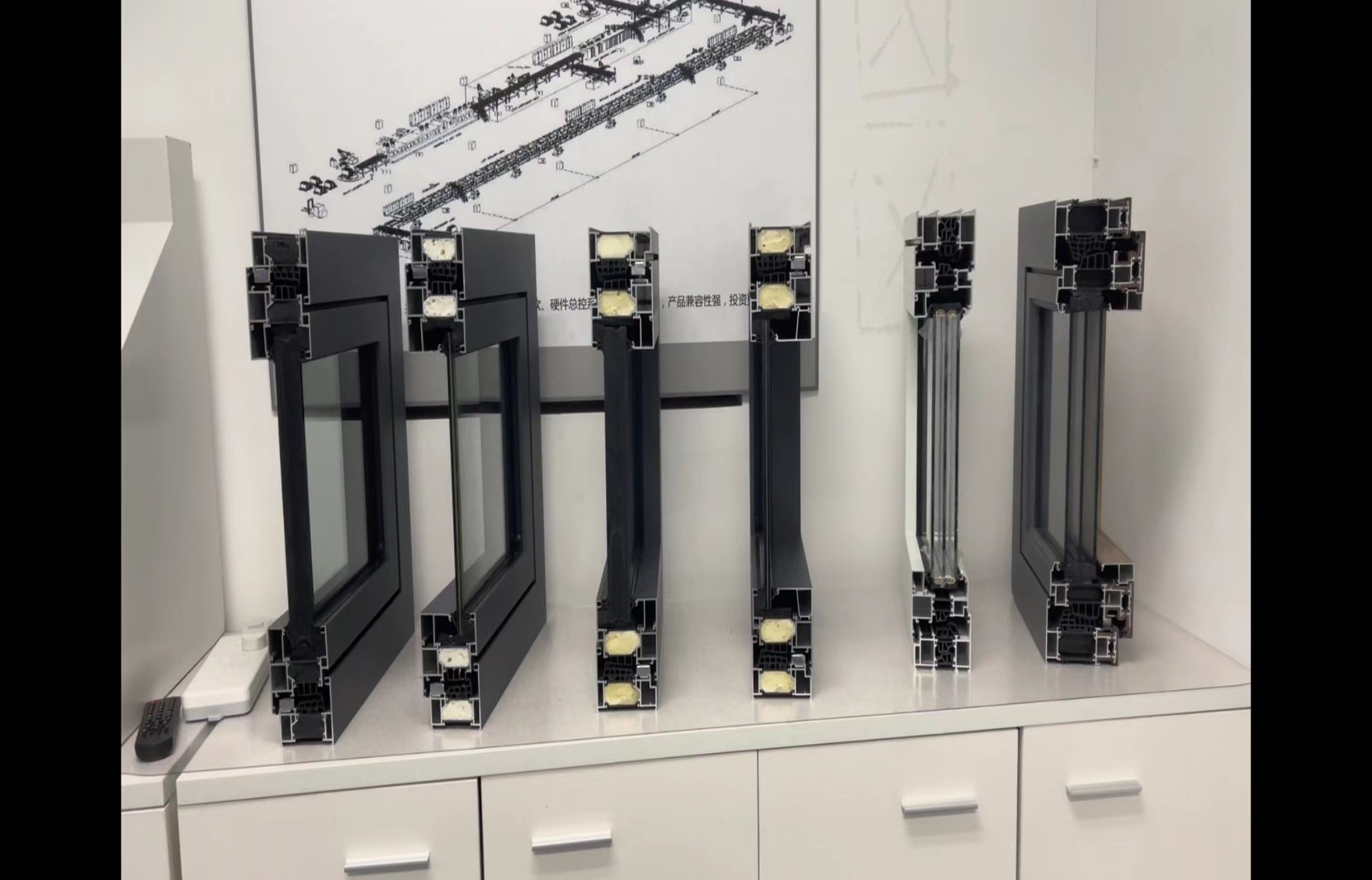
Complete windows built around ultra-thin tempered vacuum glass (U ≤ 0.6 W/m²K) in thermal-break ("bridge-cut") aluminium profiles designed for vacuum panes. The 85 series reaches a whole-window U-value ≤ 0.8 W/m²K — the highest grade (level 10) of China's standard — with 39 dB sound insulation and top national grades for watertightness (6), airtightness (8) and wind-pressure resistance (9); the 70 series reaches U ≤ 1.0 at a sharper price point for public buildings. Flush sashes, hidden drainage and hidden hinges keep the sightlines clean.
Vacuum Windows in Real Interiors
The brand's own product video: vacuum window systems in finished homes — quiet, temperature-stable rooms behind large panes.
Vacuum window systems in residential interiors (brand video, Chinese subtitles in the original): the pitch is silence and stable temperature behind very large panes.
Thinner, Quieter, More Efficient
More Energy Efficient
Vacuum glass is the thermos-flask principle applied to buildings: with heat transfer down to 0.4–0.5 W/m²K against 0.8 for triple glazing, Xinliji states energy savings above 40% — insulation in summer, heat retention in winter, especially valuable in severe cold and heat.
Quieter
39 dB weighted sound insulation — over 20% quieter than the three-glass two-cavity units it replaces, the company states — makes it the strongest sound-insulating transparent material in its class, suited to downtown and sea-view rooms where the view is the point and the noise is not.
Lighter, Clearer, Longer-Lived
Roughly 30% lighter and over 20% more transparent than triple glazing (80% vs 60% light transmittance), with a service life the company states is more than 200% longer — and a thinner build that cuts curtain-wall profile weight and cost on large structures.

Large glazed areas are where vacuum glass earns its keep: two panes doing the work of three or four. (Brand image.)
Landmarks in Vacuum Glass
Tianheng Building, Beijing (2005) — the world's first full vacuum-glass curtain-wall building: 9,500 m² of vacuum glass curtain wall in Beijing's CBD, U-value ≤ 1.0 W/m²K, sound insulation ≥ 37 dB, saving over a million in comprehensive electricity charges every year, with an 8-year payback on the glass.
China Chemistry residential project, Beijing — 14 buildings and 216,000 m² of housing built with Xinliji's vacuum curtain wall and fireproof vacuum window systems: the world's largest vacuum window and vacuum glass application project.
Changsha Cultural Center (2011) — the world's first vacuum glass building complex: library, museum and concert hall at Orange Isle, with panes over 2.5 m × 1.5 m. Qinhuangdao "On the Water Side" (2014) — China's first ultra-low-energy-consumption residential project. Beijing Academy of Life Sciences greenhouse (2014) — China's first full vacuum-glass agricultural greenhouse.
Government and institutional work includes the Zhengzhou Library, Tsinghua University's low-energy demonstration building and the Hebei Qinghe Development Zone Management Committee (2023). In total the technology has been applied in more than 100 engineering projects covering some 300,000 m², and exported to Switzerland, Denmark, Finland, Russia, Mongolia, the United States, South Korea and other countries.
Reach the Company
Headquarters: Beijing, China · Production base: Tangshan, Hebei
Contact email: jskj003@126.com
For project inquiries — energy-saving buildings, curtain walls, vehicle glass, cold-chain applications — contact Xinliji by email at jskj003@126.com, or ask GlobleMatch to make the introduction.
Glass That Insulates Like a Wall
The Thinnest Pane in the Building — and the Quietest.
Vacuum glass, photovoltaic vacuum glass and vacuum windows from the team that invented the technology: for passive houses, curtain walls, electric vehicles and cold chains that cannot afford to leak heat or sound.
Email Xinliji → Ask GlobleMatch to Connect You →
For partnerships and business inquiries: Ask GlobleMatch to Connect You →
Xinliji Vacuumglass Technology, Explained
The short, citable version — what it is, how the technology compares, and where it has been used.
What is Xinliji Vacuumglass Technology?
Xinliji Vacuumglass Technology (Beijing Xinliji Vacuumglass Technology Co., Ltd.) is a Chinese manufacturer of vacuum glass, photovoltaic vacuum glass and vacuum windows. It was founded in Beijing by Professor Tang Jianzheng, the inventor of vacuum glass, together with the core team of the former Beijing Vacuum Glass Technology Research Institute. Its production base is in Tangshan, Hebei, with an annual production capacity of 30,000-50,000 square meters.
Key facts
- Founded by Professor Tang Jianzheng, the inventor of vacuum glass, and the former Beijing Vacuum Glass Technology Research Institute team; headquarters Beijing, production base Tangshan, Hebei.
- Three product lines: vacuum glass; photovoltaic vacuum glass; vacuum doors and windows.
- Vacuum glass performance: heat-transfer coefficient down to 0.4 W/m2K, weighted sound insulation 39 dB, about 10 mm thick, 80% visible-light transmittance.
- More than 30 patents and intellectual-property rights; the team drafted China's vacuum glass standards JC/T 1079-2008 and GB/T 38586-2020.
- Applied in 100+ engineering projects covering about 300,000 sqm; exported to Switzerland, Denmark, Finland, Russia, Mongolia, the United States, South Korea and other countries.
- Contact email: jskj003@126.com.
How is vacuum glass different from ordinary insulating glazing?
Vacuum glass seals a vacuum layer between two panes, working on the thermos-flask principle. A vacuum pane about 10 mm thick reaches a heat-transfer coefficient of 0.5 W/m2K (down to 0.4 in the best specification) and 39 dB weighted sound insulation, compared with 0.8 W/m2K and 33 dB for a 47 mm three-glass two-cavity insulating unit - while transmitting 80% of visible light instead of 60%, and weighing 25 kg/m2 instead of 40.
What is photovoltaic vacuum glass used for?
Photovoltaic vacuum glass generates electricity on the glass surface while insulating against heat and sound. In vehicles it serves as panoramic skylights, side windows and rear windshields, generating roughly 1-3 kWh per day. In buildings it turns curtain walls and sunrooms into power-generating surfaces for building-integrated photovoltaics (BIPV) and near-zero-energy buildings, generating about 1-2 kWh per square meter per day.
Where has Xinliji vacuum glass been used?
Landmark projects include the Tianheng Building in Beijing (2005), the world's first full vacuum-glass curtain-wall building; a 216,000 sqm China Chemistry residential development in Beijing, the world's largest vacuum window application; and the Changsha Cultural Center (2011), the world's first vacuum glass building complex. The technology has been applied in more than 100 projects covering about 300,000 sqm, and exported to Switzerland, Denmark, Finland, Russia, Mongolia, the United States, South Korea and other countries.
Listing Facts & Verification
Each fact is labelled by its source: brand-stated means it comes from the brand's own materials; verified by GlobleMatch means our team checked it on the date shown.
- Who it serves: Building developers, architects and curtain-wall contractors; new-energy vehicle makers; high-speed rail and cruise ship builders; cold-chain appliance manufacturers. (brand-stated)
- What it does: Three product lines: vacuum glass (heat-transfer coefficient down to 0.4–0.5 W/m²K, 39 dB weighted sound insulation, ~10 mm thick, 80% visible-light transmittance); photovoltaic vacuum glass for vehicles and buildings (insulation plus on-glass power generation); and vacuum window systems in thermal-break aluminium profiles (whole-window U-values ≤ 0.8–1.0 W/m²K). Annual production capacity of 30,000–50,000 m² from its Tangshan base. (brand-stated)
- Pricing: Brand has not publicly disclosed this; pending verification.
- Limitations: Minimum order quantities, custom-size limits, lead times and certification coverage by market: Brand has not publicly disclosed this; pending verification.
- Contact email: jskj003@126.com (brand-stated, supplied by the brand)
- Information source: The company's English introduction deck and product videos, supplied by the brand in October 2026.
- Disclosure: Free Launchpad listing; materials supplied by the brand. This profile is not a paid placement.
- Verified as of: 2026-10-19
Show your listing
Copy this badge to your site — it links back to your profile here.

Know a brand that belongs here?
The Launchpad grows by nomination. If you know a cross-border or B2B brand that should have a profile like this one, nominate it — we review every nomination by hand, and the brand is invited to complete its own profile.