
Short answer: The United States is the largest single country in the GlobleMatch robotics directory: 138 of the listed companies are headquartered there. They are not evenly spread. Four concentrations explain most of the map — the Boston research corridor, Pittsburgh's autonomy cluster, Silicon Valley's AI-driven entrants, and a warehouse-automation belt that follows America's logistics geography — with system integrators distributed through the manufacturing Midwest. Where a supplier sits still predicts what it is good at.
Boston and the research corridor
Greater Boston is the oldest of the clusters, built on the region's university robotics research and the companies it spun out. Boston Dynamics, based in Waltham, Massachusetts, is its emblem: founded in 1992 as an MIT spinout, it defined the public image of legged and mobile robots long before they were products. Around it sits a dense layer of warehouse-automation and robotics software firms, close to the customers of the Northeast logistics corridor and to a deep pool of robotics engineers.
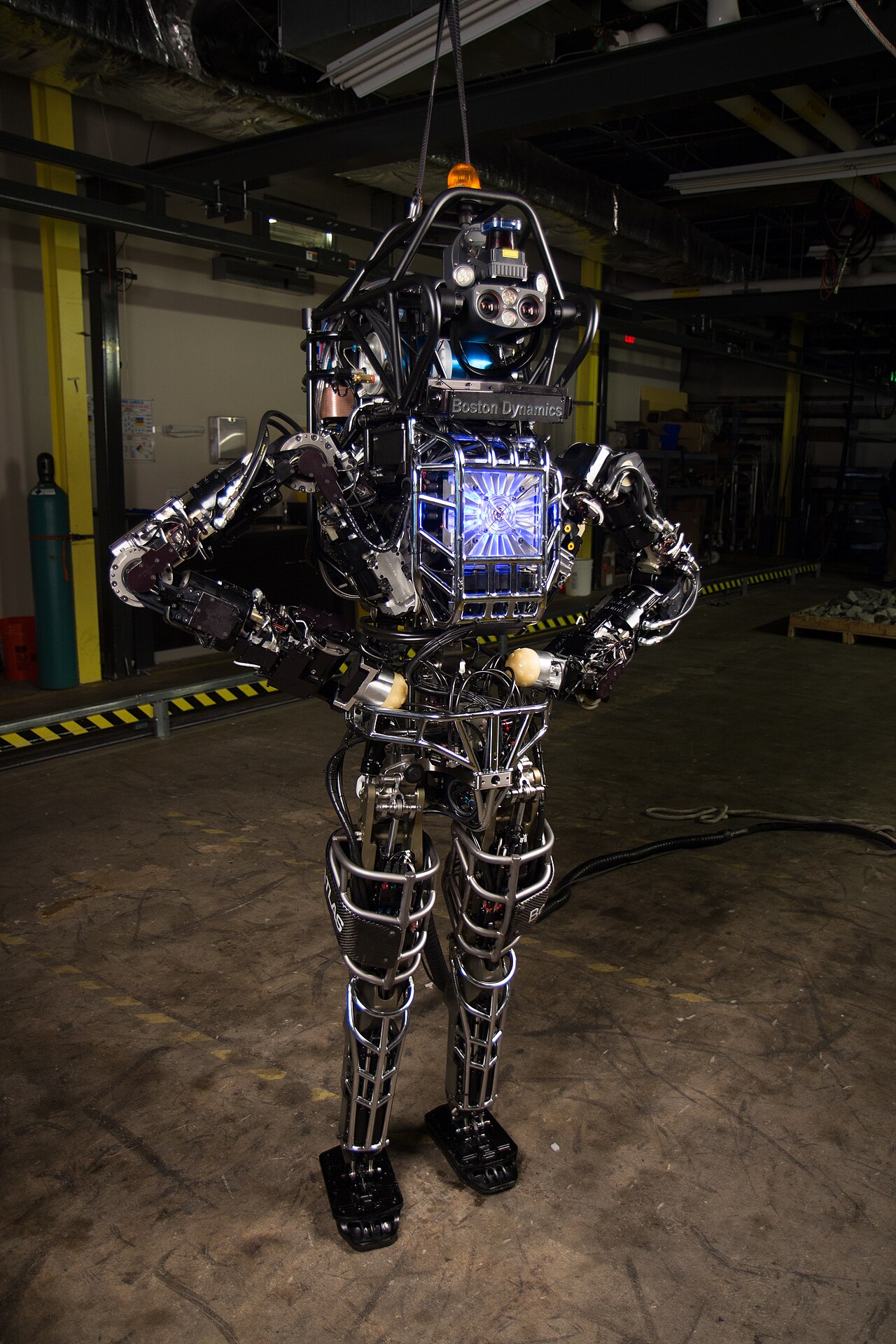
The corridor's second layer matters as much as its famous names: contract engineering firms, autonomy software specialists and component suppliers that grew up serving the platform companies. For a buyer, that density means a Boston platform purchase usually comes with local integration and support capacity attached — an advantage that does not show in any specification table but shows up clearly at commissioning time. It also means the region's companies are practiced exporters of complete systems rather than components, a pattern visible in the directory's Boston-area listings.
Pittsburgh: autonomy from the research institute out
Pittsburgh's cluster orbits Carnegie Mellon University's Robotics Institute, one of the field's founding institutions. The region's signature is field robotics and autonomy — machines for mining, agriculture, logistics yards and unstructured outdoor work, plus the autonomous-vehicle supply chain that grew up alongside. For buyers, Pittsburgh is where you look for perception and autonomy competence applied to dirty, unstructured environments rather than clean factory floors.
Silicon Valley: the AI-first entrants
The Bay Area's robotics generation is software-led: foundation-model and embodied-AI companies, humanoid startups, and firms treating the robot as a platform for a learning stack. The cluster's strengths are AI talent, venture funding and speed of iteration; its products are correspondingly younger, and buyers should weight deployment evidence accordingly. Many of the Valley's companies appear in the directory's software section as much as among complete-robot makers — an accurate reflection of where their value sits.
The warehouse belt and the Midwest integrators
Warehouse automation follows freight. Fulfilment-robot makers and their integrators cluster near the logistics corridors — the Inland Empire, the Midwest distribution hubs, the Southeast — and the humanoid entrants targeting warehouses are appearing in the same geography: Oregon-based Agility Robotics, whose Digit was built for warehouse work, is the visible example. Separately, the manufacturing Midwest hosts a deep bench of system integrators serving automotive and general industry — the firms that turn robots into production lines, listed under the directory's integrators section.

Beyond the four: Texas and the Southeast
The four concentrations are not the whole map. Texas has built a humanoid and logistics cluster of its own — Austin is home to Apptronik, whose Apollo humanoid is aimed at warehouse and manufacturing work, and the state's distribution geography pulls automation suppliers toward its freight hubs. The Southeast combines automotive plants, ports and a growing integrator base. Treat these as the emerging second tier: fewer headquarters than the big four today, but deliberate state-level courting of robotics employers means the directory's next editions are likely to thicken there first.
How to use this map — and its limits
Use clusters as a prior, not a verdict: Boston for research-grade platforms, Pittsburgh for outdoor autonomy, the Valley for AI-first products, the logistics belt for warehouse systems, the Midwest for integration capacity — then verify the individual company. The directory figures behind this article (138 US headquarters among the listed companies) describe reviewed listings on this platform, not a census of the American industry; strong companies exist outside every cluster named here, and the full directory is the way to find them.
Frequently asked questions
Which country has the most robotics companies in the directory?
The United States, with 138 headquarters among the robotics companies listed, followed by China (73) and Germany (57). These are reviewed directory listings, not an industry census.
Why did Boston become a robotics centre?
A long research base — the region's universities have run major robotics programmes for decades — combined with early spinout companies such as Boston Dynamics (an MIT spinout founded in 1992) and a resulting local pool of robotics engineers and suppliers. Clusters compound: each generation of companies trains the next generation's founders.
Where are US robotics system integrators concentrated?
Disproportionately in the manufacturing Midwest and Southeast, near the automotive and general-industry plants they serve, though integrators operate nationally. The directory's integrator section (81 companies worldwide) can be browsed by location.
Does the directory cover every US robotics company?
No. The 138 figure counts reviewed, listed headquarters as of 10 November 2026. It is a working buyer's directory, not a census — coverage grows as new profiles are verified and added.