
Short answer: teleoperation — a human guiding a robot directly, or stepping in when it gets stuck — is one of the main ways robot AI gets its training data, and a common safety net during real deployments. Robot behaviour data barely exists compared with text and images, so companies create it: operators perform tasks through the robot while every camera frame, joint angle and correction is recorded as training material. The same connection that collects data in the lab can assist a deployed robot in the field. None of this is scandalous; it becomes a problem only when it is hidden inside the word “autonomous”.
Three forms of teleoperation
- Demonstration collection. Operators deliberately perform tasks — folding, picking, tidying — through a robot or a leader device, generating the examples a model learns from. This is the robotics equivalent of building a dataset, and it is labour-intensive by nature.
- Remote assistance during deployment. A deployed robot handles routine work itself and calls a remote operator for the cases it cannot solve. This is a design pattern, not an admission of failure — provided the intervention rate is known.
- Shadow and supervision modes. A human watches, scores or corrects without normally driving, producing evaluation data and catching systematic errors before they become incidents.
Data is the constraint behind the model layer discussed in our guide to robot foundation models and VLA models: the models are only as general as the robot experience they were trained on, and most of that experience has to be manufactured through exactly this work.
Two public examples worth knowing
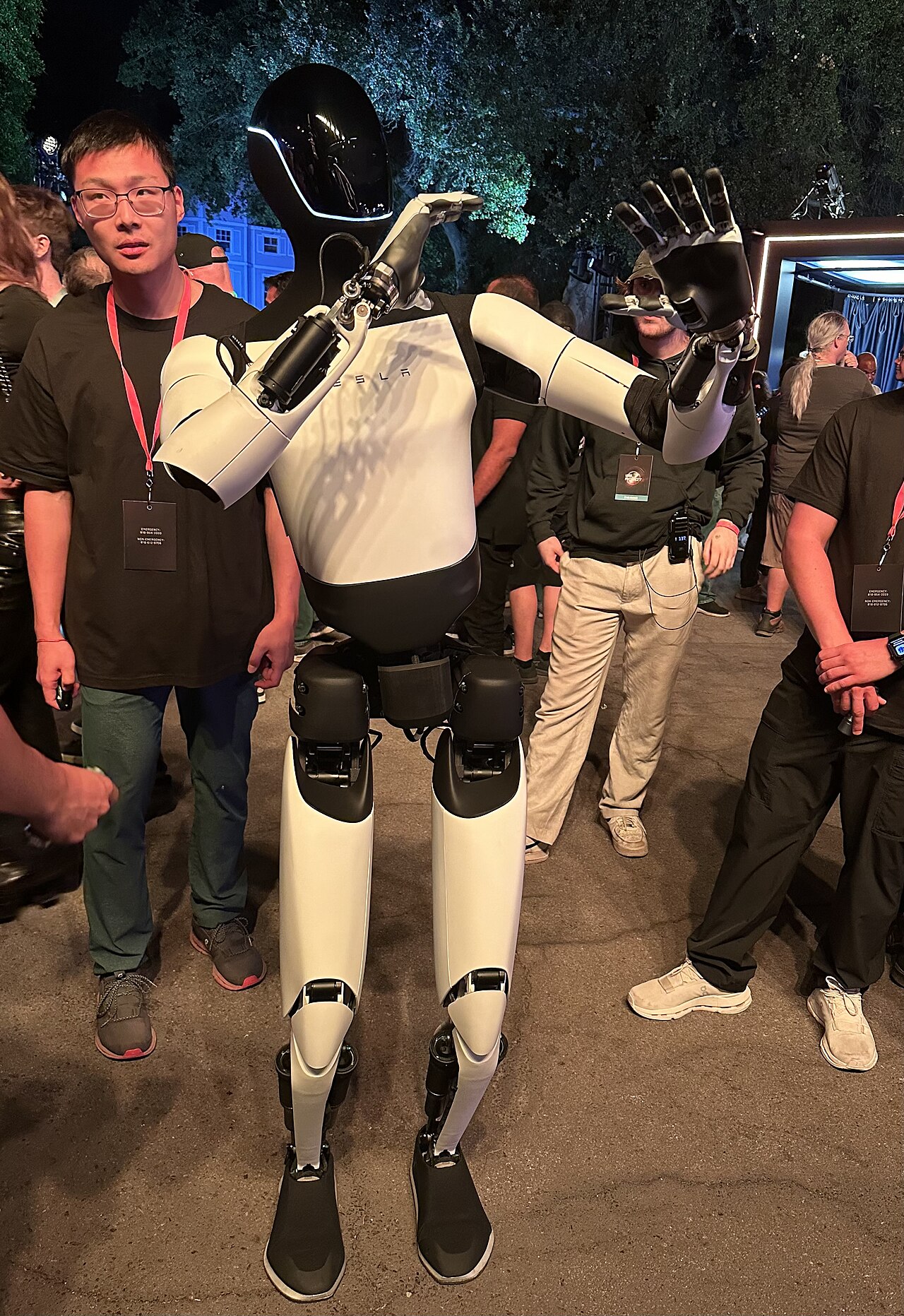
1X has publicly described expert remote assistance as part of the plan for its NEO home humanoid — human helpers able to support tasks the robot cannot yet do alone, presented by the company as a feature of early home deployment rather than a defect. In a different register, media reports after Tesla's 2024 “We, Robot” event described remote-operation elements in the Optimus demonstrations shown there; Tesla's presentations should be read with that reporting in mind. The two cases mark the honest and contested ends of the same spectrum: assistance disclosed as part of the product, versus assistance the audience had to discover.
The questions that keep it honest
Buyers and partners evaluating any AI-driven robot — especially the humanoids surveyed in our article on humanoid robots in warehouses and factories — should ask: What exactly counts as an “intervention” in your published numbers, and how often does it happen on a task like mine? Who are the operators, where do they work, and what can they see — a live question for robots entering homes and hospitals. What happens to the recordings: are my premises and my staff in somebody's training set, under what consent and retention terms? And what is the roadmap for the intervention rate to fall — because a service whose humans never get fewer is a staffing business wearing a robot costume.
Why this layer is an industry, not a footnote
Data collection is becoming a supply chain of its own: dedicated collection facilities, operator workforces, annotation and quality review, and platform companies selling data services to robot makers. That is part of why the directory's embodied AI and robot software category — 73 companies as of 10 November 2026 — includes data and platform businesses alongside model companies. Judging this layer well matters: the robots that improve fastest over the next few years will likely be the ones attached to the most disciplined data operation, not the ones with the most dramatic launch video.
There is a final, quieter reason this layer deserves attention: it is where the industry's claims become auditable. A company that publishes intervention rates, data volumes and operator practices is giving the market something to check — and a market that can check claims prices them more accurately. Expect the serious humanoid and robot-AI companies to compete on exactly this transparency over the next few years, because their enterprise customers are already writing it into procurement questionnaires.
Frequently asked questions
What is teleoperation in robotics?
Teleoperation means a human controls or guides a robot at a distance — directly driving it, demonstrating tasks through it, or intervening when the robot's own software cannot handle a situation. It has existed for decades in surgery, space and hazardous work. In robot AI it has a second job: every guided movement is recorded, turning human skill into training data for learned models.
Why do robot companies need human operators if the robots are autonomous?
Because autonomy in physical work is learned from experience, and robot experience data has to be created. Operators generate demonstrations for training, supervise early deployments where reliability is still being proven, and handle the long tail of situations the model has not mastered. A robot can be genuinely autonomous on most of its task list and still need human help on the remainder — the honest measure is the intervention rate, not the label.
Is teleoperation a problem or a feature?
Both, depending on disclosure. As a designed feature — remote experts assisting a home robot, or a support centre unblocking a warehouse fleet — it makes early products viable and safer. It becomes a problem when marketing implies full autonomy while operators quietly carry the performance, because customers then buy reliability that does not exist. The dividing line is whether the company publishes how often humans step in.
What should I ask a vendor about remote assistance?
Ask how an intervention is defined and how often it occurs on tasks like yours; who the operators are and what they can see and record; what happens to the data collected in your facility, including consent and retention; and how the intervention rate has trended over the past year. A vendor with a serious data operation will have these numbers ready. Evasiveness on any of them is information in itself.