
Short answer: Hospitals evaluate surgical robots as a clinical programme, not as a machine purchase. The deciding factors are the clinical evidence for the procedures the hospital actually performs, the per-procedure cost of instruments and accessories, the service and uptime arrangement, and the training pathway that turns its surgeons into confident users. The category's reference system — Intuitive's da Vinci, first cleared by the US FDA for general laparoscopic surgery in 2000, with the da Vinci 5 generation launched in 2024 — built its position on exactly those four legs, and every challenger is measured against them.
Clinical evidence comes before specifications
The evaluation starts in the library, not the showroom: what does the published evidence say about outcomes for the procedures on this hospital's list — and for its patient mix, not an idealised one? Committees of surgeons, anaesthetists and hospital management will weigh operative time, conversion rates to open surgery, complications and length of stay as reported for systems they are considering, and they will ask the vendor which claims are supported by which studies. A buyer's guide cannot and should not summarise that evidence; the discipline is procedural. Require the evidence dossier per procedure, and let clinicians, not procurement, grade it.
The regulatory pathway shapes what you may buy
Medical robots reach hospitals through medical-device regulation, and the clearance is procedure-specific: a system is authorised for defined uses in defined markets, under frameworks such as FDA clearance in the United States and CE marking under the EU's medical device regime. Evaluation therefore includes a regulatory check that surprises buyers from other industries: is this system cleared, in our market, for the procedure list we intend — or only for some of it, with the rest in trials or pending? The answer determines the launch programme, the marketing claims the hospital may make, and sometimes the reimbursement position. Regulatory status belongs on the first page of the evaluation file, verified from the regulator's records rather than the brochure.
The real price: system, instruments, service
Surgical robotics runs on a system-plus-consumables model. Beyond the capital price of the system sit the instruments — many with limited use counts — drapes and accessories consumed per procedure, and the annual service contract that keeps the system available. Committees should therefore model cost per procedure at their expected case volume, including training cases and the ramp-up period, and compare it honestly against the conventional laparoscopic or open alternative for the same procedure list. Volume is the pivot of the whole calculation: the same system that is economical in a high-volume specialty programme can be indefensible at a handful of cases a month.
Branches differ more than brands do
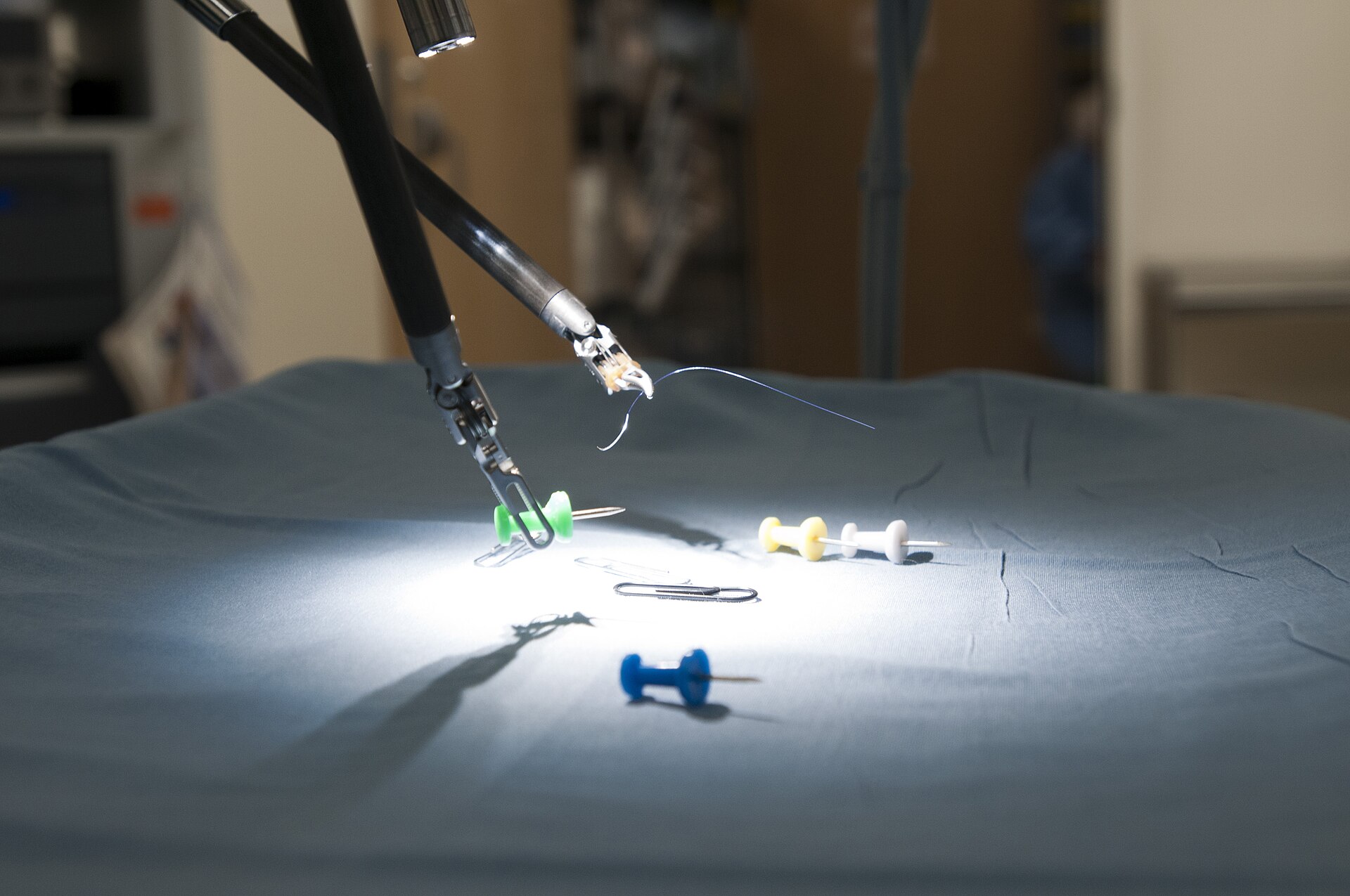
'Surgical robot' names a family, not a product. Soft-tissue systems for laparoscopy, orthopaedic systems that guide bone preparation for joint replacement, endoscopy platforms and ophthalmic microsurgery devices pose different evaluation questions: imaging integration, compatibility with the hospital's implant or instrument ecosystems, footprint in theatres that were not designed for them. The directory's platforms section lists medical robotics companies alongside the wider robot field; the hospital-side logistics of robots outside the operating theatre — pharmacy, transport, cleaning — are covered in our companion guide to robots in hospitals beyond surgery.
Training is a procurement item
A surgical robot's value is realised by trained teams, so the training pathway is part of the purchase: simulator time, proctored first cases, credentialing requirements the hospital sets for its own surgeons, and the training of the theatre team around them — nursing, anaesthesia and sterile services all work differently around a robot. Ask how many cases the pathway expects before independent practice, who provides proctors and for how long, and how new surgeons joining later are brought on. Hospitals that budget training as seriously as hardware reach steady utilisation; hospitals that treat it as an afterthought own an expensive monument.
An evaluation sequence that works
In practice: define the procedure list and volumes first; verify regulatory clearance for that list in your market; grade the clinical evidence with your clinicians; model cost per procedure at realistic volumes, instruments and service included; visit a reference hospital with a similar profile and talk to its theatre team, not only its champions; and run the training and credentialing plan past the surgeons who will live with it before the contract, not after. The robot itself — its arms, console and vision chain — is the part the demonstration shows best and the part that decides least.
Frequently asked questions
How do hospitals decide whether to buy a surgical robot?
As a clinical programme: the evidence for the procedures they perform, cost per procedure including instruments and service, regulatory clearance for their procedure list in their market, and the training pathway for their surgeons and theatre teams.
Why is cost per procedure more important than the robot's price?
Surgical robots use a system-plus-consumables model: limited-life instruments, per-case accessories and annual service contracts accumulate with every case. At low volumes the per-procedure cost can be far higher than the conventional technique it replaces.
What regulatory checks should a hospital make?
Confirm the system is cleared in your market for each procedure you intend to perform — clearance is procedure-specific under frameworks such as FDA clearance in the US and CE marking in the EU — and verify it from the regulator's records, not the brochure.
What is Intuitive's da Vinci, and why is it the reference system?
The da Vinci is Intuitive's soft-tissue surgical robot platform, first cleared by the FDA for general laparoscopic surgery in 2000; the da Vinci 5 generation launched in 2024. It is the category's reference because of its long clinical history and installed training ecosystem.