
Short answer: Three service-robot categories have normalised in public-facing buildings: delivery (food, amenities, linen, medication), cleaning (floors, patrol disinfection in some settings), and guidance or reception. They work because the environment is semi-structured — flat floors, elevators, known routes — and the task repeats all day. What still breaks deployments is rarely the robot: it is elevator and door integration, fragmented one-off tasks, and the unglamorous question of who cleans, charges and rescues the machine.
Hotels: delivery is an integration project
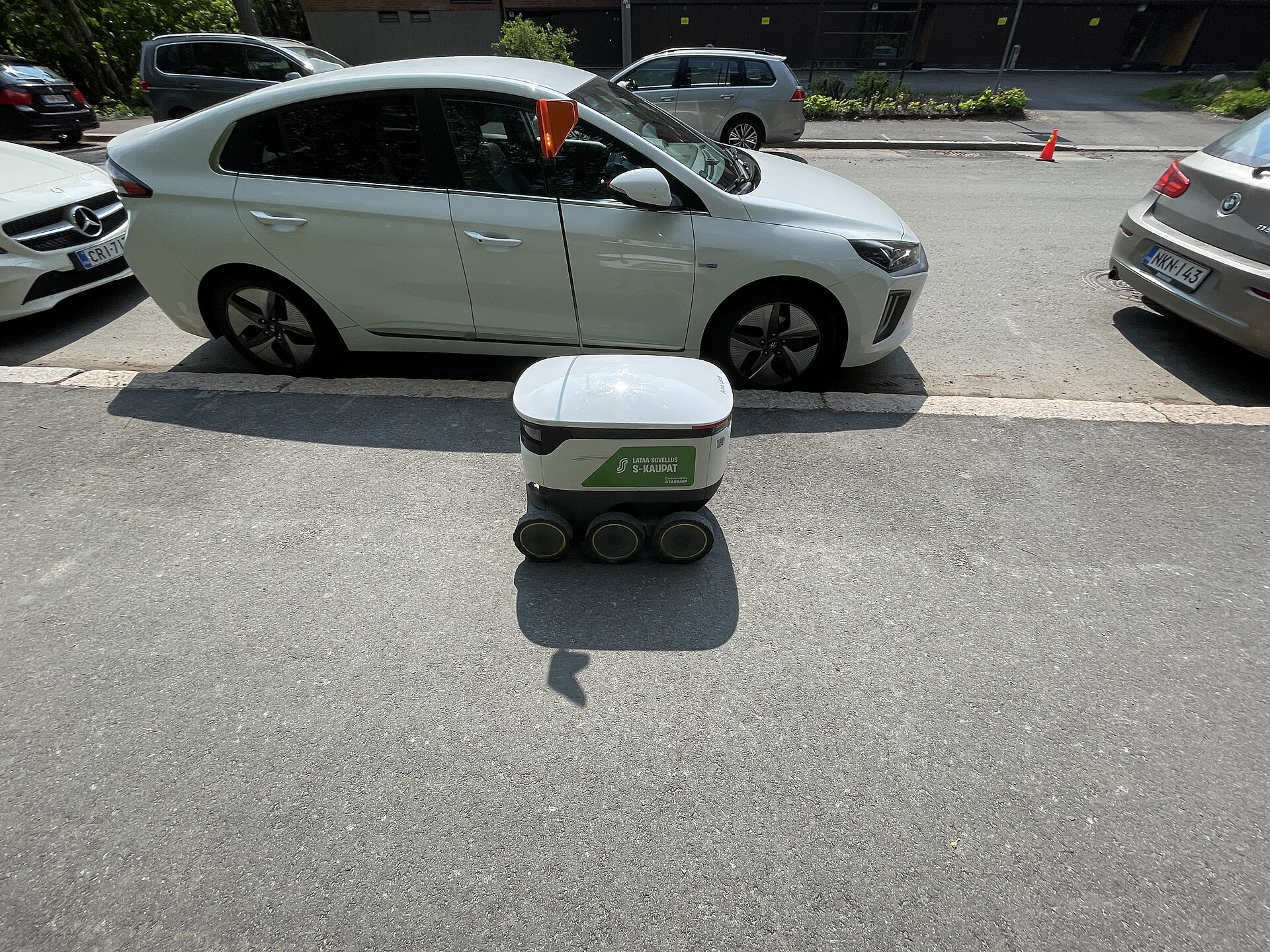
The hotel delivery robot's job — take amenities, towels or room-service items to a guest room door — is simple motion wrapped in building integration. The robot must call and ride the elevator alone, pass fire doors, navigate around housekeeping carts, and announce itself at the door by phone or knock. Every one of those requirements touches hotel systems: elevator vendor approval, door hardware, Wi-Fi coverage in shafts and corridors. Experienced buyers therefore pilot the integration, not the robot: if the machine completes unassisted round trips to the farthest room at the busiest hour, the category works. If staff are walking it to the elevator, it does not — however charming the screen face is.
Hospitals: logistics before novelty
Hospitals bought service robots earliest and most seriously, for internal logistics: moving medication, laboratory specimens, linen, meals and waste between departments. Aethon's TUG — a mobile robot that hauls carts through hospital corridors and elevators — is the category's early reference product, and its lesson is that the value sits in porter hours and delivery reliability, not in visibility. Hospital deployments add requirements hotels do not have: infection-control cleaning of the machine itself, secure compartments and chain-of-custody for medication, and traffic rules around beds and emergency routes. The hospital-internal view — logistics, cleaning and pharmacy — is deep enough that it has its own guide in this series; this article covers the cross-sector picture.
Restaurants and retail: the front-of-house test
In restaurants, tray-carrying delivery robots such as Bear Robotics' Servi line run food from kitchen pass to table and bus dishes back, in dining rooms full of children, chairs and spilled drinks. Retail uses the same platforms for shelf-scanning in some chains and for guidance and promotion in others. The front-of-house test is social as much as technical: a robot that guests find delightful and staff find helpful survives; one that blocks aisles, startles children or creates work for the floor team is unplugged within a quarter, whatever its navigation specifications say. Both companies above are profiled in the directory's platforms section, alongside the wider service-robot field.
Cleaning and patrol: quiet, measurable, expanding
Floor-care robots — scrubbing and vacuuming large retail, warehouse-club and transport spaces — are the least glamorous and most easily justified category: the area covered per night is measurable, the labour is hard to hire for, and the machine works when the building is empty. Guidance and reception robots have narrowed to where they genuinely help: wayfinding in large hospitals, airports and malls, often as a moving extension of a directory screen rather than a humanoid performance.
Measure a deployment in completed trips
The honest metric for a delivery deployment is unassisted completed trips per day: deliveries the robot finished without a staff member walking it, rescuing it or apologising for it. Vendors naturally quote capability; operators should quote this number, trended weekly, from the pilot. A rising trend after route adjustments and door fixes means the deployment is converging. A flat trend at a low number means the building, not the robot, is the constraint — and the fix list (a door closer adjusted, a corridor kept clear, a lift lobby re-marked) is usually cheap compared with the robot.
Why deployments still fail
The recurring failure pattern is scenario fragmentation: a building buys a robot for one task, discovers the task is only twenty minutes a day, and cannot find a second task the same machine can do. Close behind are operations gaps — nobody owns daily cleaning of the robot, a blocked dock goes unnoticed for a week, a software update changes behaviour nobody re-validated. And the oldest cause: the robot was bought for the lobby photograph, with no workflow owner at all.
Buyer checklist
Before signing: walk the full route at the busiest hour and list every door, elevator and threshold. Confirm elevator integration in writing with the elevator maintenance company, not just the robot vendor. Name the staff owner for charging, cleaning and rescue. Define the task in trips per day and measure the pilot against trips completed unassisted. And check the service arrangement for your region — a service robot is a building system, and it will need its supplier the way the elevator does.
Frequently asked questions
Which service robots are actually working in hotels and hospitals today?
Delivery robots (amenities, food, linen, medication), hospital logistics robots hauling carts between departments, and floor-cleaning robots in large public spaces. Guidance robots survive in large venues. These categories repeat known routes all day, which is why they normalised first.
What is the hardest part of a hotel delivery robot deployment?
Building integration, not navigation: the robot must call elevators and ride them alone, pass fire doors, and cope with housekeeping traffic. Pilot the integration — unassisted round trips to the farthest room at the busiest hour are the real test.
What do hospital logistics robots carry?
Medication, laboratory specimens, linen, meals and waste — the porter work of a hospital. Products such as Aethon's TUG haul carts through corridors and elevators; the value is in porter hours saved and delivery reliability.
Why do service robot deployments get cancelled?
Usually scenario fragmentation — the one task bought for turns out to be twenty minutes a day — and operations gaps: nobody owns charging, cleaning and rescue, so small problems compound until the machine is quietly unplugged.