
Short answer: Robots in pharmaceutical manufacturing and laboratories are bought under a rule the rest of industry escapes: every action must be documented, traceable and validated before it counts. Sterile filling lines, liquid-handling workstations and sample logistics all automate successfully — but the project's centre of gravity is the validation package (installation, operational and performance qualification) and the data integrity of the records the system produces. Speed is a specification; proof is the product.
Where the robots are: filling, handling, moving
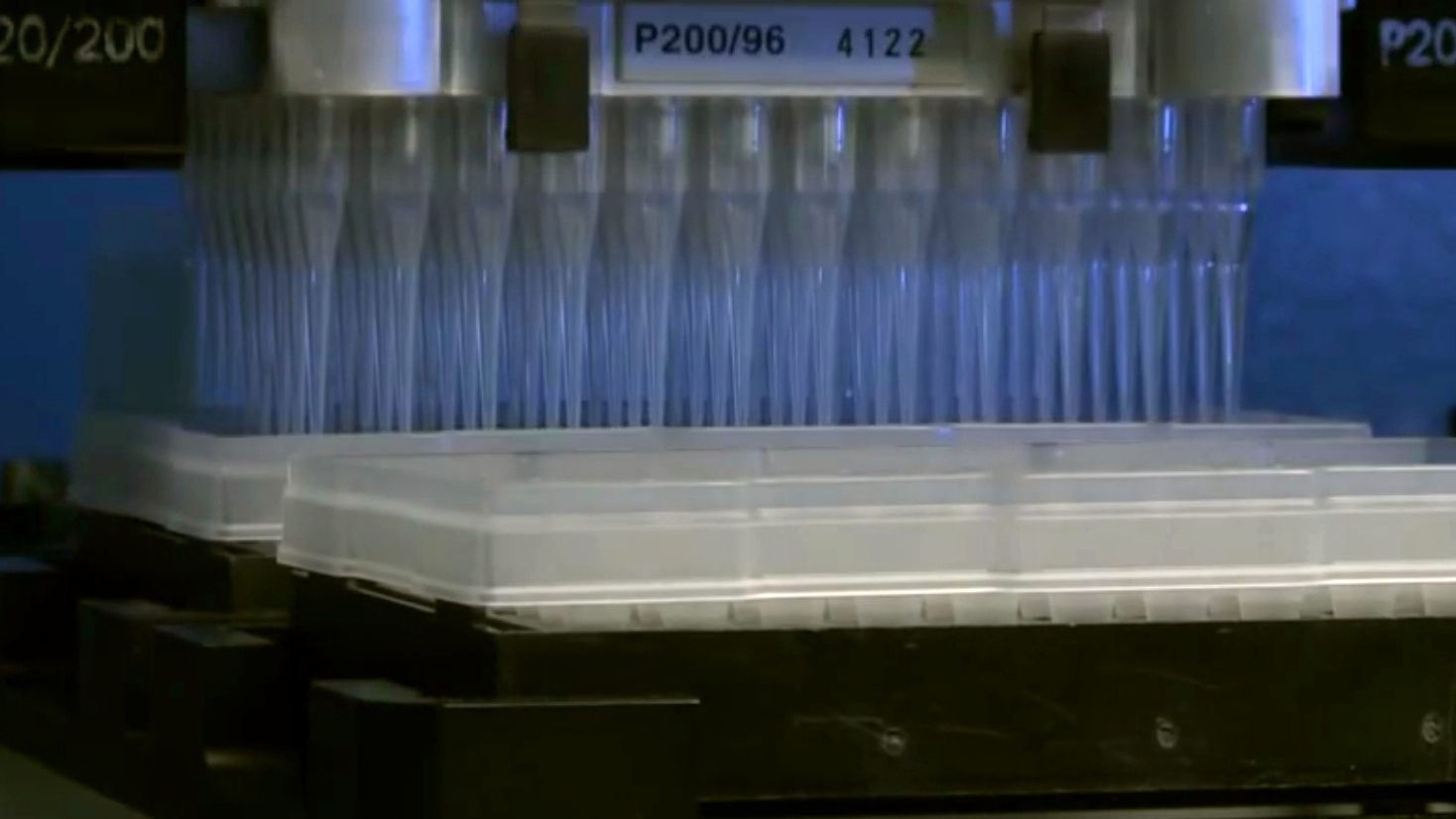
The established applications divide into three families. In production, robots work inside sterile filling and packaging environments — increasingly inside isolators, where a robot arm handles vials and syringes without the contamination burden of a human operator in the cleanroom. In laboratories, liquid-handling robots pipette, dilute and plate samples at volumes and repetition counts no technician should be asked to sustain, and sample-transport systems move tubes between reception, storage and analysers. In quality control, automated sample preparation feeds the instruments whose results release or reject batches. The directory's platforms section lists the manufacturers working across these environments.
Validation: IQ, OQ, PQ in plain language
Qualification is the formal proof that a system is what it claims to be, in three stages. Installation Qualification (IQ) documents that the equipment is delivered, installed and configured as specified — right model, right software version, right environment. Operational Qualification (OQ) challenges the system across its intended operating ranges and shows it responds correctly, including to faults and boundary conditions. Performance Qualification (PQ) runs the real process, with real materials, and shows it consistently produces acceptable results. For the buyer, the practical questions are who writes and executes each protocol, what the vendor supplies as standard documentation, and how much of your process knowledge must be frozen before PQ begins — because changing the process afterwards reopens the proof.
Data integrity: the audit trail is a deliverable
Pharmaceutical records are regulated evidence. An automation system in this world must attribute every action to a user or a process, protect records from silent alteration, timestamp them reliably, and produce audit trails that an inspector can follow years later. In evaluation, this translates into concrete questions: role-based access with individual accounts, electronic signatures where the process needs them, time synchronisation, backup and retention of raw data — not just results — and how the system behaves when its network or clock fails. Vendors fluent in this language, who answer with features and references rather than reassurance, are the ones whose systems pass inspections; the acceptance-test discipline this resembles is covered generally in our guide to FAT, SAT and acceptance testing.
Small batches change the flexibility calculation
Pharmaceutical production increasingly means smaller batches: clinical-trial materials, personalised medicines, high-value biologics in modest volumes. That inverts the traditional automation argument — the prize is not raw speed but fast, validated changeover: a line or workstation that switches products with documented, repeatable setup, minimal line clearance disputes and recipes under version control. When comparing systems for small-batch work, weight the changeover evidence — timed, witnessed, with its documentation — as heavily as the top-speed figure, and ask how a recipe change is approved and recorded. Flexibility that cannot be validated is not flexibility a regulated plant can use.
Supplier evaluation in a regulated key
The pharma-specific overlay on normal supplier evaluation is auditability. Can you audit the vendor's quality system, and do they host customer audits as routine? What is their change-notification record for software and components — in a validated environment, an unannounced change is not an upgrade but an incident. How are patches and cybersecurity handled for systems that may be validated in a state that must be maintained for years? And what validation support — protocol templates, test records, training — is included, priced or absent? Ask for the list of the vendor's documentation deliverables in the quotation, in writing. In this industry, the paper is not bureaucracy around the product. The paper is a substantial part of the product, and it should be specified, priced and accepted like one.
Frequently asked questions
What do IQ, OQ and PQ mean in pharmaceutical automation?
Installation Qualification proves the system is installed and configured as specified; Operational Qualification challenges it across its operating ranges, including faults; Performance Qualification runs the real process with real materials and shows consistent, acceptable results.
Why is data integrity so important for lab and pharma robots?
Their records are regulated evidence. Systems must attribute actions to users, prevent silent alteration, keep reliable timestamps and audit trails, and retain raw data — so that an inspector can reconstruct what happened years later.
How do small batches change automation choices?
They shift the prize from top speed to fast, validated changeover: documented, repeatable setup under version control. Flexibility that cannot be validated cannot be used in a regulated plant, so changeover evidence matters as much as throughput.
What should a pharma buyer ask about a vendor's change control?
How software and component changes are notified, how patches and cybersecurity are handled for systems that must stay in a validated state, and whether customer audits of the vendor's quality system are routine. Unannounced change is an incident in a validated environment.