
Short answer: Robot cells are signed off in two stages. The Factory Acceptance Test (FAT) proves the cell at the integrator's works, before shipping, against criteria fixed in the contract. The Site Acceptance Test (SAT) repeats and extends the proof after installation, in the real environment, with real parts and real upstream and downstream equipment. Final acceptance — and usually the last payment milestone — follows SAT and a punch-list clearance. The tests only protect the buyer if the criteria were written, measurably, before the cell was built.
What FAT actually tests
A serious FAT runs the cell, not a demonstration of the cell. Cycle time is measured over sustained runs, not a single best lap. Accuracy and repeatability are checked on the buyer's parts or faithful representatives, with the buyer's measurement method. Endurance is sampled by running production-like sequences long enough for the intermittent faults — the gripper that misses one part in fifty, the sensor that drifts as it warms — to show themselves. Safety functions are exercised, alarms are provoked, and recovery from a stop is demonstrated. All of this is easier and cheaper to fix at the integrator's works than on your floor, which is the entire economic logic of FAT. The integrator's role in structuring this is part of what system integrators do across a project.
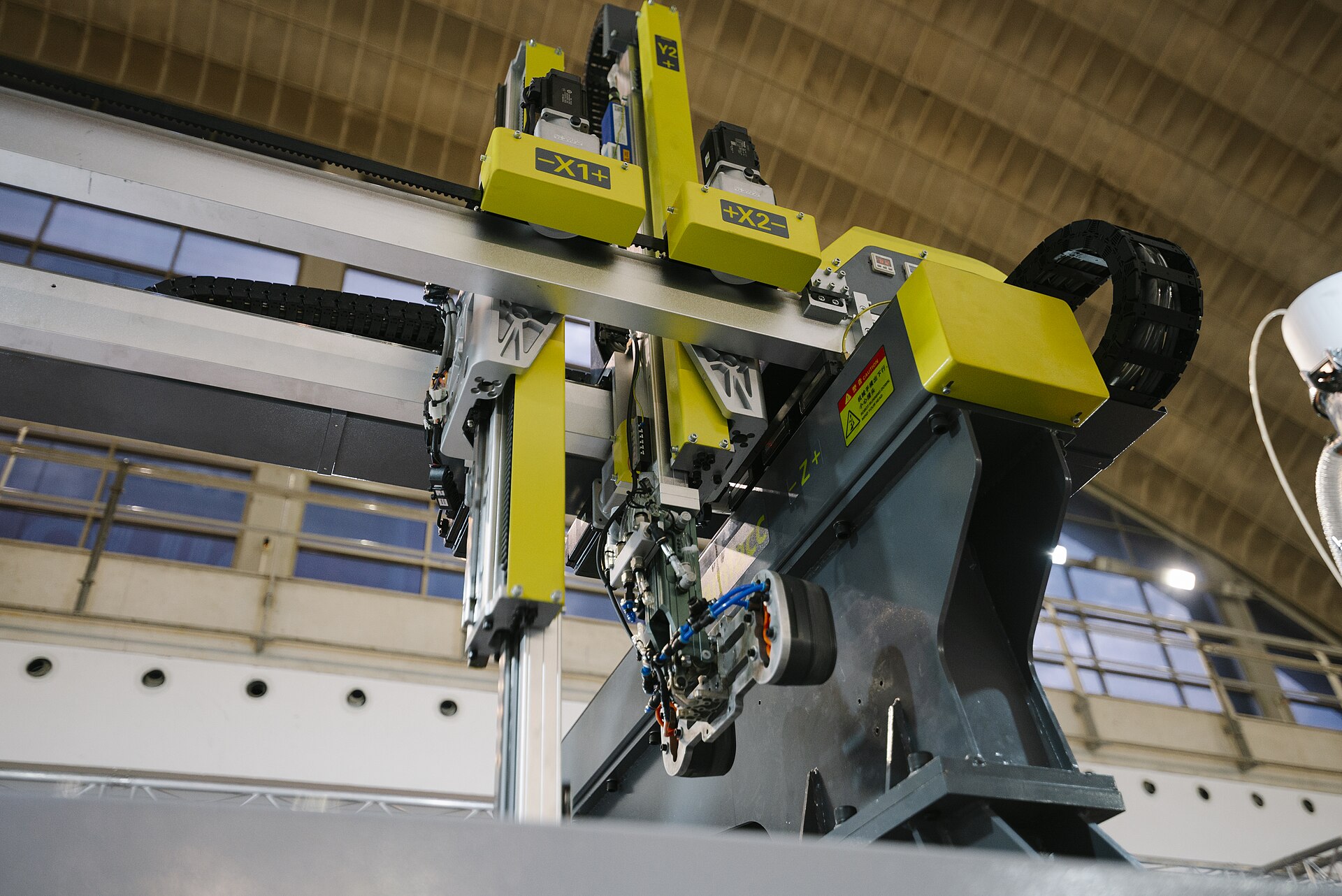
SAT: the same cell, a different place
Cells that passed FAT fail SAT for site reasons: foundations and floor quality differ, power and air utilities behave differently, the upstream machine delivers parts at a different rate or orientation than assumed, and the downstream process becomes the bottleneck the cell was never sized for. SAT therefore tests the interfaces as much as the cell — handshakes with line control, buffer behaviour when downstream stops, restart sequences after a site power event. Plan SAT with production staff present and production parts flowing; a SAT performed on an empty line certifies an empty line.
Criteria belong in the contract
Every acceptance criterion should trace to a contract line written before the build: cycle time under stated conditions, quality rate over a stated run length, availability over a stated observation period, with measurement methods and the consequences of missing them. Vague criteria ('performs to specification') convert acceptance into an argument; measurable ones convert it into a checklist. This discipline starts at the request stage — our guide to writing a robot RFQ covers putting measurable duty into the document every supplier prices against.
Punch lists, rectification and money
No real cell passes clean. The punch list — the agreed record of deficiencies, owners and deadlines — is the working instrument: items are classified by whether they block production, payments are typically staged so that a meaningful retention rides on punch-list clearance and final acceptance, and rectification visits are scheduled like production, not favours. Buyers lose leverage by signing final acceptance early 'to keep the relationship warm'; the retention and the unsigned certificate are the leverage, and professional integrators expect them to be used professionally.
Send operators, not just engineers
Acceptance tests double as the best training the project will ever offer, and they are wasted if only engineers attend. The operators and maintenance technicians who will live with the cell should be at FAT to run it, break it and recover it under the integrator's coaching, and at SAT to learn its site-specific behaviour. Faults they find are free; the same faults found in the first production week are not. Good integrators welcome this — it reduces their warranty calls. If an integrator resists customer staff at FAT, ask why, and write the answer into your risk register.
Documentation is an acceptance item
The handover package should be listed in the contract and checked at acceptance like any other deliverable: as-built drawings, electrical and pneumatic schematics, robot and PLC program backups in restorable form, safety validation records, the spare parts list with the wear items identified, and operating and maintenance documentation your technicians can actually use. A cell whose programs exist only on the integrator's laptop has not been delivered, whatever its cycle time. The road from a first installation to a stable production asset is the subject of our guide to scaling robot cells from pilot to production.
Frequently asked questions
What is the difference between FAT and SAT?
The Factory Acceptance Test proves the cell at the integrator's works before shipping. The Site Acceptance Test repeats and extends the proof after installation, in the real environment with real parts and the real upstream and downstream equipment.
What should a FAT include?
Sustained cycle-time runs, accuracy checks on the buyer's parts with the buyer's measurement method, production-like endurance running to surface intermittent faults, and exercised safety functions, alarms and stop-recovery — all against criteria fixed in the contract.
Why do cells pass FAT but fail SAT?
Site conditions differ: foundations, utilities, and the real behaviour of upstream and downstream equipment. SAT therefore tests the interfaces — line handshakes, buffer behaviour, restart after power events — as much as the cell itself.
How do payments connect to acceptance?
Payments are usually staged, with a meaningful retention released only after the punch list is cleared and final acceptance is signed. Signing final acceptance early gives away the buyer's main leverage, so it should follow the evidence, not the relationship.