
Short answer: Food processing imposes a filter that eliminates most general-purpose robots before speed is even discussed: the machine must survive daily washdown with hot water and chemicals, resist corrosion, avoid harbouring bacteria in seams and cable runs, and use food-safe materials and lubricants anywhere it nears the product. Within that filter, robots have taken over primary packaging pick-and-place, visual inspection and secondary packing at scale; outside it, standard robots still do the dry, packaged end of the line.
Primary packaging: speed where the product is exposed
The classic food robot job is handling exposed product — placing bakery items, confectionery, meat or produce into trays and flow-wrappers at rates no staffing model matches. Delta robots dominate here for the reasons our kinematics comparison sets out: very light parts, extreme pick rates, and a top-mounted design that keeps motors and cables away from the product zone. Grippers in this zone are a hygiene discipline of their own — soft vacuum and gentle-finger designs that can be stripped, washed and inspected, chosen from the families compared in our gripper guide. Every surface in the splash zone is specified for the washdown it will actually receive, which is why food-rated variants of standard robot models exist as distinct products with distinct prices.
Inspection: the eyes between processes
Food lines use vision at points where human inspection is slow, inconsistent or itself a contamination risk: foreign-object and defect detection, seal and label checks, portion and fill verification. The robot connection is indirect but real — inspection decisions drive the reject mechanisms, sorters and packing robots downstream, and the same 3D sensing that guides picking also grades product. Buyers should specify inspection as measured performance on their product (defect classes, false-reject rate at line speed), because a camera that performs in a laboratory demo under even light may behave differently over a wet, reflective, moving product stream.
Records matter as much as detection. Food plants work under customer and regulatory audits, and inspection systems that log what they rejected, when and why — with images retained for disputed cases — turn quality arguments into lookups. When a retailer questions a batch, the plant that can produce the inspection record for that hour answers in minutes; the plant that cannot is arguing from memory and batch paperwork. Logging, retention periods and export of inspection records belong in the purchase specification, not in a later IT project.
Secondary packaging and palletising: the dry end
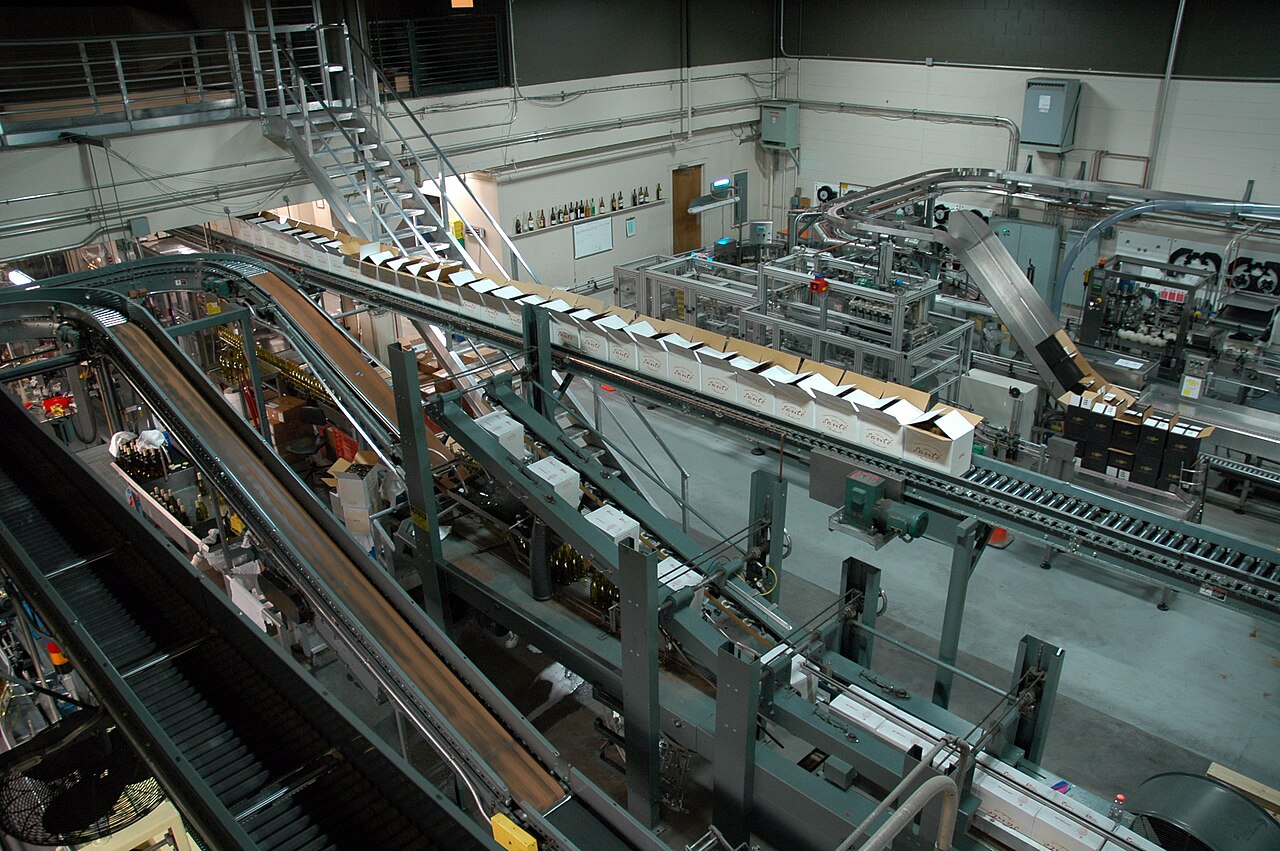
Once product is sealed in its primary pack, the hygiene constraints relax and the standard automation catalogue opens up: case packing, cartoning, tray handling and palletising with the same articulated arms and gantry systems used in general industry — the families listed in the complete robots section of the directory (233 companies as of 10 November 2026). The food-specific issues that remain are condensation, cold-store operation for chilled and frozen lines, and the changeover frequency of multi-SKU plants, which rewards quick-change tooling and recipe-driven programming over raw speed.
Washdown, materials and the certification file
The procurement file for a food-zone robot should contain, at minimum: the IP rating of every component in the splash zone (and honesty about what the rating covers), materials declarations for product-contact and near-product surfaces, food-grade (H1) lubricant specifications where lubricants exist near product, and design evidence for cleanability — sealed seams, sloped surfaces that drain, cable management that does not trap residue. Plants operating under retailer or export audits will have these demands made of them; a supplier who treats the file as routine has sold into food before, and one who treats it as an imposition has not.
Cleaning time is production time
The last food-specific discipline is operational: every robot and fixture must be cleaned on the plant's sanitation cycle, and designs differ enormously in the labour that takes. Tool-less strip-down, wash-in-place compatibility, and drying time before production resumes all come out of the same daily window. Evaluate them in the trial with the sanitation crew present, timed — a robot that is five percent faster and twenty minutes slower to clean is, on a real food line, the slower robot.
Frequently asked questions
What makes a robot suitable for food processing?
Survival and provability under the plant's hygiene regime: washdown-rated (IP) construction in the splash zone, corrosion-resistant materials, food-grade lubricants, and a design without seams or cable runs that harbour contamination — all documented for the plant's audits, not just asserted in a brochure.
Which robots are used most in food packaging?
Delta robots dominate exposed-product primary packaging for their pick rates and top-mounted, product-remote drives. Standard articulated arms handle the sealed, dry end of the line — case packing and palletising — where food-rated construction is usually unnecessary.
Do food plants need special grippers?
Yes. In the product zone, grippers must handle delicate items without damage, and must strip down for washing and inspection. Soft vacuum and gentle mechanical designs made for washdown service are the norm; a general-purpose gripper rarely survives the sanitation audit.
Why does cleaning time matter in robot selection?
Because sanitation runs on a fixed daily window shared with production. A robot that takes long to strip, wash and dry consumes productive hours every day. Timed cleaning trials with the plant's own sanitation crew are the honest way to compare designs.