
Short answer: not close — and the gap is not mainly about finger count. A robot hand's usefulness is set by how its fingers are driven, whether it can sense contact and slip, and how long it survives real work. Degrees of freedom are the easiest number to advertise and the least informative one to buy on. Today's best dexterous hands perform genuinely impressive demonstrations and a growing list of bounded tasks; none yet matches a human hand's combination of strength, finesse, durability and price.
Three ways to drive a finger
- Motor in every joint (direct drive). Maximum control and backdrivability, at maximum weight, cost and wiring complexity. Favoured by research hands where capability matters more than unit price.
- Tendon drive. Motors sit in the forearm and pull cables, like human anatomy. The hand stays slim and light, but tendons stretch, fray and complicate control — and maintenance becomes part of the product.
- Linkages and underactuation. Fewer motors than joints, with mechanical linkages or compliant elements distributing motion. The fingers wrap adaptively around shapes without being told to — less dexterity on paper, often more successful grasping in practice.
Underactuation deserves emphasis because marketing hides it: a hand with three motors and twelve joints is not a failed sixteen-motor hand. Adaptive wrapping is how a gripper survives contact with an uncertain world, and for most near-term jobs — holding tools, moving objects, steadying parts — it is the rational design point.
Touch is the other half of the hand
A hand that cannot feel is a clamp with fingers. Dexterous manipulation — rotating a part in-hand, noticing slip, setting down something fragile — needs contact information: force at the wrist, pressure at the fingertips, and increasingly optical tactile sensors that image the contact patch. This is why hand specialists and tactile-sensing companies are converging on the same product. Sanctuary AI, for example, publicly emphasises tactile sensing in its approach to robot hands — a useful signal of where the serious engineering effort is going, whatever one thinks of any single company's timeline.
The reality constraints: durability, cost, maintenance
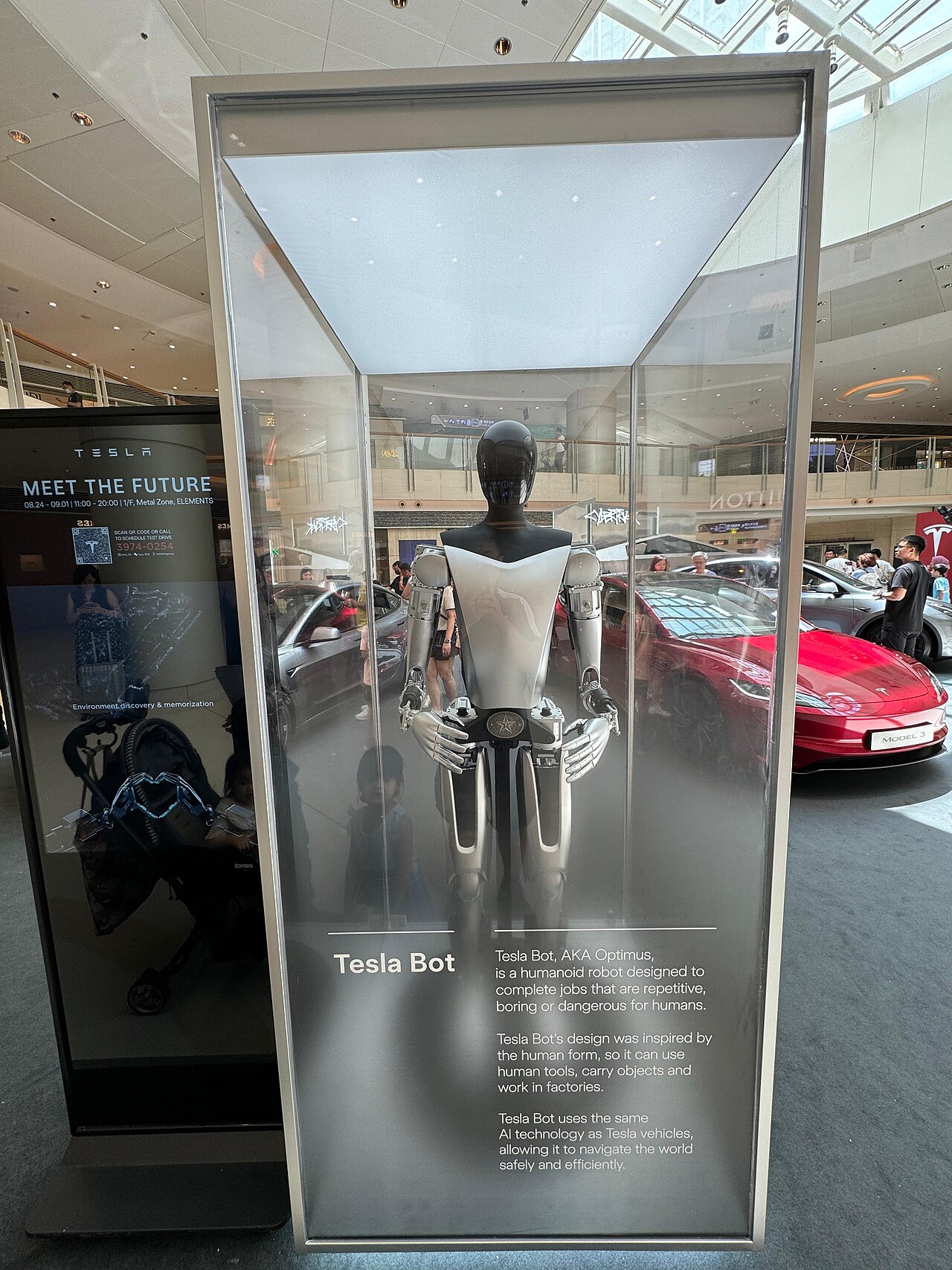
Hands live at the collision point of the robot's world. Fingertips abrade, tendons stretch, small gearboxes meet shock loads every time a grasp goes wrong. Ask a hand vendor the unglamorous questions: rated grasp cycles before service, what the fingertip wear parts cost and who replaces them, behaviour when a finger drive fails mid-task. The humanoid makers understand the stakes — Tesla, for instance, has shown successive generations of its Optimus hand design in public demonstrations, evidence that even the best-funded programmes treat the hand as an unsolved, iterating subsystem rather than a finished part. The hands and the companies behind them sit in the directory's end effectors and dexterous hands category — 30 companies as of 10 November 2026 — inside the wider story of humanoid robots in warehouses and factories.
How to evaluate a hand you are shown
When a vendor demonstrates a dexterous hand, watch for what the edit usually removes. Ask to see the same grasp repeated twenty times, not once, and note the failures between successes. Ask what the hand does with an object it has never seen, at a weight near its limit, and how it behaves when a grasp starts to slip — a hand that detects slip and re-grips is worth more than one with two extra fingers. Check the mundane specifications with the same care as the spectacular ones: rated grasp force and how it was measured, fingertip replacement cost and procedure, the rated cycle count on the most-loaded joint, and whether the tactile sensors survive the cleaning and abrasion of a real shift. Finally, ask who else is using the hand for work rather than research, and whether you may speak to them. Dexterity claims age quickly; reference users age slowly, and their answers are the most reliable specification sheet available.
Frequently asked questions
How many degrees of freedom does a robot hand need?
Fewer than the marketing implies. Many useful tasks — power grasps, holding tools, moving boxes and parts — work with adaptive, underactuated hands that have a handful of driven joints. High degrees of freedom matter for in-hand manipulation: rotating and repositioning an object without putting it down. Match the hand to the task list; a degree-of-freedom count by itself says little about what the hand can actually accomplish or survive.
Why are dexterous robot hands so expensive?
Density. A hand concentrates small motors or tendon drives, gearboxes, encoders, tactile sensors and control electronics into the most size-constrained, shock-exposed part of the robot — then multiplies that engineering by low production volumes. Each finger is effectively a small precision robot of its own. Costs fall as volumes rise, but a hand will remain one of the most expensive subsystems per kilogram on any humanoid.
Can robot hands feel what they are holding?
Increasingly, yes — within limits. Wrist force-torque sensors measure the overall load; fingertip sensors measure local pressure, and optical tactile sensors can detect texture and incipient slip. What hands still lack is the human combination: dense sensing everywhere, fused instantly, at no conscious cost. Current tactile capability is good enough to improve grasp reliability measurably, which is why serious hand programmes now treat sensing as core, not optional.
What can dexterous robot hands actually do today?
In demonstrations and bounded deployments: grasp a wide variety of everyday objects, operate some tools, sort and pack items, and perform simple in-hand adjustments. The limits show in cycle life, in delicate or deformable objects handled at speed, and in cost. For most industrial buyers today, a purpose-built gripper still beats a dexterous hand on the tasks both can do — the hand earns its place where the task variety itself is the problem.