
Short answer: China's robotics companies concentrate in three clusters with different strengths. The Yangtze Delta (Shanghai, Suzhou, Hangzhou, Nanjing) is strongest in complete robots and system integration. Shenzhen and the Pearl River Delta grew out of the electronics supply chain and lead in components, compact robots and fast-iterating makers. Beijing and the north produce research spinouts and embodied-AI teams. In the GlobleMatch directory, 73 robotics companies are headquartered in China as of 10 November 2026 — the second-largest country contingent after the United States — and which cluster a supplier sits in tells you a lot about how it works.
The Yangtze Delta: complete robots and integration depth
The Shanghai–Suzhou–Hangzhou corridor is where China's robot industry looks most like a mature supply chain. Shanghai hosts complete-robot makers such as AGIBOT, a general-purpose humanoid and embodied-AI company, and Fourier Intelligence, known for humanoids and rehabilitation robots. Hangzhou is home to Unitree Robotics, founded in 2016 and now one of the most recognised names in quadruped and humanoid platforms. Suzhou anchors the component side — Leaderdrive, a maker of harmonic reducers and precision drives, is based there — and Nanjing adds established industrial-arm makers such as Estun. For a buyer, the Delta's advantage is density: arm makers, reducer suppliers and integrators sit within a couple of hours of each other, so a single trip can cover a whole bill of materials.
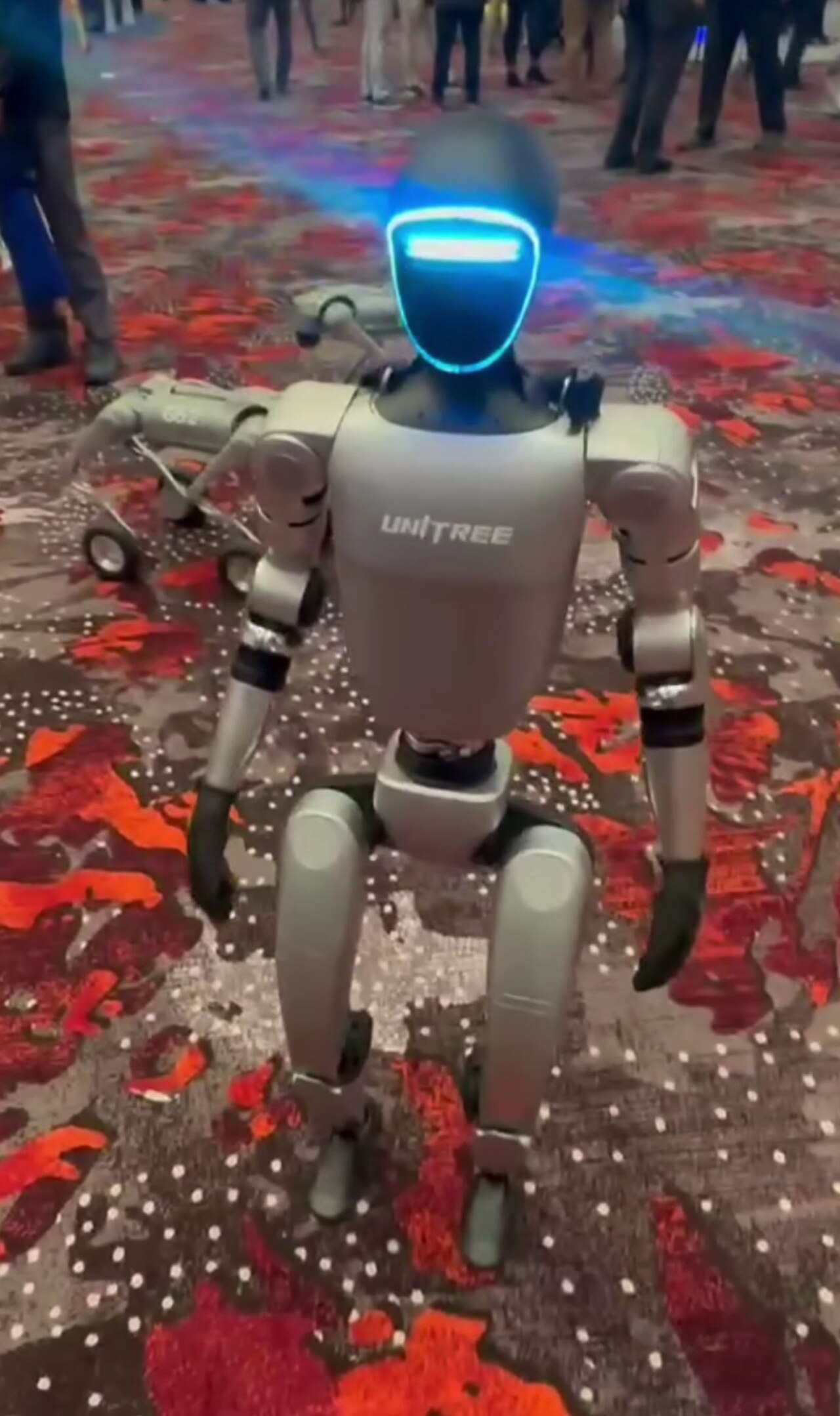
Shenzhen and the Pearl River Delta: the electronics inheritance
Shenzhen's robotics scene grew out of the world's deepest consumer-electronics supply chain, and it shows in the product mix: compact collaborative robots, warehouse systems and components produced at electronics speed. Dobot, a maker of desktop and collaborative arms, is a Shenzhen company; so is Hai Robotics, whose case-handling warehouse systems ship worldwide, and UBTECH, one of China's longest-running humanoid and service-robot makers. The practical consequence for buyers is iteration speed: a Shenzhen supplier is used to short product cycles, aggressive cost engineering and the component markets of Huaqiangbei on its doorstep. The trade-off is that factory discipline varies widely between makers — which is why an audit matters more here, not less.

Beijing and the north: research spinouts and embodied AI
Beijing's cluster is organised around universities and research institutes — Tsinghua, Peking University and the Chinese Academy of Sciences feed a steady stream of spinouts, and the capital hosts both warehouse-robotics names such as Geek+ and a dense population of embodied-AI startups working on humanoids and robot foundation models. Beyond the three main clusters, individual industrial cities hold specific strengths: Wuhu in Anhui province, for example, is the base of Efort, one of China's established industrial-robot makers. Buyers researching Chinese suppliers can browse the full set in the robotics directory and filter by category before planning travel.
What the cluster means for your sourcing
- Match the cluster to the category. Components and electronics-adjacent products: start in the Pearl River Delta. Complete arms, humanoids and integration-heavy projects: start in the Yangtze Delta. Software, embodied AI and research partnerships: include Beijing.
- Expect different working styles. Delta integrators tend to run documentation-heavy, process-led operations; Shenzhen makers iterate faster and quote faster. Neither is better — they suit different buyers.
- Plan one region per trip. The clusters are far apart. A focused three-day trip in one delta, with audits booked in advance, beats a scattered week across three cities.
- Verify on site. Cluster reputation is not supplier quality. Our factory audit checklist sets out what to check when you arrive.
Exhibitions follow the same geography, and can anchor a trip. Beijing hosts the World Robot Conference, the country's flagship robotics event; Shanghai and Shenzhen run major industry fairs of their own. The efficient pattern is fair plus factories: use the exhibition to meet ten suppliers in two days, then spend the following days inside the three or four factories that mattered, while you are still in the right cluster.
China will remain the deepest single-country sourcing pool in robotics for the foreseeable future — the directory's 73 China-based companies span every category from reducers to humanoids. Buyers who learn the cluster map first spend their travel budget on verification instead of orientation.
Frequently asked questions
Where are China's robotics companies concentrated?
In three main clusters. The Yangtze Delta (Shanghai, Suzhou, Hangzhou, Nanjing) leads in complete robots, components such as reducers, and system integration. Shenzhen and the Pearl River Delta lead in compact robots, warehouse systems and electronics-born components. Beijing and the north produce research spinouts and embodied-AI companies. The GlobleMatch directory lists 73 robotics companies headquartered in China as of 10 November 2026.
Which Chinese city is best for sourcing robot components?
It depends on the component. Shenzhen and the wider Pearl River Delta are strongest where components meet electronics — drives, controllers, compact assemblies. Suzhou in the Yangtze Delta is a centre for precision reducers, home to makers such as Leaderdrive. Many buyers audit one supplier in each cluster before deciding, because component quality varies more by company than by city.
What is the Yangtze Delta's role in Chinese robotics?
It is the most complete cluster: complete-robot makers in Shanghai and Hangzhou (AGIBOT, Fourier Intelligence, Unitree), precision component makers around Suzhou, and a deep bench of system integrators. The density means a buyer can source an arm, its reducers and an integrator within one region, which shortens both logistics and the audit trail.
How should a buyer plan a sourcing trip to China?
Pick one cluster per trip, match it to the category being sourced, and book factory audits in advance rather than relying on exhibition meetings. Use the trip to verify production reality — lines, work in progress, test and documentation — not to tour showrooms. A focused regional trip of three or four days usually covers five to eight serious suppliers.