
The purchase order is not the finish line
A factory can buy a capable robot and still fail to acquire a working production cell. A robot arm, gripper, machine interface, safety perimeter, software configuration and operator procedure are interdependent parts of the final outcome. This distinction matters most when a supplier demonstrates an impressive robot in a controlled environment but the buyer needs dependable throughput on a real line. The practical question is not merely which robot to buy. It is who will make the integrated system work, who will prove it works, and who will fix it when it does not.
The International Federation of Robotics reported more than 600,000 industrial robot installations worldwide in 2025, while global operational stock reached 5 million units. These are industrial-robot statistics, not counts of turnkey cells or successful commissioning projects. Source: IFR, World Robotics 2026.
That distinction should shape every request for proposal. Installation demand says little about the quality of individual integration contracts. The buyer needs evidence of application fit, integration ownership and a measurable acceptance plan.
Define the boundaries of the system
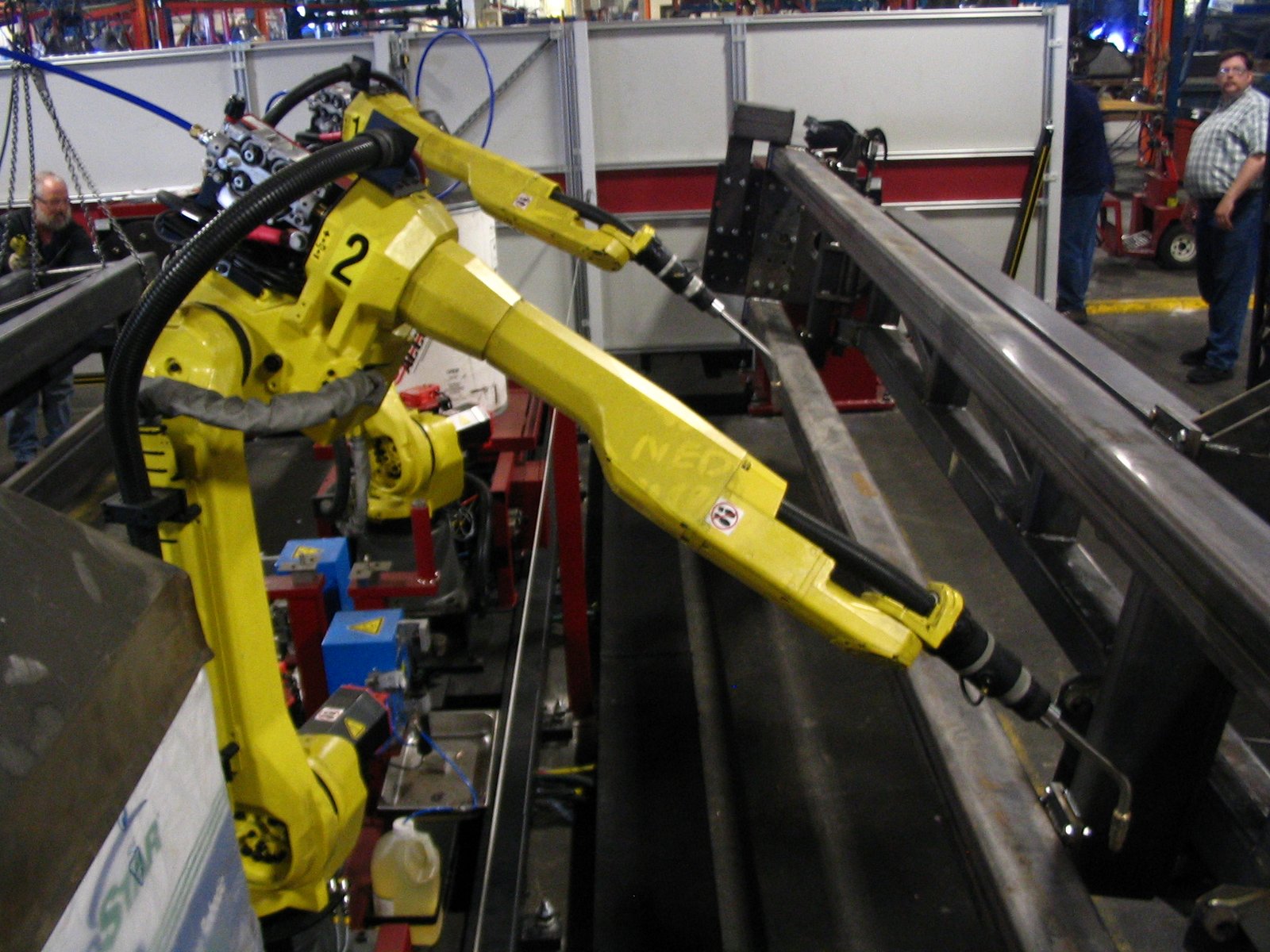
OSHA's technical manual describes an industrial robot system as including the robot, end-effector, control systems, power sources, sensors and communications interfaces. It also identifies collision, trapping and other hazards that can arise from robot applications. Source: OSHA Technical Manual, Section IV, Chapter 4.
The procurement consequence is straightforward: the quotation must identify the whole system, not just the arm. Ask bidders to draw the cell boundary, including upstream and downstream machines, conveyors, fixtures, workholding, guarding, scanners, software connections and manual interventions. Ask for a responsibility matrix that names the party accountable for each interface. This is an editorial procurement recommendation, not a quoted OSHA requirement.
An integrator may supply the robot but depend on a separate controls contractor for a programmable logic controller, a vision specialist for detection, and the buyer's own maintenance team for utilities. None of those arrangements is inherently wrong. Ambiguity is the risk. The contract should identify a single commissioning lead and an escalation route when a failure spans two vendors.
Compare solutions by the application, not the demonstration
A polished demonstration often proves that a system can perform one motion under selected conditions. It does not necessarily prove it can tolerate product variation, shift changes, dirty sensors, inconsistent packaging or an upstream machine stopping unexpectedly. Buyers should provide representative parts and define the actual operating envelope before bidders estimate cycle time.
The request for proposal should specify the range of product dimensions, weights, materials and tolerances; target units per hour; expected operating hours; available floor area; upstream and downstream signals; changeover frequency; and known failure modes. For each requirement, ask the bidder to mark whether it is standard, configured, engineered, excluded or dependent on a third party. These categories prevent a prototype capability from being presented as an off-the-shelf commitment.
A useful comparison separates three questions: Can the robot physically execute the task? Can the integrated cell meet the buyer's production conditions? Can the supplier support it over time? Each question needs different evidence.
Use a staged acceptance protocol
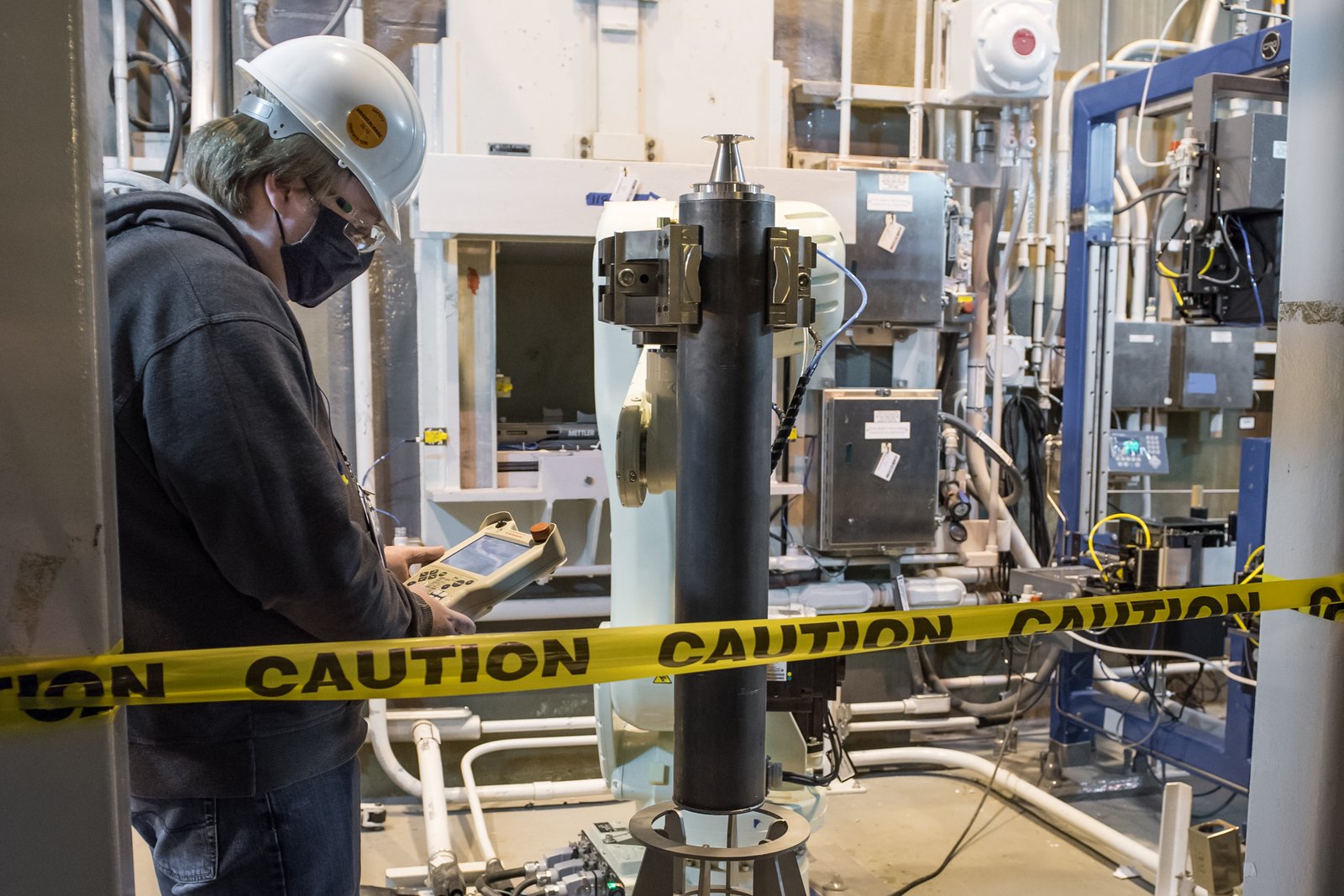
An acceptance protocol should be agreed before the deposit, not invented after delivery. One reasonable structure has four stages. First, design review checks layout, interfaces, safety approach and assumptions. Second, factory acceptance testing demonstrates agreed functions at the supplier's site, using representative samples where feasible. Third, site acceptance testing verifies operation with actual utilities, operators and neighboring equipment. Fourth, a sustained production trial measures reliability across a realistic period. These stages are suggested commercial controls, not universal statutory mandates.
A good test plan defines the sample size, test conditions, acceptable defect rate, cycle-time measurement, exclusions, data capture, retest process and signatures. Avoid using only a headline throughput number. A cell that runs quickly for five minutes but repeatedly stops for resets may miss the buyer's economic objective. Track accepted good units, unplanned stops, changeover time and operator interventions separately.
Tie milestone payments to observable deliverables. A shipment milestone proves shipment; it does not prove commissioning. A successful demonstration at a vendor site proves something different from sustained production at the buyer's facility. A procurement team should make those distinctions explicit in its payment and remedy clauses, subject to legal review.
Make safety a joint design responsibility
OSHA's robotics overview notes that many robot accidents occur during non-routine activities such as programming, maintenance, testing and adjustment. OSHA also states that there is no single OSHA standard specifically for the robotics industry, while other applicable standards and obligations may still apply. Sources: OSHA robotics overview and OSHA robotics standards.
The buyer should therefore ask for a documented hazard and risk assessment covering not only automatic production but also setup, troubleshooting, recovery, maintenance and cleaning. Request evidence for safeguarding choices, access controls, emergency-stop behavior and validation of safety functions. Assign the system integrator and site owner explicit roles for risk review and final approval. A site-specific qualified safety professional should determine the applicable requirements; this article does not certify compliance.
When a robot cell interacts with workers, a risk assessment cannot be replaced by marketing labels such as collaborative, AI-powered or intelligent. Those words do not define a safe application. The robot, tooling, payload, speed, reach, environment and operating mode must be considered together.
Test the exception paths
Normal operation is only part of the real workflow. Ask bidders to demonstrate what happens when a part is missing, a gripper loses vacuum, a camera cannot classify an item, the network disconnects, a protective device is triggered or the upstream machine stops. Determine whether the system pauses safely, how an operator diagnoses the issue and how production restarts.
The support plan should distinguish a software defect from a consumable failure and a site infrastructure problem. Require clear response-time definitions, spare-parts ownership, remote-access permissions, software backup arrangements and a change-control process. The buyer should retain access to configuration records and recovery instructions needed to operate the purchased system, subject to negotiated intellectual-property and security terms.
Build a total-cost comparison
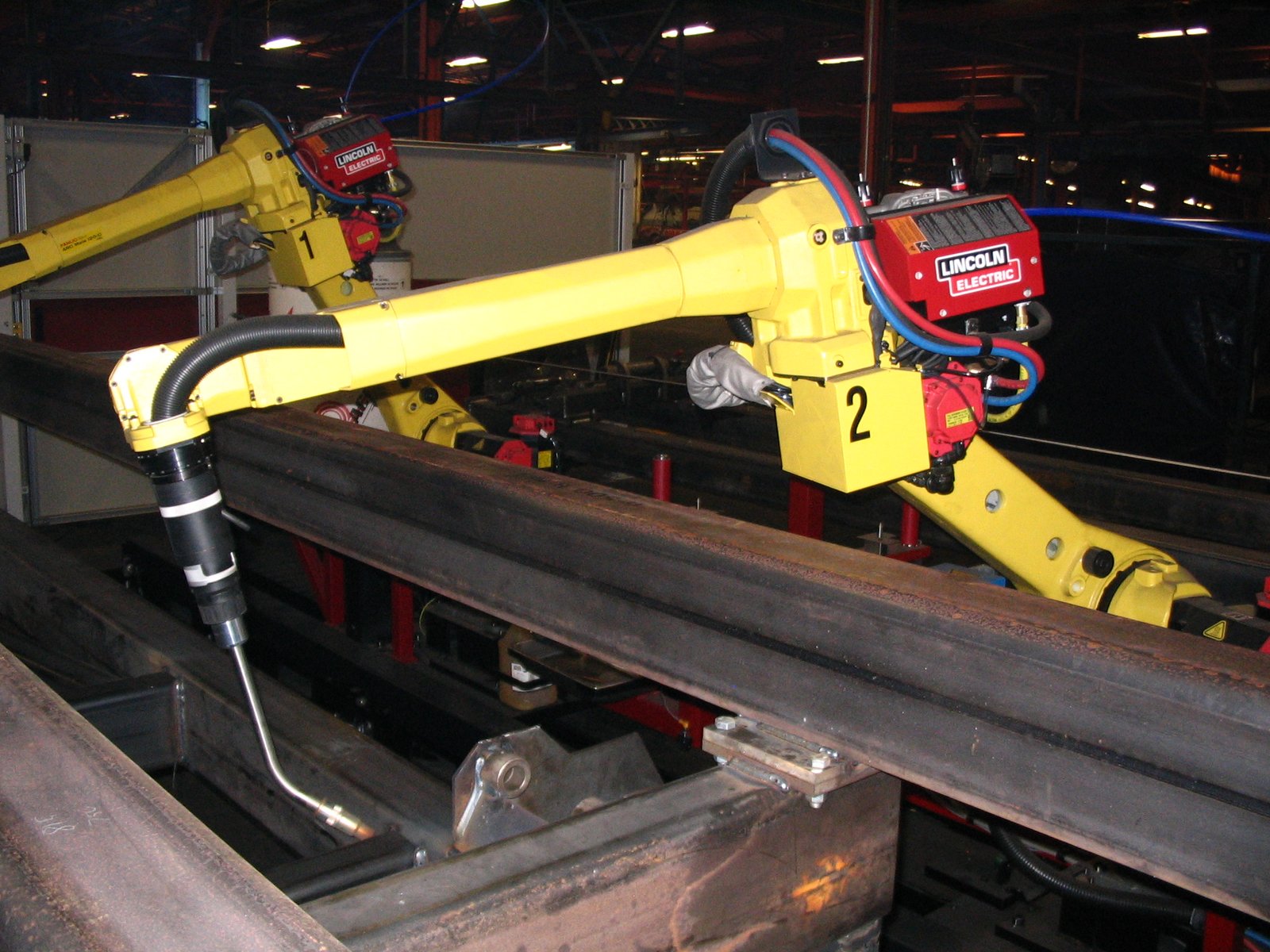
The robot purchase price is not the total cost of automation. A buyer-side comparison should include engineering, installation, guarding, tooling, utilities, operator training, production disruption, preventive maintenance, software licenses, support, spare parts and future changeovers. The estimate should also include realistic ramp-up and scrap assumptions.
Consider two hypothetical proposals. Bid A is cheaper but excludes line integration and commissioning support. Bid B is more expensive but includes site acceptance, operator training and a defined response service. Without normalizing the scope, a price comparison is misleading. Do not assume Bid B is better: quantify the missing work and evaluate vendor evidence. These are illustrative scenarios, not market price observations.
An economic case should use a range rather than a single payback claim. Model conservative, expected and optimistic throughput; include downtime and implementation risk; and identify which assumptions depend on the buyer's operations. Require suppliers to separate measured performance from forecasts.
Evidence buyers should request
A defensible vendor dossier contains an application description, system architecture, interface responsibility matrix, test plan, safety deliverables, project schedule, training plan, support terms and documented exceptions. Ask for references to comparable installations only where customers have consented to reference checks. Avoid treating an unverified customer logo as proof of deployment.
For a multi-vendor shortlist, record each claim beside its source and verification date. A supplier's product page may substantiate the existence of a model, but it rarely proves that the model achieves the buyer's specific cycle time. A case study can illustrate an application, but it is not a substitute for site acceptance criteria. The more specific the claim, the more specific the required evidence.
A practical negotiation checklist
Before signing, the buyer and integrator should agree on the following questions in writing: What exact system is delivered? Who owns every interface? Which representative parts and operating conditions are in scope? What constitutes a passed test? Who corrects failed tests and at whose expense? Who signs final acceptance? What documentation, backups and training are transferred? What happens if production performance falls below the agreed threshold? Who handles a safety-related change? What happens if a component becomes unavailable?
These questions are not intended to impose one contract model. A small pilot and a multi-site rollout deserve different levels of formality. But both benefit from an evidence trail that connects the buyer's problem to the supplier's commitment and the final result.
The GlobleMatch perspective
A directory can help buyers discover robot manufacturers, integrators, gripper vendors and software providers. Discovery alone does not establish compatibility or project accountability. The next useful layer is structured evidence: application fit, interface ownership, documented test conditions and verified service scope. That is where a directory can evolve into a credible B2B procurement network without selling the buyer's introduction to the highest bidder.
For suppliers, this approach creates a fairer competition. A vendor with a higher quoted price but stronger integration and acceptance evidence can explain its value. For buyers, it converts a vague promise of automation into measurable obligations. The most important procurement question is not 'Does the robot work?' It is 'Will the complete system work here, under these conditions, with these people, and who is accountable when it does not?'
Editorial guidance, not legal advice. Safety and commercial recommendations require qualified local review before use as policy or contractual terms.
Related directory categories
Browse the categories this analysis points to in the GlobleMatch directory: robotics system integrators, industrial robot suppliers, end effectors and robotics software and AI suppliers.
Sources
- IFR, Five Million Robots now Operate in Factories Globally (World Robotics 2026 global release): ifr.org — global installation and operational stock statistics; factual paraphrase only.
- OSHA, Technical Manual, Section IV, Chapter 4: osha.gov — system components and hazard classes; factual paraphrase only.
- OSHA, Robotics overview: osha.gov/robotics — non-routine operation risk context.
- OSHA, Robotics standards: osha.gov/robotics/standards — standards context.