
Japan is where much of the world's factory automation is designed and built. For buyers of industrial robots, precision reducers, servo systems and machine vision equipment, it offers something few supply bases can match: complete robot manufacturers and the specialist component makers behind them, in one country, with a long record of shipping to overseas plants. According to the Japan Robot Association (JARA), Japanese manufacturers produced 176,215 industrial robots in 2024, and the association put the value of production at JPY 781.1 billion. This guide explains how the Japanese industry is structured, what buyers typically source from it, and how the procurement process works in practice, including how to run the search through GlobleMatch.
Why buyers source robotics from Japan
Scale is the first reason. JARA's annual results for 2024 record orders received of JPY 832.1 billion and shipments of JPY 825.2 billion across member and non-member manufacturers. Even in a year when order and production values declined, the Japanese industry remained a production base of global weight, and JARA's outlook for 2025 pointed to recovery, with orders forecast to rise 4.6 percent to JPY 870 billion and production 6.3 percent to JPY 830 billion.
The second reason is export orientation. Japan's robot industry was built to sell abroad. The Japan External Trade Organization (JETRO) has noted that Japan has maintained the world's largest share of exports of industrial robots since 2007. JARA's member data for the final quarter of 2024 shows the same pattern at unit level: of 42,250 robots shipped by member companies in that quarter, 31,980 went to export markets, roughly three of every four units. A supply base that ships most of its output overseas is used to foreign specifications, export documentation and overseas service arrangements.
The third reason is depth in components. A factory buyer rarely needs only a robot arm. Projects also need the reducers that give the arm its precision, the servo motors and drives that move it, and the vision systems that let it see. Japan has established domestic makers in each of these layers, which allows buyers to source a matched stack rather than stitching together unrelated suppliers.
The structure of the Japanese robotics industry
Robot manufacturers
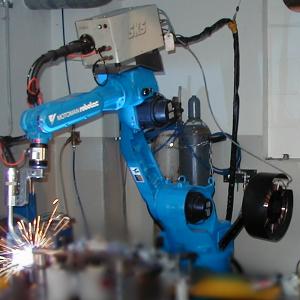
Japan's robot makers include FANUC, known for its yellow articulated robots as well as the CNC controls and servo systems behind them; Yaskawa Electric, whose Motoman robots sit alongside its original business in servo motors and AC drives; Kawasaki Heavy Industries, an early mover in industrial robots with a range spanning welding, painting and cleanroom handling; and Nachi-Fujikoshi, which combines robots with bearings, cutting tools and hydraulic equipment. Around them sits a wide tier of smaller specialists in SCARA robots, cartesian systems, end effectors and integration.
Precision reducers and gearing
Two Japanese companies define this layer. Nabtesco is the established name in RV reduction gears, the large precision reducers used in the main joints of industrial robots. Harmonic Drive Systems supplies strain wave gearing, the compact, low-backlash reducers used in smaller robot joints and precision positioning equipment. Because reducer capacity is a genuine bottleneck in robot production, buyers planning volume orders treat reducer allocation as an early question, not an afterthought.
Servo systems, drives and controls
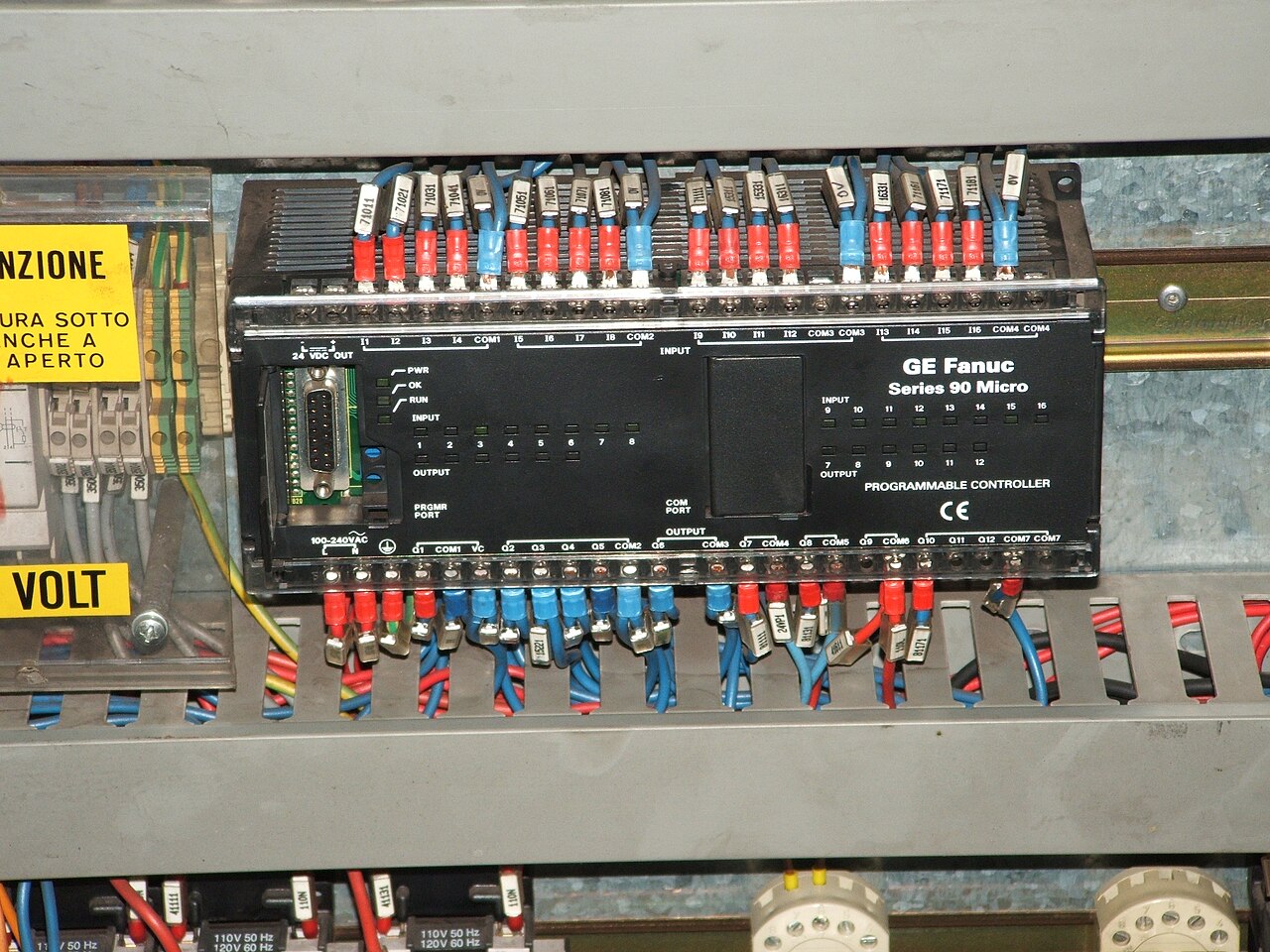
Servo motors and amplifiers are the muscles of automation equipment, and Japan's suppliers here overlap with its robot brands: Yaskawa, FANUC and Mitsubishi Electric all supply servo systems, programmable controllers and factory automation equipment to machine builders worldwide. This layer matters to component buyers who are not buying complete robots at all, but building machines of their own.
Machine vision and sensing
Keyence built its business on sensors, measurement systems and machine vision sold through a direct engineering sales model, while Omron supplies vision systems, sensors and safety components as part of a broad factory automation range. For buyers, this layer is where inspection, guidance and measurement capability is sourced.
What buyers typically source from Japan
The regular shopping list includes complete articulated, SCARA and collaborative robots; RV and strain wave reducers; servo motors, drives and CNC controls; machine vision cameras, sensors and measurement systems; and dedicated equipment such as surface mount and electronics assembly robots, which feature prominently in JARA's shipment categories for the electronics industry. Buyers also source spare parts and long-term service arrangements, because a robot line is a ten-to-twenty-year commitment and the support terms matter as much as the purchase price.
The sourcing process, step by step
1. Specify the application, not just the product. Japanese suppliers engineer to the application: payload, reach, cycle time, environment (welding, cleanroom, food handling) and the standard the equipment must meet. A request that describes the task and the production environment gets a serious answer; a request for "a robot, best price" usually does not.
2. Choose the channel. Large robot makers sell through overseas subsidiaries and authorised distributors, which is the right route for standard robots, commissioning and local service. Specialist component makers may sell direct, through their own overseas offices, or through Japanese trading companies and distributors that aggregate smaller orders and handle export logistics. For smaller buyers, a trading company or an authorised distributor is often the practical channel for reducers and servo components.
3. Use public support infrastructure. JETRO, Japan's trade promotion organisation, maintains offices abroad and programmes that connect foreign companies with Japanese suppliers, and its published trade data is a useful cross-check on which categories Japan actually exports at scale. JARA's published statistics are the reference point for production and shipment volumes by application, which helps buyers judge whether a category is a Japanese strength before spending time on it.
4. Qualify before committing. Standard practice is to verify the seller's status (manufacturer, authorised distributor or independent trader), request datasheets and drawings against your specification, and, for components, order samples or a pilot quantity before a volume commitment. For robots, confirm the controller generation, the teach pendant language options, and who provides installation and training in your country.
5. Contract carefully on the details that differ. Expect quotations in yen or US dollars with defined validity periods, lead times that reflect real production allocation (longer for reducers and large robots), and warranty terms that specify whether service is delivered by a local subsidiary, a distributor or by return to Japan. Agree on packaging, shipping terms and spare parts availability in writing before the first production order.
Risks and practical notes
Lead time is the recurring surprise: reducer and servo capacity is shared with the robot makers' own production, so component lead times can stretch when robot demand recovers, as JARA's 2025 outlook suggested it would. Price is the second: headline prices from unauthorised channels can exclude the controller software licences, cables and commissioning that make a robot usable, so compare complete working configurations. Finally, documentation quality is generally high, but confirm that manuals, safety documentation and software interfaces are available in your working language before payment, not after delivery.
Sourcing from Japan through GlobleMatch
GlobleMatch lists Japanese robotics and automation suppliers in its directory, and buyers can work in two ways. You can browse the directory by category and country, open company profiles, and contact suppliers directly through their listed websites. Or you can post one sourcing request describing the equipment, quantities and destination, and receive answers from suppliers that match it. Posting a request is free for buyers. Introductions are made on the basis of fit between the request and the supplier's profile; suppliers cannot pay to be ranked or recommended, and there are no paid placements in the matching process. For Japanese sourcing in particular, a precise request, with application, payload, quantities and delivery country, is what produces useful replies from serious manufacturers and distributors.
Frequently asked questions
Does Japan still export most of the robots it makes?
Yes. JARA member data for the fourth quarter of 2024 shows 31,980 of 42,250 shipped units went to export markets, and JETRO records that Japan has held the world's largest share of industrial robot exports since 2007.
Can small buyers order reducers and servo components, or only large manufacturers?
Smaller buyers are routinely served through trading companies and authorised distributors, which aggregate orders and manage export paperwork. Direct accounts with component makers are easier to open at sustained volumes.
What should an RFQ to a Japanese supplier include?
Application and environment, technical specification (payload, accuracy, interface, standard), quantities and forecast, destination country, required documentation language, and your service expectations. Precision in the request is the fastest route to a precise quotation.
Is sourcing through GlobleMatch free for buyers?
Yes. Posting a sourcing request is free, and matching is based on fit. There is no paid ranking, so suppliers cannot buy their way into your shortlist.
Sources
Every figure in this article traces to one of the following primary sources:
Japanese robot production of 176,215 units in 2024; production value of JPY 781.1 billion; orders of JPY 832.1 billion; shipments of JPY 825.2 billion; 2025 forecast of orders rising 4.6 percent to JPY 870 billion and production 6.3 percent to JPY 830 billion: Japan Robot Association (JARA), annual orders, production and shipments results for 2024 — https://www.jara.jp/e/data/dl/year/IR\_CY2024\_e.pdf
Fourth quarter 2024 shipments by JARA member companies of 42,250 units, of which 31,980 units were exported: Japan Robot Association (JARA), quarterly results, October to December 2024 — https://www.jara.jp/e/data/member/dl/quarter/October-December-2024.pdf
Japan holding the world's largest share of industrial robot exports since 2007: Japan External Trade Organization (JETRO), Global Trade and Investment Report 2018 — https://www.jetro.go.jp/en/news/releases/2018/77fd93c565ffb27a.html
Image credits
Image: Articulated industrial robot with a welding torch — Public domain, by H. Weihe, via Wikimedia Commons
Image: A FANUC programmable logic controller installed in a drive cabinet — Public domain, via Wikimedia Commons