
The short version: the past 48 hours brought three new robotics funding rounds - RMB 500 million for Wuxi robot-chip startup Xilect, a strategic round of several hundred million yuan for Chinese robot rental platform Qingtianzu, and a $189,000 angel commitment for Pennsylvania construction-robot maker Raise Robotics - while Jensen Huang resigned as NVIDIA's chief executive, OpenAI disbanded its stand-alone robotics team in favour of general models, Rhoda AI detailed a robot model trained on internet video, Melexis launched a fingertip module that feels force in three axes, and six AGIBOT humanoids were graded on a 24-hour shift in a working Shanghai convenience store.
Funding rounds
Xilect raises RMB 500 million in an angel round to build the robot's brain on one chip
Xilect - the English name of Xixuan Chuangzhi Technology (Wuxi) Co., Ltd. - has closed an angel round of RMB 500 million at a post-money valuation of RMB 4 billion, according to Gasgoo. The round was co-led by GGV Capital and Matrix Partners China, with participation from Heli Capital, CDH Investments' Longxin Venture Capital, SAIC Hengxu Capital, Yaotu Capital, Zhengxuan Capital, Xin Capital, Advantage Capital, Boya Ventures and others, according to Zhitong Finance, via Longbridge. Xilect was founded in May 2026 in Wuxi, jointly initiated by GPU designer MetaX and humanoid maker UBTech Robotics, with Fenglong as a third founding shareholder, according to TechNode. It is designing a system-on-chip that combines multimodal perception, decision-making and motion control on the robot itself - an integrated "large-and-small-brain" processor whose stated development goal is to surpass NVIDIA's Thor chip, according to Gasgoo; the chip is currently in architecture design. The money goes to core chip and computing-platform research, software toolchains, expanding the research team and joint validation with robot manufacturers and industry customers. Xilect plans to give partners a development and verification platform in 2027 and to release its first SoC, with an accompanying embodied-intelligence solution, in 2028.
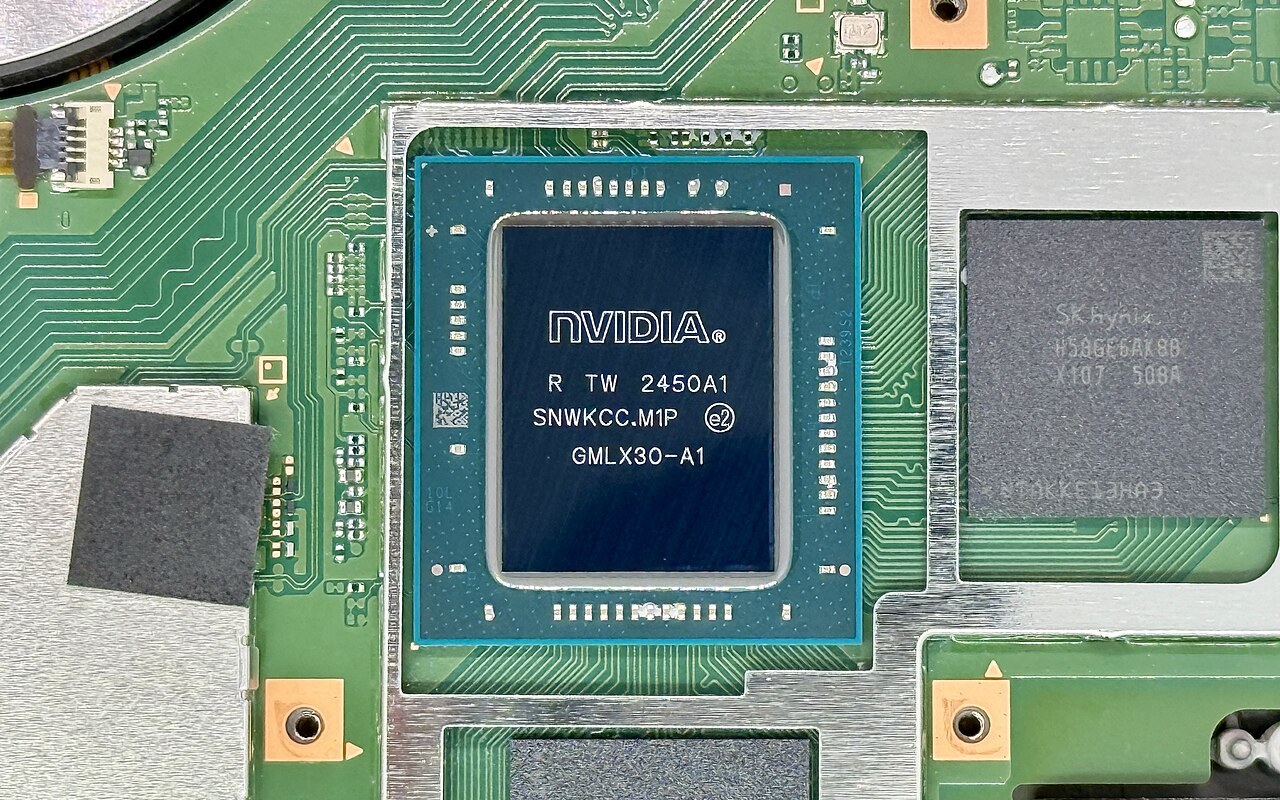
Xilect sits in the core-components layer we track with the robot makers themselves: a humanoid manufacturer co-founding its own silicon supplier is vertical integration at the industry's most contested layer - the computer inside the robot. The RMB 4 billion valuation prices that parentage and the roadmap, not a product: there is no chip to benchmark until the 2027 partner platform, and the 2028 SoC date is the claim this round will be judged against.
Qingtianzu closes a strategic round of several hundred million yuan to rent out robot labour
Qingtianzu, a Chinese robot rental platform, announced on November 13 that it has closed a strategic financing round of several hundred million yuan - no exact figure was disclosed - with participation from Heda Investment, Houwei Capital, the Mango industrial investment arm, and Zhonglian Jisong, among other industrial and entertainment investors, according to Beijing News, via Sina. The round will fund application-service research, rollout of the company's Worken training system, ecosystem building and an upgrade of its national fulfilment network. Alongside the closing, Qingtianzu announced a brand and business-model upgrade from "robot rental" to "robot productivity services", extending the platform's work from matching equipment supply and demand to task organisation, fleet scheduling and continuing service. Per Qichacha records cited by Sina, the company was founded in December 2025 with AGIBOT as its largest shareholder; beyond AGIBOT it has connected nearly 20 robot-body brands, and 20 national operating centres are now in operation. Chinese reporting describes this as the company's seventh disclosed financing round of 2026.
Qingtianzu is the services mirror of the hardware rounds around it: its capital buys operating centres, scheduling software and a training system - the fulfilment layer that decides whether rented robots actually produce work. A rental platform founded by a robot maker, now raising from entertainment and logistics investors, is also a distribution story: each new operating centre is shelf space for every brand on the platform, not just its largest shareholder's.
Raise Robotics wins a $189,000 commitment from Penn State's angel network
Raise Robotics, a Pennsylvania company building robots for construction and industrial work at height, has received a $189,000 investment commitment from Nittany Angels, Penn State's official angel investment network - the network's second investment - according to Penn State. Raise was co-founded by Penn State alumnus Conley Oster, its co-founder and chief operating officer. Its Autonomous Mobile Fabricator mounts on standard aerial work platforms such as scissor lifts and carries swappable tools, so crews stay on the ground while the robot works overhead; the system rehearses each new job in simulation before reaching the site and adapts to conditions in real time. The company reports zero safety incidents across more than 6,000 field hours, projects across eight states, and a recent configuration demonstrating operational ability roughly six stories in the air - company-reported figures. The announcement notes that falls account for roughly one in three construction deaths and that fall protection has topped OSHA's most-cited violations for 15 years running.
This is the smallest cheque in today's digest by three orders of magnitude, and the most concrete use case: the product is not a general-purpose humanoid but a tool carrier for the specific hours when a person would otherwise be working at height. Angel-network money at this scale buys field validation, and Raise's reported metric - incident-free hours aloft - is exactly the number its buyers will ask for.
Industry moves
Jensen Huang resigns as NVIDIA chief executive; Colette Kress takes over as interim CEO
NVIDIA announced on November 12 that Jensen Huang has resigned as President, Chief Executive Officer and board member, effective immediately, ending 33 years leading the company he co-founded, according to NVIDIA's official release; a Form 8-K filing states the board accepted the resignation on November 11. Colette Kress, Executive Vice President and Chief Financial Officer since September 2013, has agreed to serve as Interim CEO while continuing as CFO, until a permanent successor is named; the board will consider internal and external candidates. Harvey C. Jones was appointed the board's first-ever Chair. NVIDIA's announcement gives no reason for the resignation, and this digest repeats none of the speculation about reasons published elsewhere. NVIDIA will report its third-quarter fiscal 2027 results on Tuesday, November 17, as previously scheduled, and its new Chair said the board expects operations, customer commitments and the product roadmap to continue without interruption.
No supplier touches more of this digest than NVIDIA: its Jetson computers run robots in these pages weekly, its Isaac platform and GR00T models anchor the foundation-model layer, and one of today's funding rounds is a startup founded to out-build its Thor chip. A leadership change at that supplier is robotics news, and November 17 - the first earnings call under an interim CEO - is the first checkpoint for the continuity the board has promised.
OpenAI disbands its stand-alone robotics team, betting general models can run robots
OpenAI has disbanded its stand-alone robotics team and reassigned its people across the company, according to a Fortune exclusive published November 13, which OpenAI confirmed to Fortune. The robotics research team moved into the main research organisation, reporting to Chief Research Officer Mark Chen, while the applied robotics and hardware teams moved into the larger Applied organisation under President Greg Brockman. A spokesperson told Fortune that robotics remains a core part of OpenAI's long-term vision and presented the reorganisation as the fastest route to general-purpose robots, not a retreat. The reported reasoning is that general frontier models, including GPT-6 Astra, have proved applicable to robots directly. Fortune cites an NVIDIA study in which an Astra-driven agent scored 74.8% on a simulated manipulation benchmark, against 51.0% for the best specialised robot model on that leaderboard - a simulation result, not a test on physical hardware. Fortune also reports that OpenAI is developing its own humanoid robot, with CEO Sam Altman targeting a first public demonstration in 2027; no headcount for the moved teams was reported.
The move challenges the founding premise of the robot-brain startups this digest tracks - that robots need dedicated models of their own - and Fortune's report carries the counterpoints in the same piece: CMU's Guanya Shi noted that large models are slow and cloud-hosted, while MIT's Russ Tedrake noted that robot companies hold deployment experience and site data that AI labs lack. Whether a general model can run a robot in a benchmark is now a reported result; whether it can run one on a factory floor, all shift, is the open question.
Rhoda AI trains its robot model on internet video, then teaches it the job in hours
Rhoda AI, a Palo Alto robotics company, pretrains its direct video action (DVA) model on internet-scale video to build a prior on motion, physics and physical interaction, according to The Robot Report (November 13). The model reads a history of video frames, action tokens and language tokens, predicts the next few hundred milliseconds as video, converts that prediction into robot actions, executes for about half a second, and then re-observes the scene in a closed loop, co-founder and CEO Jagdeep Singh told The Robot Report. The company recently extended the model with mobile DVA, which combines manipulation and mobility in one policy, and says a new task then needs only about 10 to 20 hours of task-specific post-training. Rhoda is working with customers in automotive, manufacturing, logistics and e-commerce. For the record: Rhoda's $450 million Series A is not new funding - the company emerged from 18 months of stealth with that round earlier this year.
Rhoda belongs to the robot data and software layer we track separately in this digest, and its bet is the mirror image of the teleoperation model: where data-collection startups sell robot hours, Rhoda treats the existing internet as the dataset and spends its robot hours only at the end. Read alongside the OpenAI item above, the same week produced two versions of one claim - that robot intelligence will come from very large general data, not from robot-specific datasets alone.
Melexis gives humanoid hands a fingertip that feels force in three axes
Melexis introduced the MLX90901 Tactile Fingertip Module on November 12, its first mechatronic module, bringing true 3D force sensing - normal force and shear - to humanoid robotic hands, according to the company's release. Built on Melexis's magnetic Tactaxis technology, the module combines the sensor, magnet, elastomer, mechanical structure and supporting electronics in a single unit. Its published specifications are a normal-force range of 15 N, a shear-force range of 4 N, 10% full-scale accuracy and a typical resolution of 200 mN, with an I2C interface to hand controllers. The DVK90901 evaluation kit is now available. Melexis says the launch culminates four years of Tactaxis development, from individual tactile pixels to a standard module.
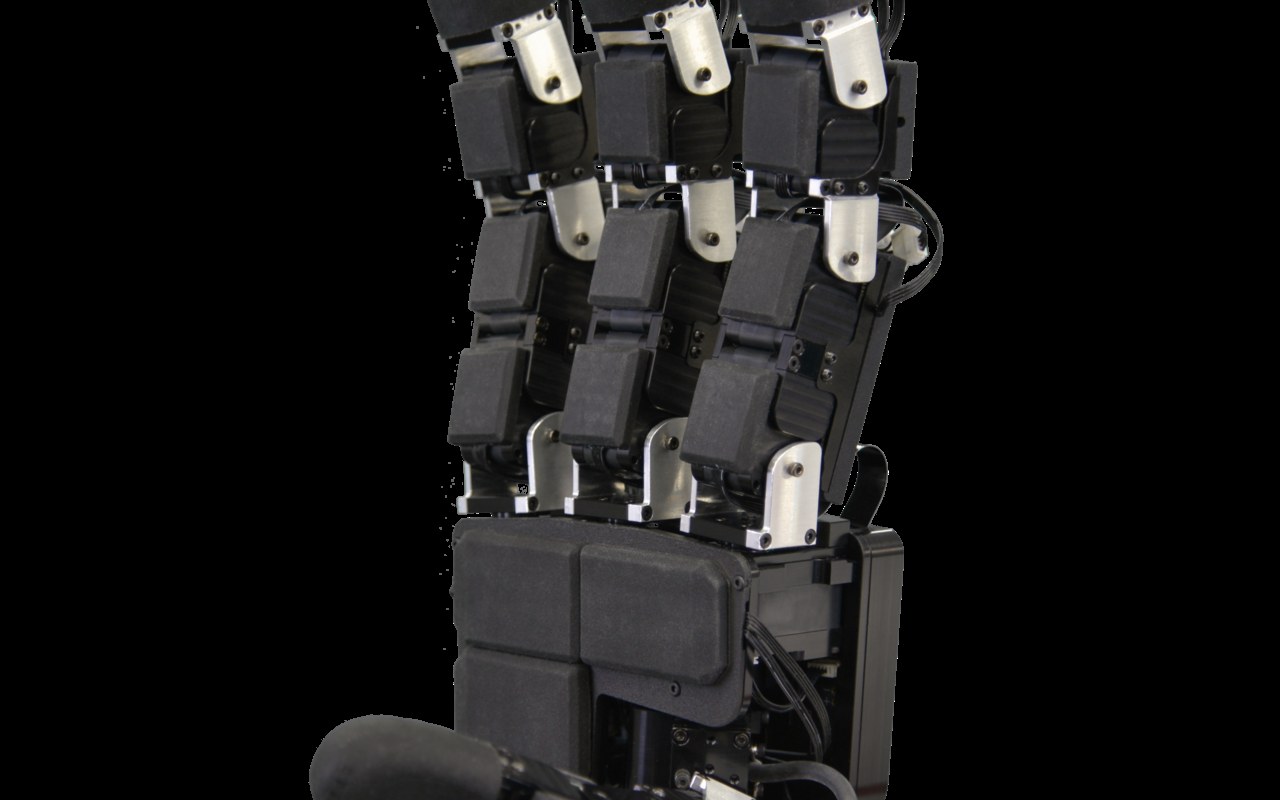
Touch is the component layer's current race: cameras and models get the attention, but grasping an unfamiliar object without crushing or dropping it is a force measurement. A standard, buyable fingertip module - with an evaluation kit and published ranges - is how a research capability becomes a line item in a hand builder's bill of materials, which is precisely the step Melexis is claiming.
Six AGIBOT humanoids work a 24-hour store shift - and two of them fail it
Six AGIBOT G2 wheeled humanoid robots completed a 24-hour trial at an operating convenience store in Shanghai's Xuhui District, performing a combined 1,730 tasks, according to The Robot Report (November 13) - in a report labelled as sponsored content by AGIBOT, with the trial itself run from 10 a.m. on November 2 to 10 a.m. on November 3. The six robots covered customer assistance, shelf inspection, restocking, coffee preparation, checkout and hot food service, and cleaning: 683 customer-service interactions, 369 product pickups and deliveries, 147 coffee orders, 126 breakfast servings, 277 shelf inspections and restocking tasks, and 128 table-cleaning tasks. The shift was livestreamed to more than two million viewers. The robots were assessed on time on duty, task completion, customer feedback, response times and handling of the unexpected; four passed the final assessment and two did not meet all the criteria. The trial also exercised AGIBOT's Genie Master embodied AI agent framework, which coordinates the robots and feeds execution results back into learning, and it concluded the company's AI WAVE showcase, launched on October 22. AGIBOT states that its 20,000th robot rolled off the production line in September 2026.
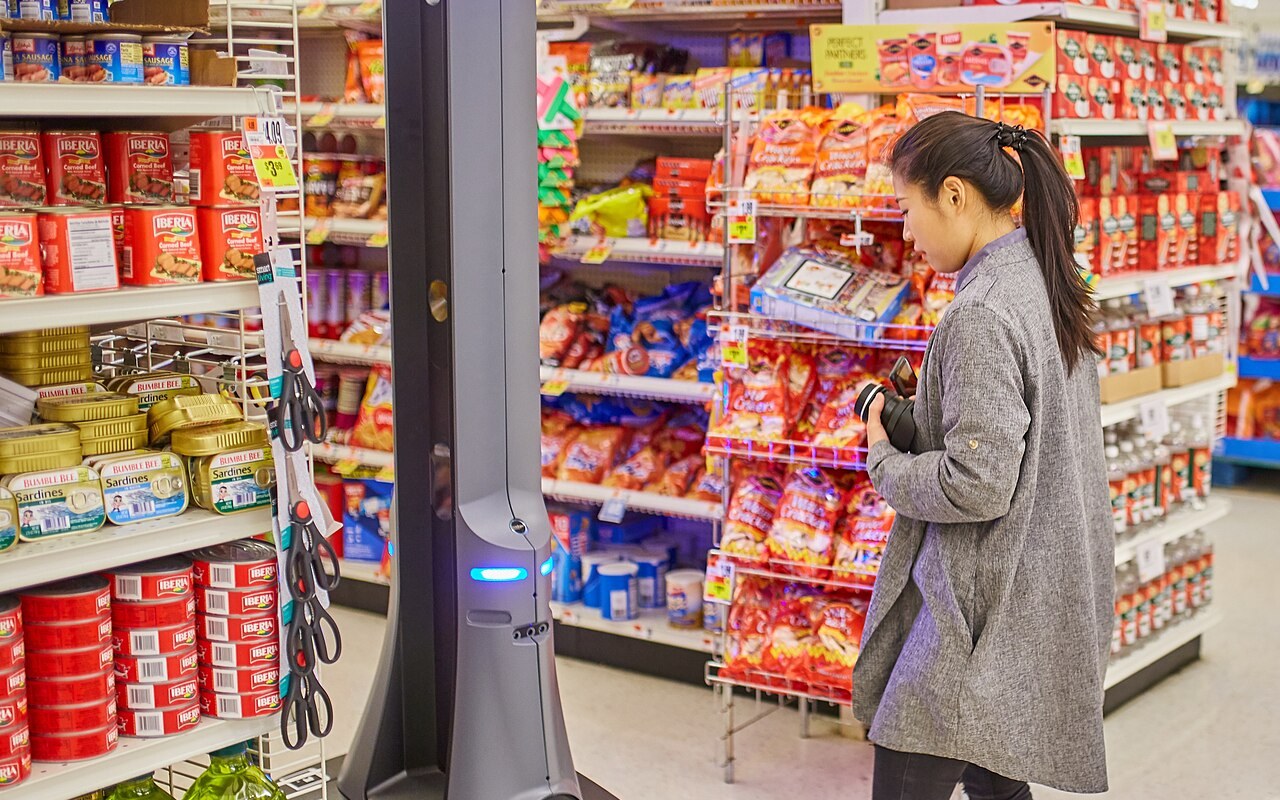
The most useful number in this item is the failure count. Sponsored or not, a maker publishing that two of its six robots failed a full-shift assessment - on proactivity and on navigation, per the fuller accounts - gives buyers a reliability frame that a task total alone does not: 1,730 tasks is a demonstration, four of six robots holding a standard for 24 hours in a trading store is a measurement.
What we are watching
Three threads run through the last 48 hours. First, the money again went to the layers around the robot as readily as to the robot: a chip startup, a rental-and-services platform and a video-trained model took three of the day's eight items, and none of the three sells a robot body. Second, the field's central argument sharpened in public: OpenAI folded a dedicated robotics team into general AI work in the same week Rhoda AI argued that internet video, not robot data, is the training set that generalises - two different organisations spending against the same premise from opposite ends. Third, continuity is the question at the top of the supply chain: NVIDIA begins an interim-CEO period five days before an earnings call, while the startups building on - and against - its silicon keep raising. We track the companies mentioned here in the GlobleMatch company directory.
Sources
- Xilect angel round - TechNode; Gasgoo; Longbridge, reporting Zhitong Finance
- Qingtianzu strategic round - Sina, carrying Beijing News; CNMO
- Raise Robotics investment - Penn State News
- NVIDIA CEO transition - NVIDIA (official announcement); TechCrunch
- OpenAI robotics team - Fortune
- Rhoda AI DVA model - The Robot Report
- Melexis MLX90901 - Melexis (official announcement)
- AGIBOT store trial - The Robot Report (sponsored content by AGIBOT)
Robotics Funding Daily is GlobleMatch's weekday digest of new robotics funding and the moves around it. Every figure is taken from the linked source as published; announced targets are reported as targets, and rounds are listed only when a verifiable source names the amount, the stage and the investors.