
The short version: the past 48 hours brought two new robotics funding rounds - about 910 million yen for Tokyo space-construction robot maker Space Quarters and $12.4 million for factory-inspection company Tristar AI - while UBTECH agreed to supply 400 U1 Pro humanoids to a Chinese car-dealer group, ASUS unveiled Gallop, its first humanoid robot, already learning a station in one of its own factories, and Runway released Praxis-1, its 27-billion-parameter robot model, as open weights anyone can download and use commercially.
Funding rounds
Space Quarters raises about 910 million yen to build structures in orbit with robots
Space Quarters, a Tokyo-based venture spun out of Tohoku University, announced on November 13 that it has raised approximately 910 million yen in a Pre-Series A round through a third-party share allotment, bringing its cumulative funding since its angel round to approximately 1.82 billion yen, according to the company's release on PR Times. Global Brain was the lead investor in the round - through its Global Brain Flagship Fund IX, according to RoundOS - with participation from the TOKYU-CNST GB Innovation Fund, the KII No.3 Impact Fund, Frontier Innovations Fund I, Reazon Holdings, THVP-3, the XTech No.3 Fund, the ANA Future Frontier Fund, the Canon Marketing Japan MIRAI Fund and LAUNCHPAD FUND No.2, according to the company's release. Space Quarters is developing a space construction system that launches building materials rather than finished structures, then assembles them in orbit and on the lunar surface using its own welding robot system. Its orbital construction robot system, DAIQ, is a coordinated multi-robot system in which three types of specialised small robots work together to retrieve, position and join structural components, combining electron beam welding with proprietary robots, according to Global Brain. The company says DAIQ's ground model successfully performed assembly and welding operations in June 2026, and that in March 2026 it demonstrated stable welding of metal materials and lunar regolith building materials in simulated microgravity and lunar gravity aboard an aircraft. The new funding will accelerate DAIQ's development and push toward orbital demonstrations and commercialisation.
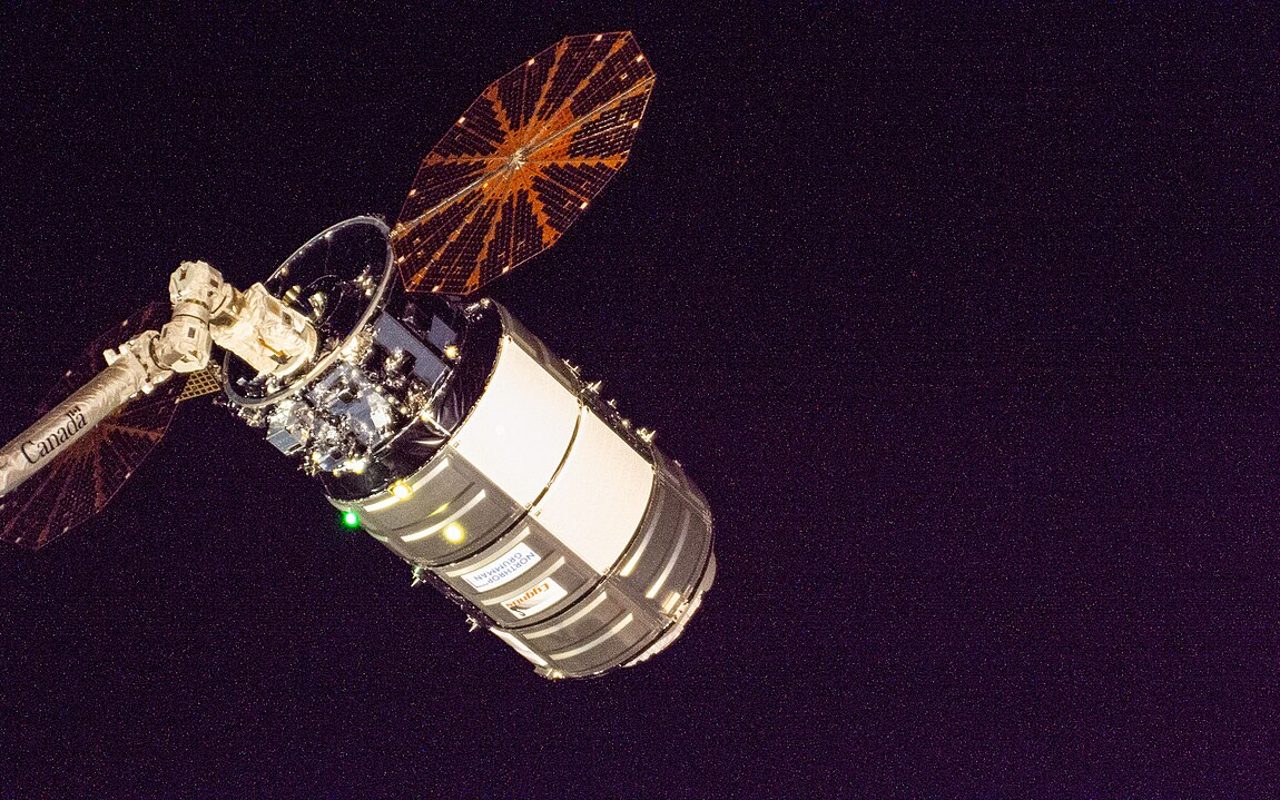
Space construction is a robotics market with no incumbent: the constraint Space Quarters attacks - that a structure can be no bigger than the rocket fairing that carries it - is physical, not commercial, and its answer is to move the factory, not the product, into orbit. The investor list, mixing a flagship venture fund with airline, construction and camera-company vehicles, reads like the customer map for orbital infrastructure as much as a cap table.
Tristar AI raises $12.4 million Series A for factory visual inspection
Tristar AI, a Cambridge, Massachusetts company that builds a real-time AI intelligence layer for the factory floor, announced on November 12 that it has raised $12.4 million in Series A funding, according to its PR Newswire release. The round was led by Isogon Ventures, with participation from Blackhorn Ventures, Ford Street Ventures, ISAI Cap Venture, Capgemini's VC Fund managed by ISAI, Las Olas VC, NextView Ventures, Seraph Partners, SNR Ventures and TenOneTen. Tristar's AI-powered visual inspection platform identifies defects as materials move through manufacturing lines, alerting operators within seconds; unlike traditional machine vision built on fixed rules, its models adapt across products, defect types and changing production conditions, and the platform integrates with the cameras, PLCs, robotics, sensors, MES and ERP systems manufacturers already use. The company, founded by CEO Salem Karani, says its AI today inspects products across more than 500 production lines in North America and Europe, that live deployments report 95-99% defect-detection accuracy, and that the platform typically pays for itself in about four months - all company-reported figures. The funding will go toward its AI vision and edge computing platform, expansion into additional manufacturing sectors, customer success and deployment teams for multi-site rollouts, and sales and marketing.
Tristar sits in the machine-vision and factory-software layer we track separately in this digest: it sells no robot, but its cameras and models decide whether the output of robotised lines is good enough to ship. Inspection is where factory AI meets an auditable number - defects caught, scrap avoided - which is why a quality platform can report payback in months rather than in roadmap milestones.
Industry moves
UBTECH agrees to supply 400 U1 Pro humanoids to Yongda car dealerships
UBTECH Robotics signed a strategic cooperation agreement on November 11 with China Yongda Automobiles Services Holdings, the Hong Kong-listed luxury car dealer group, under which Yongda will purchase 400 U1 Pro ultra-bionic humanoid robots, with delivery planned before the end of 2026, according to RobotHOT, citing the companies' announcement; The Paper reported the same agreement, via Servospace. UBTECH told Chinese press it is the first large ultra-bionic humanoid order it has disclosed. The 400 robots are for product experience, sales promotion and customer service in Yongda showrooms. The partners also plan to combine UBTECH's product technology with Yongda's channel and service resources across consumer sales, industry applications, experience and delivery services, and data and ecosystem cooperation, to build a robot experience and exhibition centre in Shanghai, and to explore store-in-store displays at Yongda outlets in East China, including robot sales and leasing through the dealer network. No contract value was disclosed in the reports.
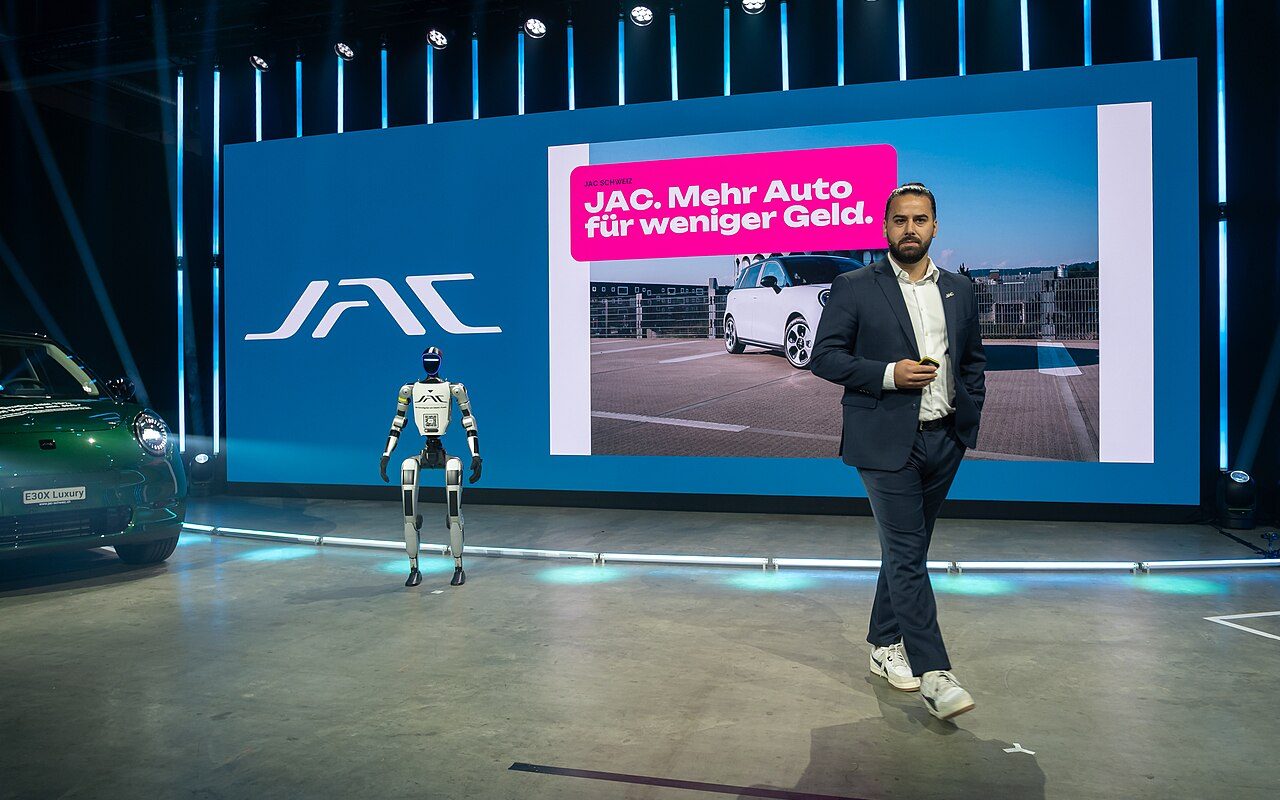
The channel is the news here: a car-dealer group is not only buying humanoids to greet customers, it is positioning its showrooms, service network and leasing capability as a retail channel for robots themselves. That makes the 400 units a distribution experiment as much as a deployment - and, with no contract value disclosed, the delivery count by year-end is the figure to check this order against.
ASUS unveils Gallop, its first humanoid, on a real factory station
ASUS introduced Gallop, its first humanoid robot, in a Pressroom post on November 13. Gallop comes from the Humanoid Robotics business unit of ASUS's Physical AI Solutions Business Group, and its first job is at an ASUS group electronics manufacturing plant: packing motherboard accessories at a workstation designed for human workers. The station handles 15 small parts, many in thin, clear bags, and takes about 20 seconds per board; ASUS's target is 99.5% success within 20 seconds, the same standard it holds a person to - a target, the company notes, not a reported result. Gallop learns mainly by watching skilled workers, who wear a head camera with their consent, supplemented by simulation-generated variations and operator-guided practice in a VR headset and gloves. All of this runs on a single NVIDIA Jetson AGX Thor computer inside the robot, using standard robotics software; ASUS designs the robot body and its dexterous hand - with a sense of touch, still in development - in-house, while motors and other standard components come from partners. Today Gallop works from a fixed base with two arms; a wheeled version comes next. The programme started in early 2026, Co-CEO S.Y. Hsu recently introduced Gallop on CNBC, customer pilots are planned for 2027 with a showing at Computex 2027, and market availability is targeted for the second half of 2028, according to ASUS.
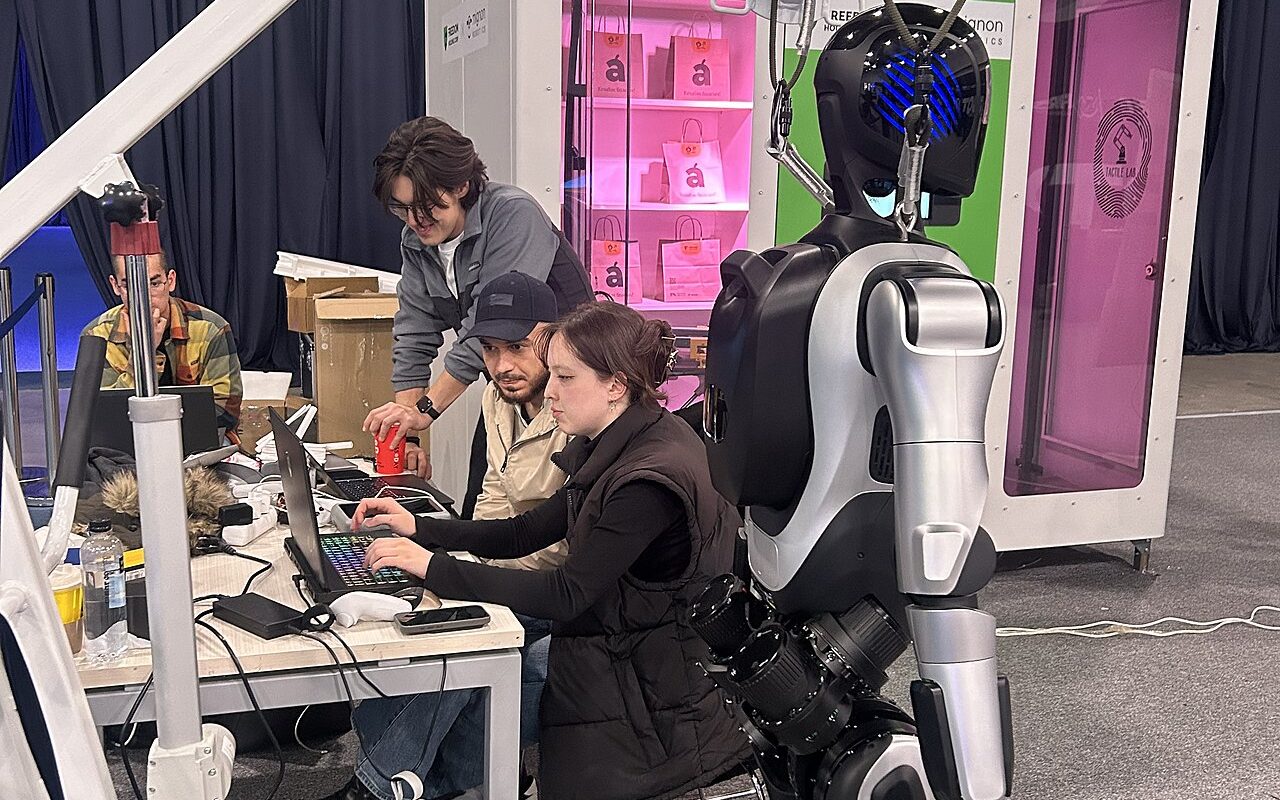
ASUS is entering humanoids from the one position most robot startups cannot rent: it owns the factory, the parts and the quality standard the robot is judged against. Defining success as a pass rate and a cycle time at one real station - 99.5% in 20 seconds - is a manufacturer's framing, and it gives Gallop a testable claim to be measured against long before its 2028 market target.
Runway releases Praxis-1, its robot model, as open weights
Runway announced on November 11 that Praxis-1, its world action model for robotics, is now available to everyone with open weights under the Apache 2.0 licence, including for commercial use, according to the company's announcement. Praxis-1, first introduced in September, is a 27-billion-parameter mixture-of-experts diffusion transformer, built on the same large-scale video pretraining behind Runway's general world models, that predicts video and robot actions together. Runway reports that Praxis-1 reaches 46.2% success across 1,200 episodes on NVIDIA's RoboLab-120 leaderboard, ahead of FLUX 3 Action at 42.9%, and 80.0% success on SimplerEnv when fine-tuned on Google's RT-1 robot - both company-reported benchmark figures, not independently verified results. The release covers the weights plus inference and fine-tuning code, with support for full fine-tuning and LoRA, and is available on GitHub and on Hugging Face with native LeRobot support, in vLLM-Omni, and with hosted inference on Reactor. Launch partners Noble Machines, Standard Bots and Ultra have been running it on their own hardware - a legged humanoid, a six-axis industrial arm and a dual-arm warehouse robot respectively, according to Runway.
Praxis-1 belongs to the robot foundation-model layer we track separately in this digest, and its licence is its headline: an open-weight model that hardware makers can run, inspect and adapt on their own terms lowers the software entry cost for every smaller robot builder - the same openness argument, now applied to the robot brain rather than the robot body.
What we are watching
Three threads run through the last 48 hours. First, robotics capital keeps funding the layers around the robot as readily as the robot itself: Tristar's inspection software and Runway's open model took two of the day's five items, and both sell into machines other companies build. Second, humanoid deployment is moving into ordinary commercial channels - a car-dealer group's showrooms for UBTECH, a PC maker's own electronics plant for ASUS - with unit counts, cycle times and delivery windows attached instead of demonstration claims. Third, the frontier keeps widening: the day's largest single cheque, in yen terms, went to robots that would build structures in orbit, a market that exists only if the robots work. We track the companies mentioned here in the GlobleMatch company directory.
Sources
- Space Quarters Pre-Series A - Space Quarters release via PR Times; Global Brain (lead investor); RoundOS
- Tristar AI Series A - PR Newswire; FinSMEs
- UBTECH and Yongda agreement - RobotHOT; Servospace, citing The Paper and Sina Tech
- ASUS Gallop - ASUS Pressroom; Interesting Engineering
- Runway Praxis-1 - Runway (official announcement); AI Frontier Post
Robotics Funding Daily is GlobleMatch's weekday digest of new robotics funding and the moves around it. Every figure is taken from the linked source as published; announced targets are reported as targets, and rounds are listed only when a verifiable source names the amount, the stage and the investors.