
The short version: the past 48 hours brought four new robotics funding rounds — a $500 million Series F for Munich physical-AI maker Agile Robots, $30 million for spatial-intelligence software company SE3, an $8 million launch round for physical-AI validation startup Qvyon and $5.5 million for hospital-operations company Akara — while GXO and Apptronik signed a letter of intent that sets a conditional, KPI-gated path toward up to 1,000 Apollo humanoids in warehouses.
Funding rounds
Agile Robots raises $500 million Series F at an $8.5 billion valuation
Agile Robots, the Munich-based physical-AI company, announced on November 12 that it has closed a $500 million Series F round at a valuation of $8.5 billion, led by SoftBank Group, according to the company's announcement; Reuters reported the same round the same day. NVIDIA, Hitachi Group (Hitachi and Hitachi Ventures), T.Capital and others participated, and the round brings Agile Robots' total invested capital to $2 billion. Founded in 2018 as a spin-off from the German Aerospace Center (DLR), Agile Robots builds humanoid and mobile robots, robotic arms and hands, and the software and AI models behind them; it says more than 20,000 of its robotic solutions are installed worldwide. The funding will strengthen its presence in the United States, support entry into new markets, accelerate robotics-application development and add production capacity, including in Germany, where its Fürstenfeldbruck site, opened early in 2026, has the capacity to produce up to 10,000 legged and wheeled humanoid robots annually, according to the company.
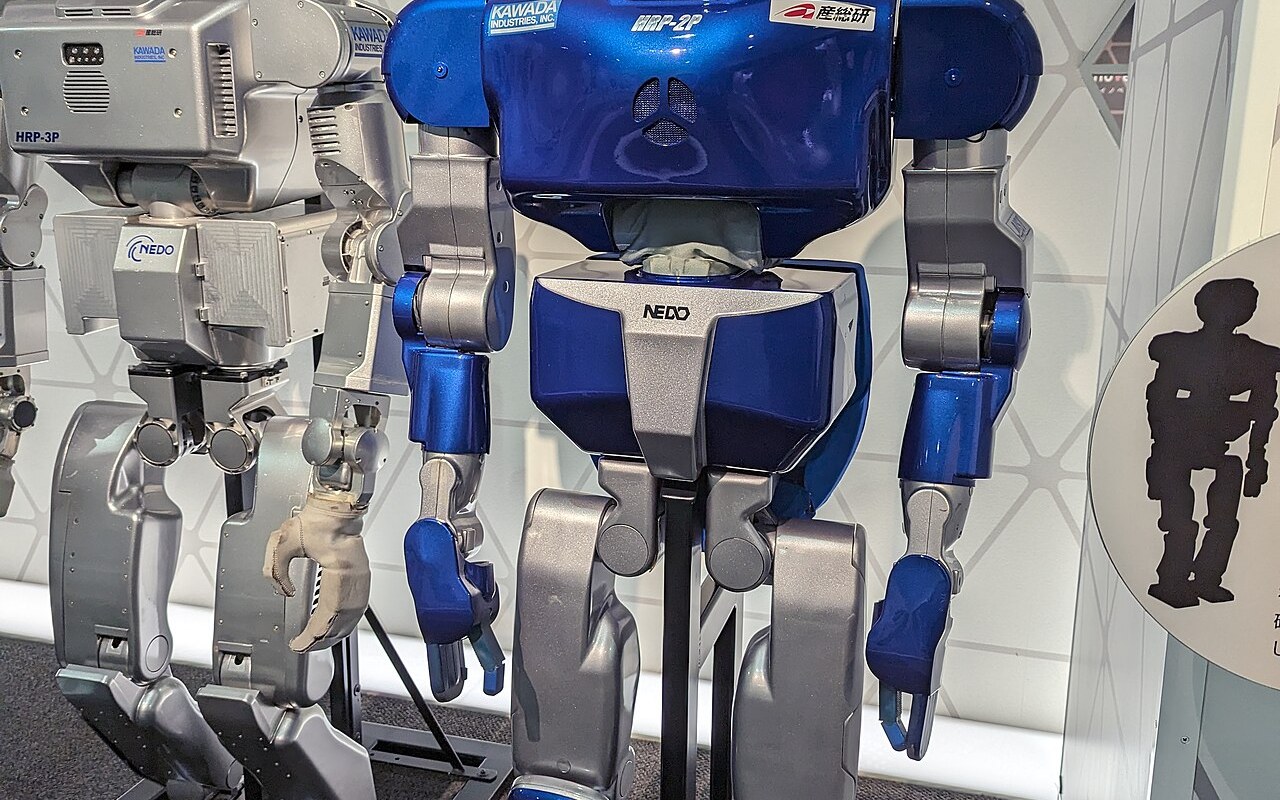
The investor mix is the story as much as the size: SoftBank leading, with NVIDIA and Hitachi beside it, is strategic capital from the AI-compute and industrial-equipment sides of the table, and it is buying production capacity and a US beachhead rather than a research programme — Agile Robots already counts its installed base in the tens of thousands.
SE3 raises $30 million Series A for spatial intelligence
SE3, a Munich-founded provider of spatial intelligence for autonomous systems, announced on November 12 that it has raised $30 million in Series A funding, led by Accel, with participation from Keen, Lakestar and Seedcamp, according to the company's announcement. SE3's platform-agnostic software combines computer vision and AI to turn sensor data into spatial understanding: it connects drones and ground vehicles from different manufacturers and fuses their data into a shared 3D picture of the environment, running entirely on-edge so systems keep operating when satellite navigation is disrupted. The company's primary focus is European defence; it says it has shipped thousands of systems over the past two years, is working on multiple contracts with Ukraine and with Germany's armed forces, the Bundeswehr, and is an AI partner to Rheinmetall and HENSOLDT and to scale-ups including Auterion and ERC System. SE3 was founded by CEO Lukas Köstler, CTO Simon Klenk and Chief Science Officer Professor Daniel Cremers as a spin-out from the Technical University of Munich. The funding will grow its engineering, commercial and operations teams, strengthen its presence in Germany and Ukraine and open a UK office; defence remains the immediate focus, with robotics, emergency response and other civilian applications planned from 2027.
SE3 belongs to the robot data and software layer we track separately in this digest: it sells no vehicle of its own. Its bet is that mixed fleets need a neutral spatial layer that no single hardware maker can supply — and that defence, where satellite navigation is routinely jammed, is where that layer gets proven first.
Qvyon launches with $8 million to validate physical AI before deployment
Qvyon Technologies, a physical-AI validation company based in Montréal, launched on November 12 with $8 million in total funding, led by MaC Venture Capital, with participation from BDC Capital, BKR Capital and Spotlight VP, according to SiliconANGLE. Its first product, Mimic Core, takes real-world sensor recordings — camera, lidar and radar — and turns them into repeatable 3D and 4D reconstructions and scenario variants, so engineers can test robot and autonomous-vehicle models against harder versions of situations they have actually recorded, instead of repeatedly collecting new field data. The platform produces traceable datasets and validation evidence, and is available through Qvyon Cloud with a 14-day guided evaluation or as self-hosted software. Co-founder and CEO Frantz Saintellemy leads the company. The funding supports Mimic Core and a rollout across the United States, Europe and Japan; two further products, Mimic Validation OS and Mimic Learn, are planned for 2027.
Qvyon is a second robot data and software raise in a single day, at the opposite end of the pipeline from SE3: SE3 gives deployed machines a shared picture of the world, while Qvyon sells the evidence that a machine was ready to be deployed at all. Validation is becoming a purchasable layer of the physical-AI stack, not an internal chore.
Akara raises $5.5 million for privacy-preserving hospital AI and robotics
Akara, a healthcare technology company developing AI for hospital operations, announced on November 11 that it has raised $5.5 million in funding, bringing its total funding to $12.3 million, according to its GlobeNewswire release. The round was led by Locke Health, with participation from VTC Ventures, the EIC Fund, CommonKind and NovaVector Holdings, alongside existing investors ACT, Atlantic Bridge and Enterprise Ireland, and strategic angel investors. Akara is a Trinity College Dublin spin-out founded by robotics and AI researchers and led by co-founder and CEO Dr. Conor McGinn. Its wall-mounted sensors use thermal sensing and on-device AI to capture how clinical spaces are used without recording detailed visual images of patients or staff; its software then coordinates services around that activity, and its sensors, AI agents and robotics are aimed at reducing administrative work so hospitals can treat more patients. Already deployed in US ambulatory surgery centers and hospitals, Akara will use the funding to expand its operations and engineering teams, accelerate adoption and develop AI agents for more healthcare applications; the company notes its thermal sensing technology was named among TIME's Best Inventions of 2025.
Akara's route into hospital robotics runs through coordination, not a new robot body: understand the room first, act on that understanding second. In a sector where camera-based systems raise privacy objections, thermal sensing at the edge is the company's wedge.
Industry moves
GXO and Apptronik sign letter of intent toward up to 1,000 Apollo humanoids
GXO Logistics announced on November 12 that it has signed a letter of intent with Apptronik to expand development of Apptronik's technology for deployment at scale through a Robotics-as-a-Service (RaaS) model, according to the companies' GlobeNewswire release. Under the agreement, GXO and Apptronik will expand joint trials of the Apollo humanoid in live operations across warehouse workflows including goods-to-person and person-to-goods picking, case and tote movement, packing and sortation. Beginning in 2027, the trials will validate the safety, security and technical requirements for scaled deployment, with each use case assessed against jointly agreed productivity, safety and operational KPIs. Subject to the success of those deployments and to meeting the agreed KPIs, the companies intend to progress toward a global rollout of up to 1,000 Apollo humanoid robots over the next four years, with initial deployment in North America in late 2027. The partnership began in 2024 with a proof of concept; earlier this year Apollo completed a pilot deployment with GXO in the US focused on autonomous picking for small consumer goods, and the two companies have run data collection and live autonomous evaluations on more than 50 logistics tasks at Apptronik's Robot Park training facility.
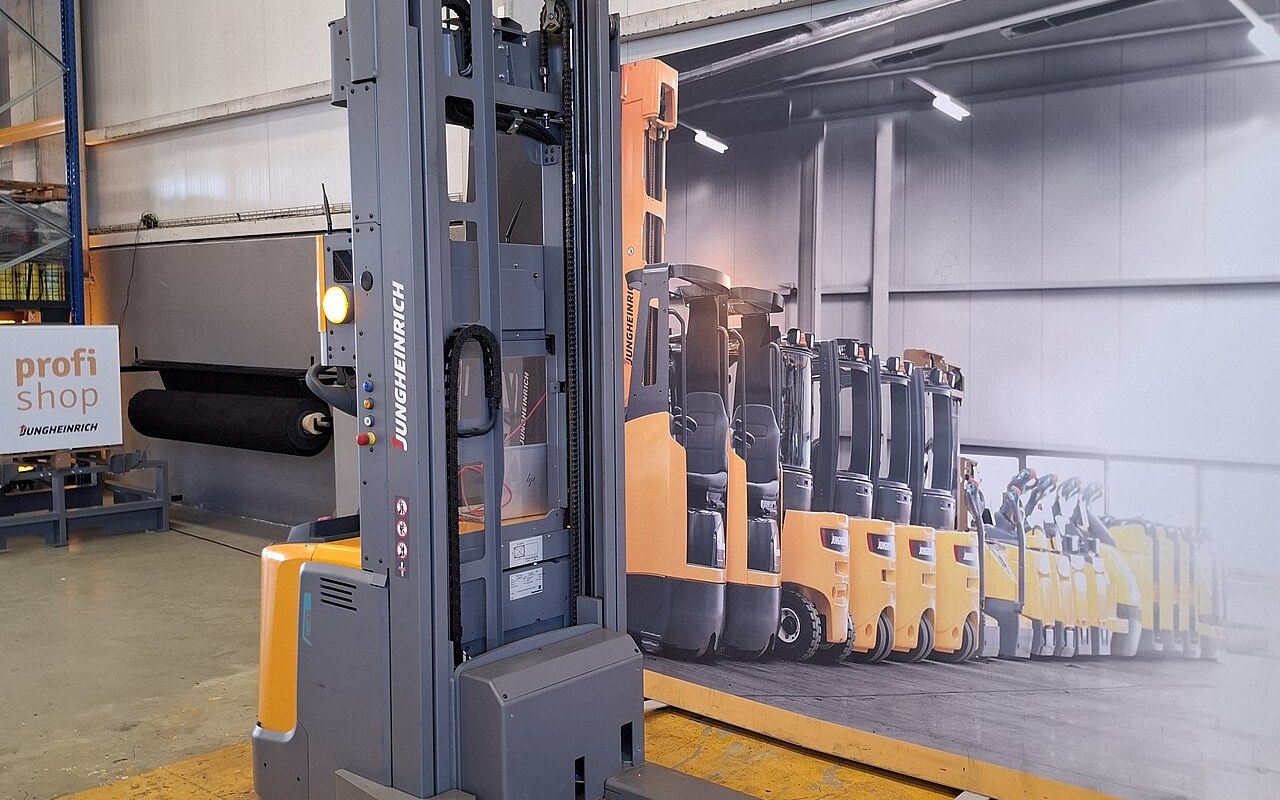
Read the conditions before the headline number: 1,000 robots is an intention inside a letter of intent, gated on trials that start in 2027 and on KPIs both sides still have to agree the robots have met. What is new is the structure — a named fleet size, a four-year window and a RaaS framework attached to a specific operator's network — which is how humanoid deployment stops being a pilot and starts being a procurement line, if the trials deliver.
What we are watching
Three threads run through the last 48 hours. First, Munich had an outsized day: Agile Robots' $500 million Series F and SE3's $30 million Series A both closed in the same city, one for robot hardware at industrial scale and one for the spatial software layer above other makers' machines. Second, the software layer took two of the day's four rounds — SE3's spatial intelligence and Qvyon's validation evidence — continuing the pattern that the data and software side of robotics is funding on its own merits. Third, humanoid deployment is acquiring paperwork: the GXO-Apptronik letter of intent attaches fleet size, timelines and KPI gates to a warehouse rollout, a more testable claim than a demonstration video. We track the companies mentioned here in the GlobleMatch company directory.
Sources
- Agile Robots Series F — Agile Robots (official announcement); Reuters
- SE3 Series A — SE3 (official announcement); Accel
- Qvyon launch funding — SiliconANGLE; Dealroom News
- Akara funding — GlobeNewswire
- GXO and Apptronik letter of intent — GlobeNewswire; Unite.AI
Robotics Funding Daily is GlobleMatch's weekday digest of new robotics funding and the moves around it. Every figure is taken from the linked source as published; announced targets are reported as targets, and rounds are listed only when a verifiable source names the amount, the stage and the investors.