
The short version: the past 48 hours brought four new robotics funding rounds — a $300 million Series E for welding-AI maker Path Robotics, $30 million for defense-factory model builder Nidus, a $47 million seed for surgical-navigation startup Mosaic Intelligence Labs and a Series B first close for powered-prosthetics maker BionicM — while Google DeepMind shipped Gemini Robotics 2.5 with a 96% factory proof of concept, Ant Group's Robbyant open-sourced a tactile foundation model, and South Korea committed $330 million to humanoid components.
Funding rounds
Path Robotics raises $300 million Series E at a $2.45 billion valuation
Path Robotics, the Columbus, Ohio company behind the Obsidian physical-AI welding model, announced on November 10 that it has raised $300 million in Series E financing at a post-money valuation of $2.45 billion, led by Georgian, according to the company's announcement. Existing investors Addition, Drive Capital, IronArc Ventures, Tiger Global and Yamaha Motor Ventures and its affiliates participated, alongside new investors D. E. Shaw Ventures and NAVER Ventures; Georgian partner Emily Walsh will join the board. Path says its annual recurring revenue grew 17-fold over the past 18 months as deployments scaled across North American industrial customers — it does not disclose the absolute figure — and the new capital will scale its welding business while extending Obsidian to the tasks before and after the weld.
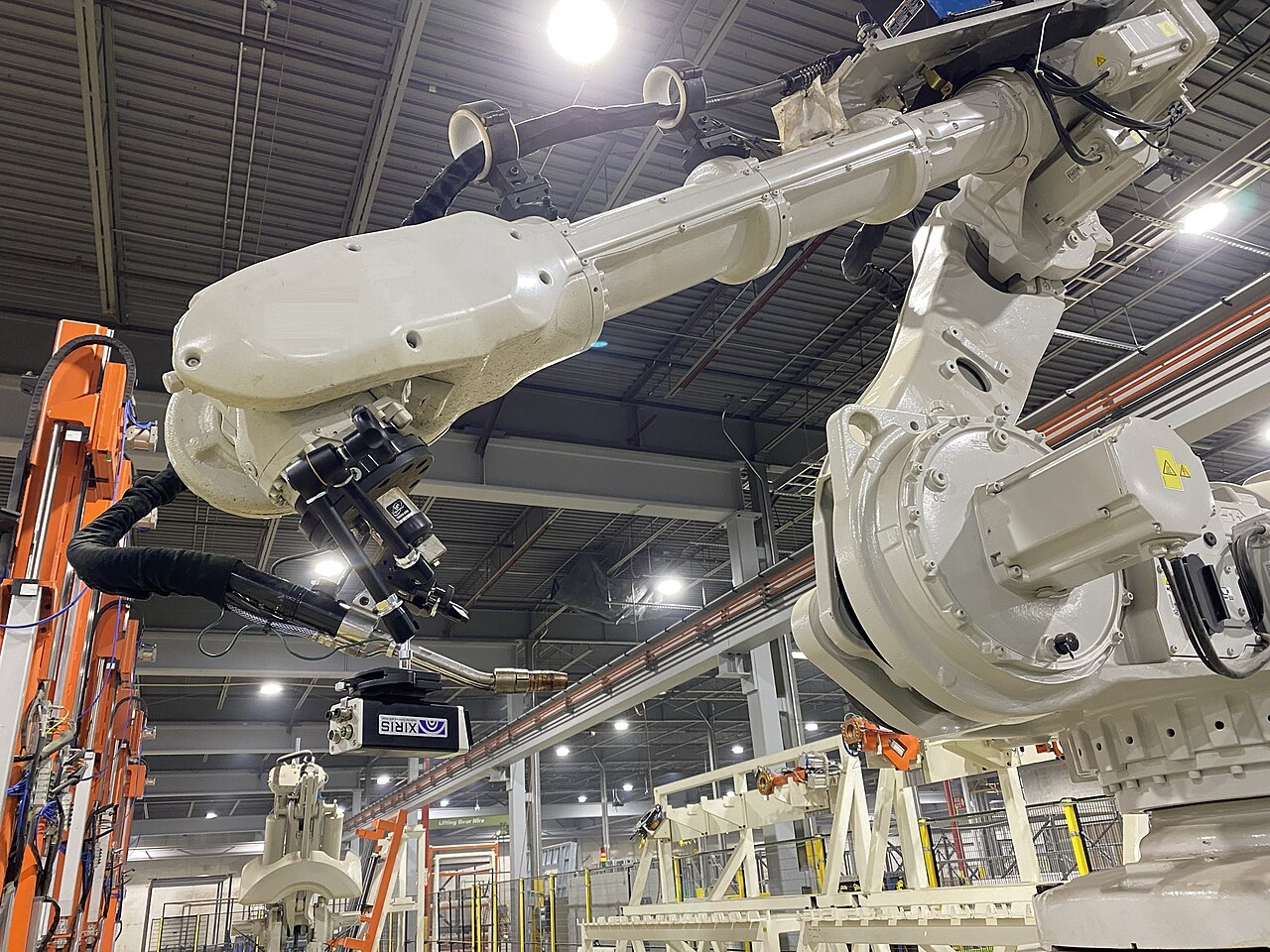
Path is the clearest current example of the welding-first route into factory AI: prove one hard, high-value process in production, collect the deployment data, then widen the model's remit process by process. A $2.45 billion valuation says investors are now pricing the platform ambition, not just the welding cells already shipped.
Nidus raises $30 million to put foundation models in defense factories
Nidus, a robotics company deploying embodied intelligence inside America's defense factories, announced on November 10 that it has raised $30 million in funding backed by Kleiner Perkins and Costanoa, with participation from Ludlow Ventures, SF1, Absolute Partners, Tau and angel investors including Hadrian founder Chris Power, according to its PR Newswire release. Upstarts, which reported the round exclusively, adds that the total spans a pre-seed led by Costanoa and a seed led by Kleiner Perkins. Led by CEO Justin Sealy, Nidus builds foundation robotics models that let traditional industrial robots perform precision assembly, starting with wire-harness automation on a platform built to meet Department of War security requirements; the company says it eclipsed seven figures in revenue in its first four months, and will use the funding to grow its engineering team, move beyond wire harnesses and scale production deployments with US defense manufacturers.
Nidus sits squarely in the robot data and software layer we track separately in this digest: it sells models and deployment, not a new robot body, and its pitch — train on a customer's own data, inside that customer's security perimeter — is built for the factories least able to send data to a shared cloud.
Mosaic Intelligence Labs emerges from stealth with $47 million seed
Mosaic Intelligence Labs, a San Francisco company building sensing-enabled spatial intelligence and robotic infrastructure for surgery, announced on November 10 that it has emerged from stealth with $47 million in seed funding, backed by 8VC, Fundomo, Lingotto Innovation and Obvious Ventures, according to FinSMEs. The company is led by CEO Dr. Ileana Pirozzi and CTO Dr. Alison Kight Mackanic, who met during their doctoral studies at Stanford. Mosaic is starting with endovascular intervention — procedures that thread wires and catheters through blood vessels — combining sensing with computation to reconstruct the vascular environment from within and give physicians a continuously updated three-dimensional view of anatomy and instrument position, paired with a robotic interface for precise control. The funding will expand development and hiring across hardware engineering, sensing, perception, machine learning and clinical engineering.
The announcement makes no clinical claims, and none should be read into it: what is funded here is a navigation problem. Knowing exactly where an instrument is inside the body, from the instrument itself, is the sensing foundation that any later surgical autonomy would have to stand on.
BionicM raises JPY 710 million in Series B first close
BionicM, the Tokyo-based developer of powered prosthetic legs applying humanoid robotics technology, announced on November 10 that it has raised JPY 710 million (approximately USD $4.5 million) in the first closing of its Series B round, including prior investments via J-KISS convertible equity, according to its PR Newswire release. The closing brings total funding to date to JPY 2.58 billion (approximately USD $16.4 million) including government grants. Key investors in this closing are B Dash Ventures and Mitsubishi UFJ Capital, alongside overseas investors and individual angels. BionicM, led by President and CEO Xiaojun Sun and built on University of Tokyo research, already sells the Bio Leg powered prosthetic knee in the United States; the new funds will reinforce production infrastructure and expand US sales and marketing ahead of the 2027 US launch of ASISTA, its next-generation powered microprocessor knee.
BionicM is a useful counterweight to humanoid headlines: the same actuation and control stack, commercialized as a medical device with reimbursement codes rather than as a general-purpose robot, on a regulatory timeline instead of a demonstration one.
Industry moves
Google DeepMind releases Gemini Robotics 2.5, with a 96% factory proof of concept
Google DeepMind introduced Gemini Robotics 2.5 on November 10, calling it its most capable vision-language-action (VLA) model to date, in its official announcement. DeepMind says it evaluated the model across more than 200 distinct tasks — from serving food with tongs to pipetting a liquid — with success rates 30% to 100% higher than previous baselines and tasks completed 20% to 30% faster. In a proof of concept run with Apptronik and Mercedes-Benz, Apptronik's Apollo 2 humanoids performed automotive kitting on active production lines in Kecskemét, Hungary and Sindelfingen, Germany at a 96% success rate. DeepMind also reported improved safe task completion around obstacles (33%) and people (43%) from inference-time safety guidance, and released ASIMOV-Jailbreak, an open benchmark for adversarial robot safety, on which its Gemini 4 Argon scored 99.5% jailbreak resistance against 82% for the previous baseline. The model is rolling out to robotics partners; no public API or pricing was announced. All performance figures in this item are DeepMind's own, as published.
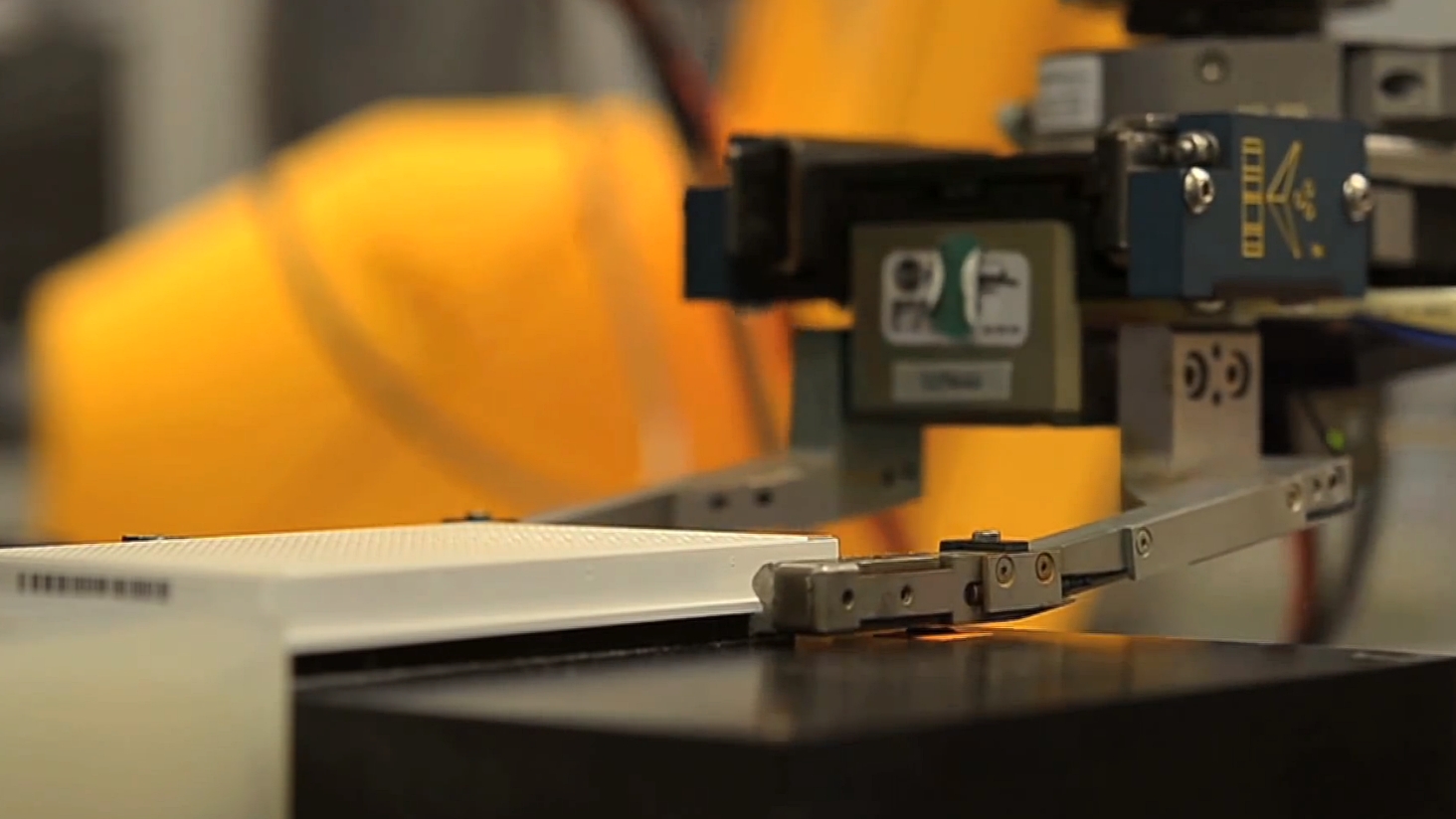
The notable shift is where the test happened: not a lab bench but two live Mercedes-Benz lines, with the model supplier, the robot maker and the carmaker named together. Vendor-run and small in scope, but a proof of concept on a running line is a different claim from a benchmark video — and it is the kind other model makers will now be pressed to match.
Ant Group's Robbyant open-sources LingBot-Touch, a tactile foundation model
Robbyant, the embodied-AI company within Ant Group, announced the open-source release of LingBot-Touch on November 10, according to its Business Wire release. The tactile foundation model was pre-trained on nearly 5,000 hours of real-world tactile data and translates magnetic, visual tactile and piezoresistive sensor signals into one unified tactile representation, so dexterity learned on one hand or sensor can be reused on others. Robbyant says that across 26 real-world tests on two dexterous hands (Sharpa Wave and XHand) and four action models, adding LingBot-Touch improved average task success by approximately 14 to 26 percentage points over operating without tactile input; in one test, unscrewing a bottle cap rose from 56.25% without tactile input to 90% with the model. The technical report and code are available on Hugging Face and GitHub. The results are the company's own, as published.
Touch is the sense the current generation of robot models mostly lacks, and Robbyant is attacking the unglamorous blocker: every sensor family speaks a different language. A shared tactile token layer, given away openly, is a bid to become the default interface between hands and policies.
South Korea commits $330 million to humanoid robot components
South Korea will invest 440.2 billion won ($330 million) in developing critical components for humanoid robots, KED Global reported on November 11, as the government seeks to reduce reliance on overseas suppliers and build a domestic industry able to compete with Chinese manufacturers. The government targets 80% localization of key components by 2030, according to the report, which followed an economic ministers' meeting in Seoul.
State money aimed at components rather than complete robots is a supply-chain play: actuators, reducers and sensors are where humanoid margins and dependencies concentrate, and Seoul is explicitly framing localization as industrial policy, not research funding.
What we are watching
Three threads run through the last 48 hours. First, manufacturing is where the large checks are going: Path's $300 million and Nidus's $30 million both fund physical AI inside existing factories, one with its own welding systems and one as a model layer over robots factories already own. Second, the model layer is splitting into partner-only releases (Gemini Robotics 2.5) and open-source interface plays (LingBot-Touch) in the same news cycle. Third, governments are buying position in the stack — South Korea's $330 million is aimed at the component layer its champions will need. We track the companies mentioned here in the GlobleMatch company directory.
Sources
- Path Robotics Series E — Path Robotics (official announcement); Business Wire via Morningstar
- Nidus funding — PR Newswire; FinSMEs; Upstarts
- Mosaic Intelligence Labs seed — FinSMEs; Unite.AI
- BionicM Series B first close — PR Newswire
- Gemini Robotics 2.5 — Google DeepMind (official announcement)
- LingBot-Touch — Business Wire; Interesting Engineering
- South Korea humanoid components investment — KED Global
Robotics Funding Daily is GlobleMatch's weekday digest of new robotics funding and the moves around it. Every figure is taken from the linked source as published; announced targets are reported as targets, and rounds are listed only when a verifiable source names the amount, the stage and the investors.