
The expensive question after commissioning
Buying an industrial or service robot usually involves a visible chain of decisions: identify an application, compare suppliers, run a pilot, approve capital expenditure, install the equipment and measure initial output. The ownership question starts after that sequence ends. Motors wear, sensors drift, cables fail, software dependencies change and individual components are eventually withdrawn. The commercial issue is not whether a supplier can deliver a robot. It is whether the buyer can obtain the right part, competent help and a safe recovery path when the robot stops.
That question matters at global scale. The International Federation of Robotics reported on September 24, 2026 that the operational stock of industrial robots had reached five million units worldwide, with more than 600,000 industrial robots installed during 2025.[S1] A large installed base creates a parallel market for spares, field service, configuration management and lifecycle support. Yet procurement documents often describe those services in generic language — “24/7 support,” “global service network” or “comprehensive spare-parts availability” — without naming the evidence a buyer should request before awarding the contract.
This article treats spare-parts and serviceability diligence as a procurement discipline in its own right. It does not rank suppliers or assume that every robot needs the same support model. Criticality, geography, internal maintenance capability and contractual risk tolerance vary. What should not vary is the standard of proof: buyers should ask for specific documents, testable commitments and clear statements about what a supplier cannot yet substantiate. In the GlobleMatch directory, those answers belong beside the underlying company profile as supplier-provided, not independently verified evidence.
1. Specify the service boundary before requesting a quotation
A maintenance quotation is only comparable when every bidder is pricing the same boundary. Buyers should define the robot model and configuration, firmware or software versions, safety functions, integrated peripherals and expected production calendar. They should also decide whether the agreement covers preventive maintenance only or corrective repair, remote diagnostics, on-site attendance, spare-parts logistics, software updates and emergency recovery.
The most common ambiguity is the phrase “full service.” One supplier may treat it as labour during business hours, with parts, travel and expedited shipping charged separately. Another may include defined wear items but exclude damage from collisions, contamination or unauthorised changes. A distributor may provide first-line support while the original manufacturer controls firmware, specialised tools and escalation. None of those models is inherently wrong; the problem arises when the buyer discovers the boundary only during an outage.
Evidence request: a service-scope matrix that assigns each task to the OEM, distributor, integrator, buyer or third party. Acceptance test: walk through three failures — a servo fault, a corrupted configuration and loss of a safety-related component — and ask who diagnoses, authorises, supplies, installs and revalidates each one. Negotiation point: state exclusions in the contract, not only in sales material.
2. Distinguish availability from catalog presence
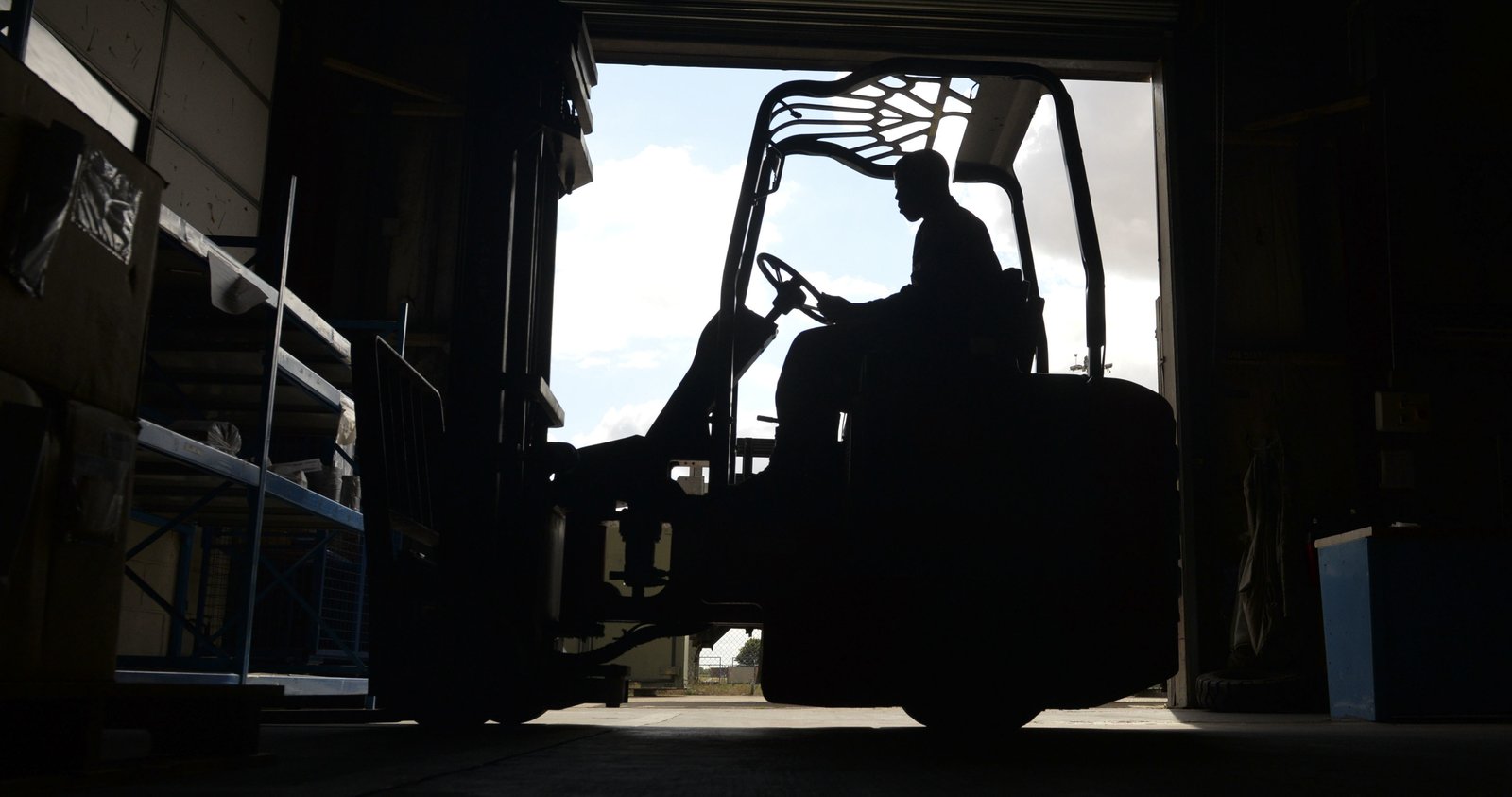
A part number in a catalog proves that a component has an identity. It does not prove that the part is stocked, compatible with the buyer’s configuration, shippable to the site or still supported by the manufacturer. Buyers should therefore ask for a critical-spares list linked to the exact robot configuration and production criticality. For each item, the relevant questions are whether it is stocked locally, regionally or only at a central warehouse; what the normal and expedited lead times are; whether an approved substitute exists; and whether the supplier has issued an end-of-sale or end-of-support notice.
The fastest diligence method is a sampled audit rather than a request for the entire warehouse database. Select a small set of high-consequence components — for example a controller board, servo amplifier, teach pendant or model-specific cable set — and ask the supplier to state available quantity, warehouse region and ship date for each. The supplier need not disclose commercially sensitive inventory systems, but it should be able to answer those questions in a dated document.

Evidence request: a dated critical-spares schedule with part revision, region, normal lead time and lifecycle status. Acceptance test: sample at least three parts and ask for confirmation that the quoted lead time covers shipment to the buyer’s site, not merely dispatch from a remote warehouse. Negotiation point: obtain a contractual remedy if the supplier later withdraws a critical part without a qualified replacement path.
3. Turn response-time language into measurable obligations
“Rapid response” is not a service level. A workable commitment distinguishes acknowledgement, remote diagnosis, dispatch decision, technician arrival and restoration. It also states the clock: calendar hours or business hours; local time or supplier headquarters time; and whether the measurement stops when a technician arrives or when production resumes. For some operations, a four-hour remote response is more valuable than a next-day site visit. For others, the decisive measure is the right certified technician with the right part.
Geography should be tested against the actual site, not against a country-level claim. A supplier may have an office in the buyer’s country but rely on a small number of specialists located elsewhere. Buyers should ask where the nearest qualified technician is based, whether coverage is direct or subcontracted, what escalation occurs outside normal hours, and how the supplier handles simultaneous outages. Where remote access is offered, the buyer should also define authorisation, logging and credential controls before an incident occurs.
Evidence request: a service-level table by severity, including acknowledgement, remote-support start, dispatch and target restoration times. Acceptance test: simulate an out-of-hours failure and trace the contact path from operator to decision-maker. Negotiation point: attach service credits or termination rights to repeated failure, while recognising that an unrealistically punitive clause may simply be priced into the contract.
4. Protect the ability to recover software and configuration
Modern robot downtime is not always caused by broken hardware. A robot cell can become unusable after a controller replacement, firmware change, network alteration or accidental overwrite of parameters. The buyer needs the ability to restore a known-good configuration and prove that it has done so. That requires more than a USB drive stored beside the cell. Buyers should identify which artefacts must be backed up: robot programs, controller parameters, PLC logic, safety configuration, vision recipes, calibration data, licence files, network settings and relevant documentation.
NIST’s Guide to Operational Technology (OT) Security, SP 800-82 Rev. 3, treats backup and recovery as part of OT security planning and calls for recovery and reconstitution to a known state after a disruption or failure.[S2] NIST’s OT backup quick-start guidance likewise focuses on the practical ability to back up and restore OT systems.[S3] A buyer should therefore ask who owns each backup, where it is stored, how integrity is checked, how often restoration is rehearsed and what validation is required before the cell returns to production.
Access rights are equally important. If only the integrator can modify a password-protected safety configuration, the buyer should know the cost and response time for that intervention. If a licence is tied to hardware or a vendor portal, replacement hardware should not create an unexpected activation delay. Any export restrictions or cybersecurity controls should be identified in advance rather than treated as evidence of obstruction during a crisis.
Evidence request: a backup artefact list, restoration procedure, rehearsal record and named owner for each artefact. Acceptance test: restore the configuration in a controlled environment or during planned downtime and record the elapsed time and validation steps. Negotiation point: require delivery of machine-readable configuration exports at handover and after supplier-led changes.
5. Ask how patches are tested without stopping production
Software maintenance creates a tension: unpatched systems can accumulate vulnerabilities and compatibility problems, but an untested patch can interrupt a validated production process. Buyers should ask how the supplier evaluates updates, what information is provided before deployment, whether patches can be rolled back and whether a test environment or digital replica is available. For connected robots, the process should cover the robot controller and the surrounding OT environment, including engineering workstations, remote-access services and integrated equipment.
NIST SP 800-82 Rev. 3 notes that patch management in OT must account for the risk that a patch could affect operational or safety functions.[S2] The initial public draft of SP 800-82 Rev. 4 — published for comment, not a final standard — goes further in its discussion of testing patches in a representative non-production environment where feasible and understanding how patches could affect operational functions.[S4] Buyers should not quote the draft as a settled requirement, but they can use the underlying question: how does the supplier demonstrate that a change is safe for this cell, in this configuration, at this time?
Evidence request: release notes, affected-component list, rollback procedure and test evidence proportionate to the change. Acceptance test: classify one routine update and one emergency security update; confirm who approves each and how production validation differs. Negotiation point: reserve the right to defer non-critical patches until scheduled downtime, while defining a faster path for actively exploited vulnerabilities.
6. Evaluate technician coverage, not merely office locations
A service map can be misleading. An office may be a sales branch, while field technicians are dispatched from another region. Buyers should ask how many technicians are certified for the relevant platform, what work they are authorised to perform, whether they carry common parts, and which tasks require factory escalation. They should also ask about training for the buyer’s own maintenance team: which inspections and replacements can be performed in-house without invalidating warranty or creating a safety risk?
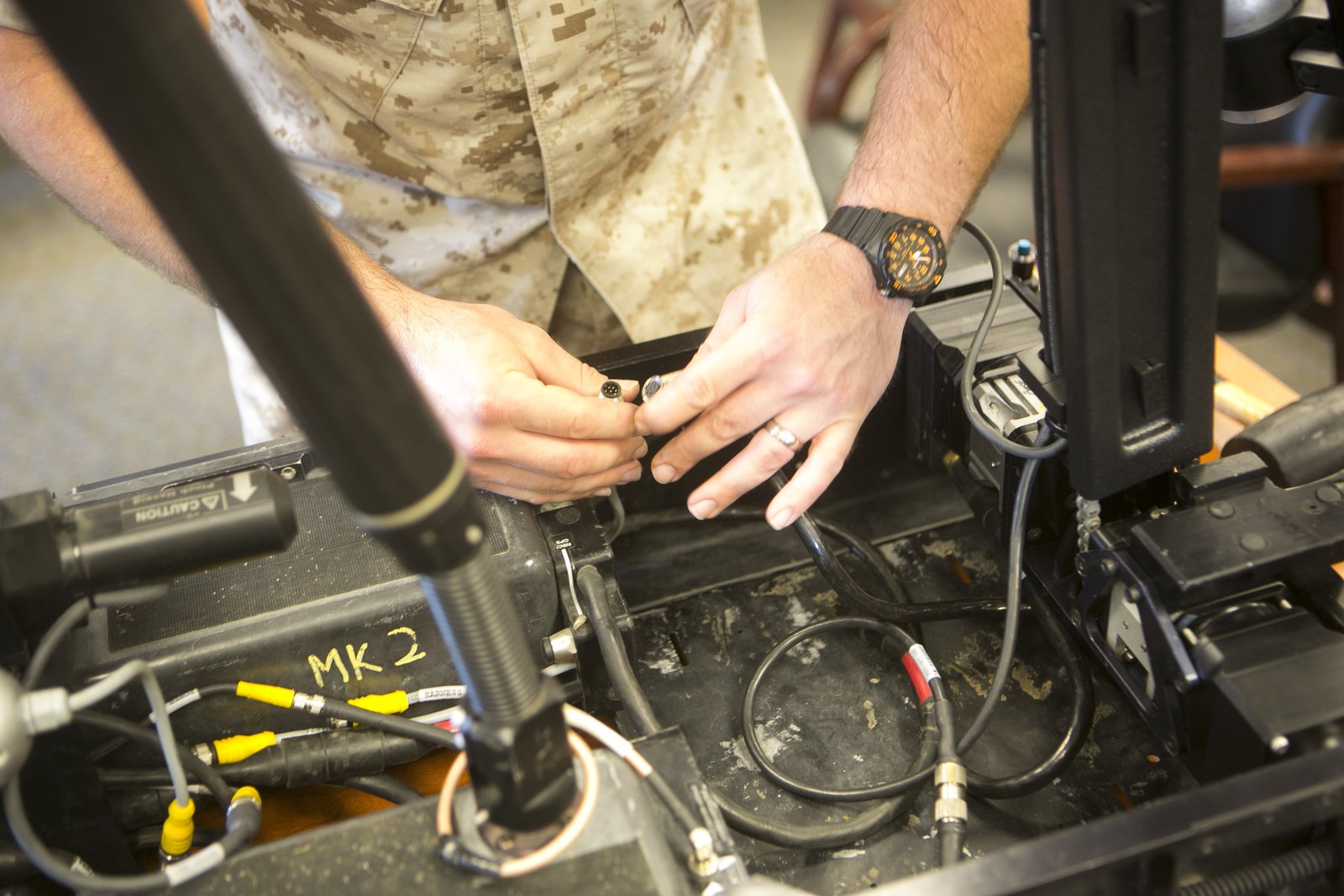

Good serviceability is partly designed into the machine. Accessible wear components, unambiguous diagnostics, modular replacement and clear calibration procedures shorten repair time. Buyers can test those claims during acceptance by timing a simulated replacement using production documentation, not a salesperson’s demonstration. Where a supplier claims that local personnel can perform a task, the required tools, training, spare parts and safety controls should be listed.
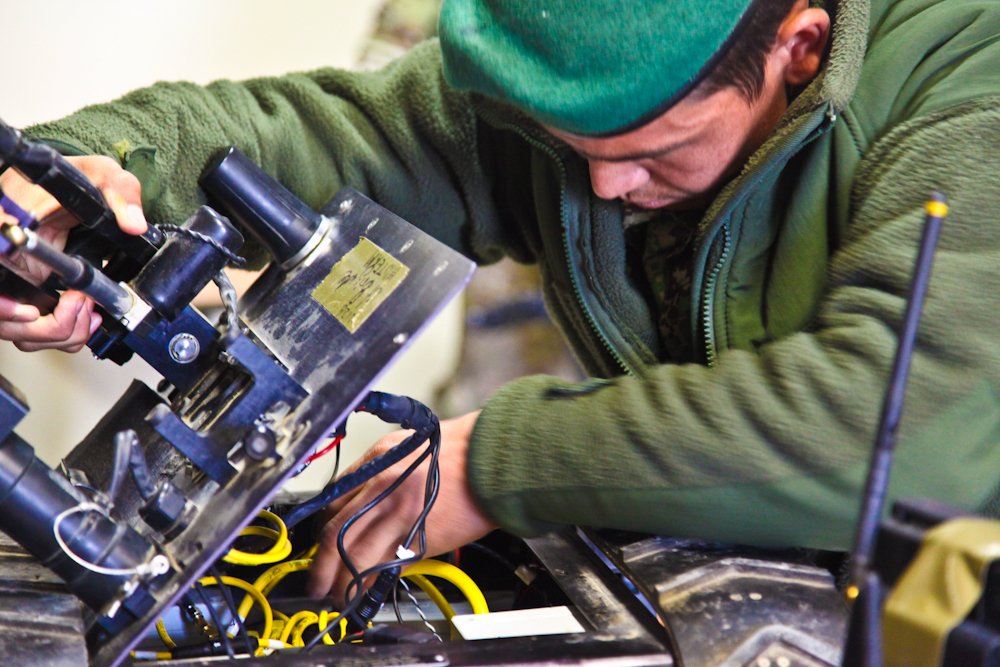

Evidence request: technician coverage by site region, certification scope, typical parts carried and escalation criteria. Acceptance test: perform one supplier-approved maintenance task with buyer personnel and record whether the documentation is sufficient. Negotiation point: price training and documentation as deliverables, not informal favours.
7. Calculate downtime exposure with disclosed assumptions
Service should be evaluated against the cost of being stopped, but buyers should not accept invented market statistics or generic claims about the hourly cost of downtime. The defensible model uses the buyer’s own operating data. A simple starting point is:
scenario downtime cost = hours of interruption × buyer-estimated cost per hour
The hourly estimate can include lost contribution margin, idle labour, overtime, scrap, re-inspection, expedited freight and contractual penalties where relevant. Not every cost applies to every site, and the estimate should be shown as a scenario rather than a fact. Buyers can then compare support options by expected reduction in interruption hours: faster diagnosis, local stock, loan equipment, preventive replacement and extended coverage all address different parts of the outage.
The point of the calculation is not false precision. It is to reveal whether an inexpensive service package is economically rational or simply under-scoped. If an eight-hour delay on one critical cell would eliminate the savings from a lower support fee, the buyer can justify a local spares kit or stronger response commitment. If the robot supports a non-critical pilot, a lighter model may be appropriate. Both conclusions are credible when the assumptions are visible.
8. Include obsolescence and exit rights from day one
Support diligence should look beyond the warranty period. Buyers should ask for the published support horizon, the process for announcing discontinuation, last-time-buy options, repair-versus-replace policy and the availability of documentation after a contract ends. They should also establish what happens if the distributor changes, if the supplier is acquired or if a product line is sold. Continuity clauses are easier to negotiate before the purchase order is signed than after a fleet has been standardised.
Data and documentation are part of the exit. The buyer should retain copies of configuration files, maintenance history, service manuals supplied under the agreement, licence information and acceptance records. Where safety or cybersecurity rules limit redistribution, the restriction should be specific. A broad claim that nothing can be shared with a successor service provider may effectively lock the buyer into the incumbent even when the contract says otherwise.
Evidence request: lifecycle policy, discontinuation-notification period, documentation pack and data-return procedure. Acceptance test: ask the supplier to describe the buyer’s options if a named critical component is discontinued in year three. Negotiation point: include an exit-assistance clause covering configuration export and reasonable cooperation with a replacement provider.
A practical evidence scorecard
GlobleMatch could make these questions easier to compare by attaching a standard evidence table to relevant supplier profiles. The table should record only what has been supplied and checked for internal consistency. It should not convert missing answers into an inferred score.
| Dimension | Evidence the buyer should request | Red flag to investigate |
|---|---|---|
| Scope | Responsibility matrix by failure type | “Full service” without exclusions or named owners |
| Spares | Dated critical-parts schedule and lead times | Catalogue links offered as proof of stock |
| Response | Severity-based service levels and escalation path | Response time that does not define restoration |
| Recovery | Backup artefacts and rehearsed restore procedure | Configuration held only by an individual engineer |
| Change control | Patch testing, rollback and approval process | Automatic updates without production validation |
| Field coverage | Technician location, certification and parts carried | Country office presented as proof of local repair capacity |
| Lifecycle | Support horizon, discontinuation and exit process | No commitment beyond the initial warranty |
Such a scorecard would complement, rather than replace, technical evaluation. It also creates an incentive for suppliers to publish clearer lifecycle information: a company with disciplined service evidence should not be forced to compete against unsupported adjectives.
What GlobleMatch should make easier
Supplier discovery often stops at product category, geography and a link to the manufacturer. Operators then repeat the same diligence privately, RFQ by RFQ. A better directory record would preserve the supplier’s answer, identify the person or organisation that supplied it, show the date on which it was last reviewed and distinguish documents from marketing claims. Buyers could filter for the practical questions that matter to a site — nearest qualified technician, parts region, remote-support model, backup deliverables and lifecycle policy — before opening commercial discussions.
That structure also disciplines this publication. GlobleMatch should not state that a supplier stocks a part, employs a technician in a city or guarantees a response time unless the underlying evidence is recorded and marked as supplier-provided. Absence of evidence should remain visible as “not provided,” not be filled with an estimate.
Editorial conclusion
A robot purchase is ultimately a continuity decision. The machine’s specifications determine what it can do on the day it is commissioned; its spare-parts chain, documentation, configuration recovery and field support determine whether it keeps doing that work economically over time. Buyers do not need longer brochures. They need evidence that can be tested before the first serious outage — and suppliers that can provide it should find that clarity commercially valuable.
Related directory categories
Browse the categories this analysis points to in the GlobleMatch directory: robotics system integrators, who typically own first-line service after a cell is installed; industrial robot suppliers, whose spare-parts and lifecycle policies set the baseline; and end effectors and other subsystem vendors, whose wear parts and revision control shape repair times.
Sources
- [S1] IFR, Five Million Robots Now Working in Factories Worldwide, September 24, 2026: ifr.org
- [S2] NIST, Guide to Operational Technology (OT) Security, SP 800-82 Rev. 3 (final), September 28, 2023: csrc.nist.gov
- [S3] NIST, OT Backup Quick Start Guide, SP 1339 (final), June 17, 2026 — listed on the NIST OT security publications index: csrc.nist.rip
- [S4] NIST, Guide to Operational Technology (OT) Security, SP 800-82 Rev. 4, initial public draft, September 21, 2026 — draft open for comment through November 30, 2026, cited for its patch-testing discussion only and not as a final standard: csrc.nist.gov