
Short answer: Japan's robot industry is a full-stack national supply chain: complete-arm makers, the world's defining reducer and servo suppliers, and thousands of specialist component firms, concentrated in identifiable regions. FANUC runs its headquarters and factories at Oshino in Yamanashi prefecture, in the foothills of Mount Fuji. Yaskawa Electric is based in Kitakyushu, where its Robot Village shows the product line to the public. The GlobleMatch directory lists 32 robotics companies headquartered in Japan as of 10 November 2026 — fewer than the US or Chinese counts, but with an unusually high share of the components the whole industry depends on.

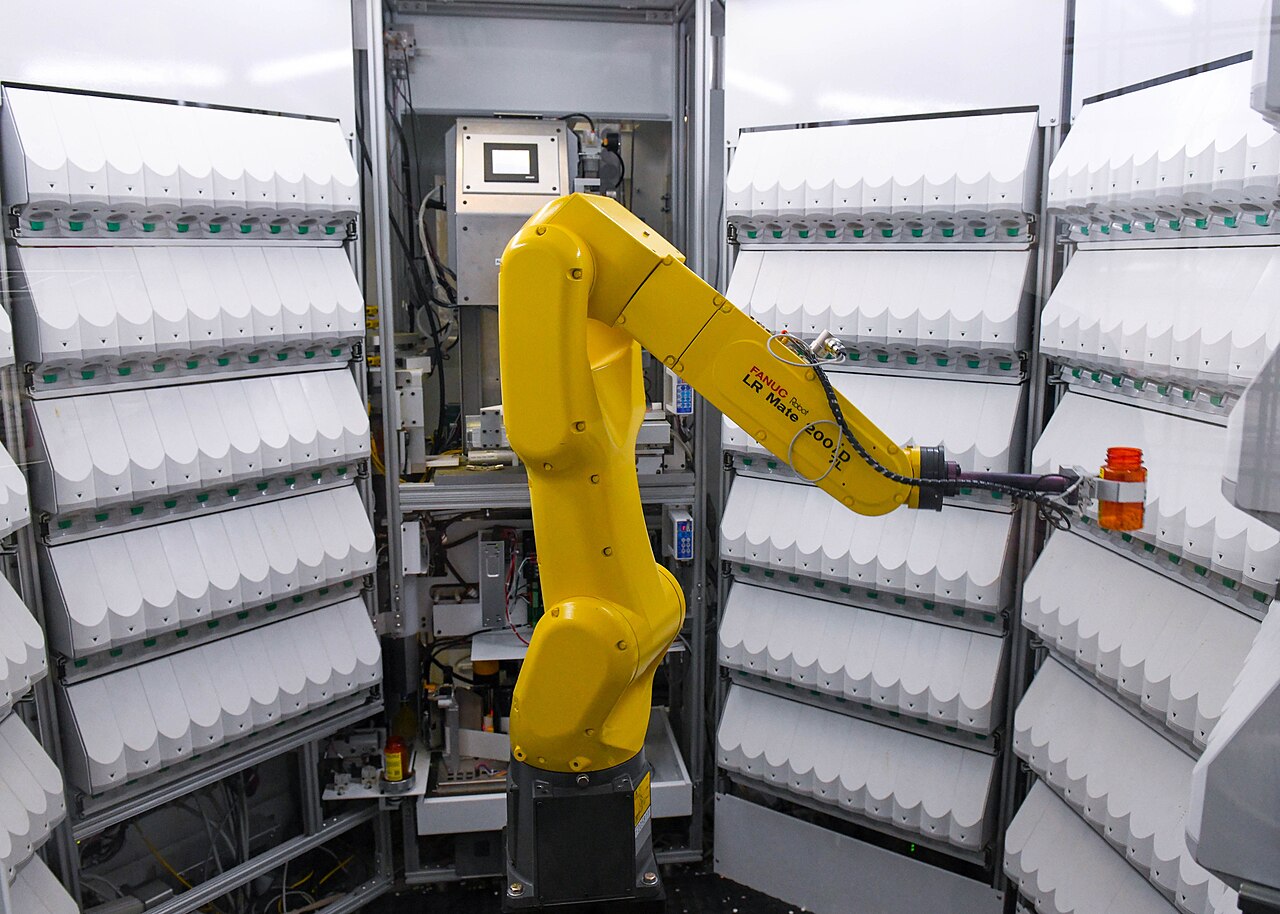
FANUC and the mountain
FANUC is the extreme case of vertical integration: from its campus in Oshino, at the foot of Mount Fuji — a site known for its uniformly yellow buildings and factories — it designs and manufactures its robots, CNC controllers and servo systems largely in-house, with a famously automated production style in which robots build robots. For buyers, the practical meaning is consistency: a FANUC arm's controller, motors and software come from one engineering culture, and the global service network behind them is part of the product. The Yamanashi location also illustrates a Japanese pattern: rather than dispersing, anchor makers built deep roots in one place and pulled a supplier town up around them.
Yaskawa and Kitakyushu
Yaskawa Electric, founded in 1915 and headquartered in Kitakyushu in northern Kyushu, opened its Robot Village in 2015 as a public showcase alongside its robot factories — visitors can see the product range and the company's history in one site. Yaskawa's weight in the supply chain is double: its Motoman arms are a fixture of welding and handling lines worldwide, and its servo motors and drives are core components inside other makers' machines as well. Kitakyushu itself is an old heavy-industry city, and the robot cluster there grew from the same steel-and-machinery base.
The supplier towns behind the giants
What makes Japan structurally different is the depth beneath the famous names. Precision reducers are the clearest example: Harmonic Drive Systems, whose strain-wave gears sit in joints across the industry, is a Japanese company, and Nabtesco's cycloidal reducers hold a comparable position at the heavy end. Around such specialists sits a tier of small and mid-sized firms — castings, precision machining, cables, sensors — often concentrated in manufacturing towns in Aichi, Osaka and the Tokyo periphery, many of them decades-old family businesses with one process done exceptionally well. When a global robot programme is delayed by a component, the trail disproportionately often ends at this tier.
Beyond the two anchors: Chubu and the specialists
The belt has a third pole. The Chubu region around Nagoya, built on the automotive industry, hosts suppliers such as DENSO WAVE — listed in the directory as an industrial-robot maker within the Denso group — whose compact arms serve electronics and assembly lines. Japan's 32 directory listings also reach beyond heavy industry: CYBERDYNE, for example, appears as a medical and assistive robotics company, a reminder that the same precision base feeds rehabilitation and care robotics. For buyers, the practical map is therefore three-layered: the arm giants, the component definers, and a regional specialist tier that rewards those who look past the famous names.
What buyers should expect
- Qualification is thorough and takes time. Japanese suppliers document deeply and change specifications reluctantly. Budget the calendar accordingly, and do not read slowness as disinterest.
- Consistency is the product. The premium buys process control: parts that match the drawing, batch after batch, with paperwork to prove it.
- Structure your approach. First contact through a clear written specification — volumes, drawings, standards — gets a serious answer; vague enquiries get polite silence.
- Use the map. The robotics directory shows which Japanese makers cover your category; the 32 listed span complete systems, components and medical and service robots.
Japan's count in the directory is modest next to the United States and China, but counting companies understates the position: this is the supply chain other supply chains buy from. Buyers who understand its geography — mountain, robot village and supplier towns — understand where their own delivery risk actually sits.
Frequently asked questions
Where are Japan's robotics companies located?
The anchors are FANUC in Oshino, Yamanashi prefecture, below Mount Fuji; Yaskawa Electric in Kitakyushu, northern Kyushu; and a broad tier of component specialists across Aichi, Osaka, Tokyo and other manufacturing regions. The GlobleMatch directory lists 32 robotics companies headquartered in Japan as of 10 November 2026, spanning complete systems, precision components and medical and service robots.
Why is Japan so strong in robot components?
Depth and tenure. Japanese firms such as Harmonic Drive Systems and Nabtesco became the defining suppliers of precision reducers, and Yaskawa did the same in servo systems, by serving a demanding domestic robot industry for decades. Around them grew thousands of specialist machining and materials firms. The result is a component tier whose quality and consistency the rest of the industry builds on.
What is Yaskawa's Robot Village?
It is Yaskawa Electric's public showcase in Kitakyushu, opened in 2015 — the company's centenary year — next to its headquarters and robot production sites. It presents the company's history and robot range to visitors. Together with FANUC's famously uniform yellow campus at Oshino, it is one of the two most visible symbols of Japan's company-town model of robot manufacturing.
How does buying from Japanese robot suppliers differ?
Expect a documentation-led process: detailed specifications, thorough qualification and reluctance to change agreed specs mid-stream. Lead times for approval can feel slow, but consistency across batches is the compensating strength — parts match drawings over years of orders. Buyers get the best results by arriving with complete written specifications rather than exploratory enquiries.