
The category error behind a very large market
A robotics procurement team can be misled before its first vendor call if a market-size slide combines industrial robot installations with professional service robot shipments. Both measures describe real commercial activity, but they do not measure the same equipment, end users, reporting populations, or transaction stages. Treating them as a single comparable market can distort supplier discovery, investment theses, and even the wording of an RFP.
The International Federation of Robotics (IFR) reported that factories installed more than 600,000 industrial robots in 2025, an 11% increase, while the global operational stock reached five million. The industrial figures describe installations in factories and stock in operation, not a count of vendors or purchase orders. Source: IFR, World Robotics 2026.
In a separate release, IFR said worldwide shipments of professional service robots grew 24% to almost 250,000 units in 2025, with transport and logistics the leading application at 117,000 units. Shipments and installations are different flow measures, and professional service robotics is not synonymous with factory automation. Source: IFR, professional service robots release.
The headline temptation is to add 600,000 and 250,000 and describe a market of roughly 850,000 robots. That would be a category and methodology error. The first number is a lower-bound, rounded industrial installation figure; the second is an approximate shipment figure in a different statistical population. Neither is a revenue figure, and their addition is not an IFR-endorsed total.
A buyer's first question is not 'How many robots?'
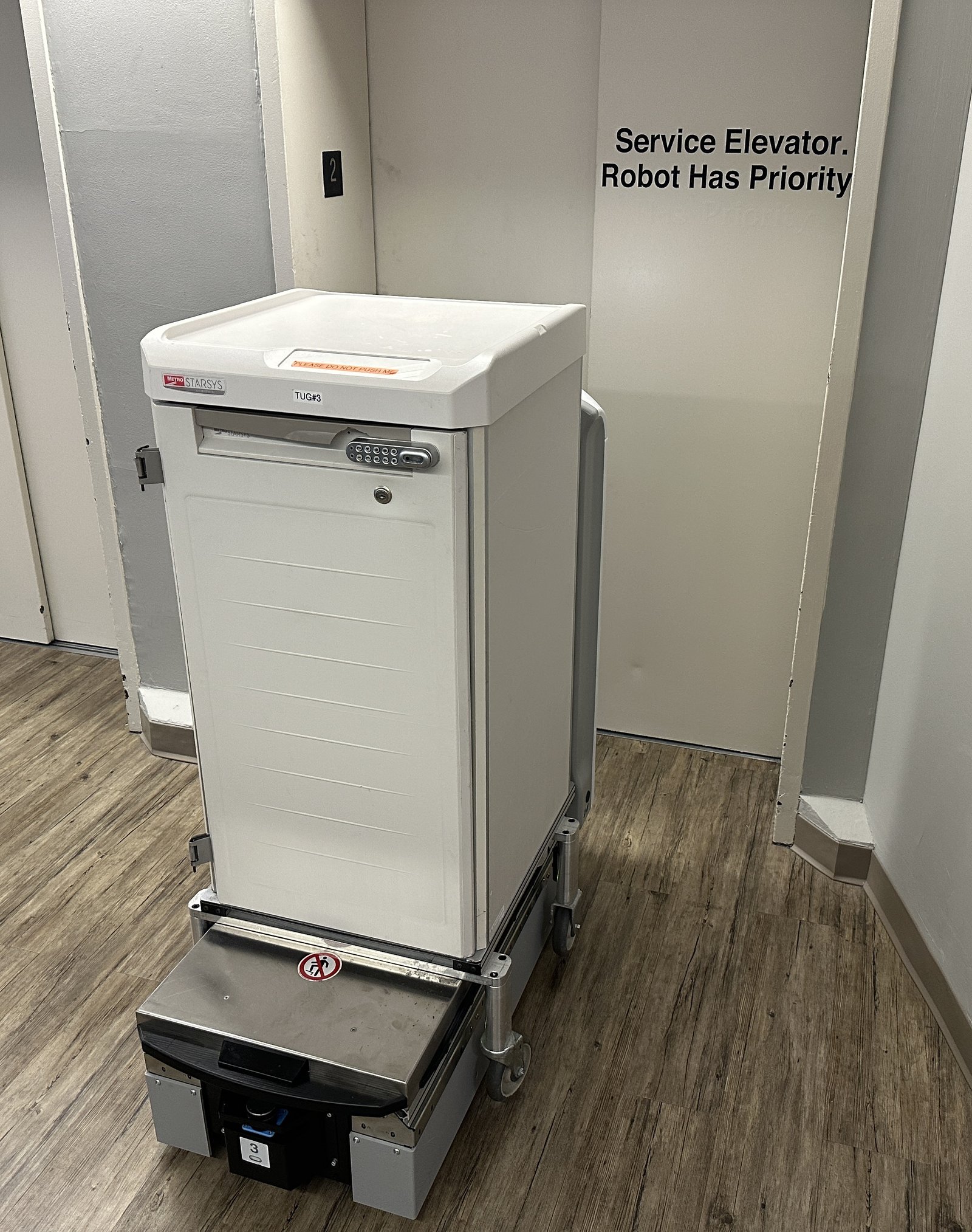
It is 'What job must the system perform, in what environment, under whose operational responsibility?' A robotic arm inside a guarded production cell may require process engineering, tooling, functional safety and factory acceptance. An autonomous mobile platform in a warehouse raises different questions about fleet coordination, charging, site maps, pedestrian interactions and uptime. A hospital delivery system introduces additional operational and workflow constraints. The technology families may share sensing, navigation, control or AI components without sharing an identical procurement workflow.
For a supplier directory, the consequence is structural: company-level labels must be more precise than the umbrella word 'robotics.' A buyer seeking an integrator for an automotive welding line should not receive a consumer robot vendor merely because both have 'robot' in their descriptions. Equally, a logistics operator seeking a fleet management layer should be able to find software suppliers that do not manufacture hardware.
A two-axis classification beats a single category
We recommend separating deployment context from supplier role. Deployment context identifies the actual work: industrial manufacturing, intralogistics, healthcare, inspection, agriculture, construction or another validated setting. Supplier role identifies the commercial deliverable: robot OEM, component maker, systems integrator, autonomy software, fleet orchestration, simulation, safety engineering or maintenance. A company can have multiple verified roles, but each should be backed by a product or service page rather than inferred from a marketing slogan.
A second distinction separates a general-purpose enabling technology from a deployed solution. Computer vision, foundation models and AI agents may serve robotics customers without being robots themselves. A B2B software provider belongs in a robotics-adjacent search only when the product and use case justify the association. Otherwise, it can remain in a broader enterprise AI software category without misleading industrial buyers.
This structure also prevents the inverse error: excluding a valuable supplier simply because it sells no robot hardware. Integrators, gripper manufacturers, machine-vision vendors, OT cybersecurity specialists and industrial middleware companies can determine whether an automation project succeeds. The purchase may involve several separate contracts with different acceptance criteria.
Statistics should travel with their denominator
A robust market table stores at least the metric name, statistical year, geography, scope, unit, precision and source publication date. An installation count is a flow over a year. Operational stock is a point-in-time population. Robot density is a ratio of operational industrial robots to manufacturing employees, commonly expressed per 10,000 workers. A shipment count is a vendor-side flow and may not coincide with site installation in the same year.
For example, IFR's November 12, 2026 release reported manufacturing robot density of 1,066 units per 10,000 employees in South Korea, 873 in Singapore and 469 in Germany, against a global average of 152. This is not evidence that a prospective customer in South Korea has a larger current budget than one in Germany, nor that a particular sector is purchasing equipment this quarter. Source: IFR, robot density release, November 12, 2026.
The IFR's April 8, 2026 density release listed a different statistical vintage, with South Korea at 1,220, Singapore at 818 and Germany at 449. A fall in a density value across releases must not automatically be labeled a collapse in robot adoption; methodology, population coverage and revised source data require checking before interpreting the change. The two published figures should be displayed with their release dates and statistical vintages, not silently spliced into one trend line. Source: IFR, robot density release, April 8, 2026.
A buyer-facing research page can communicate both what the numbers establish and what they cannot establish. The density metric describes automation penetration relative to manufacturing employment. It does not identify open tenders, vendor market share, product suitability, or verified buyer intent.
How to build a defensible supplier shortlist
Start with the operating problem and its constraints. Document the payload, cycle time, available floor space, required interfaces, environmental conditions, safety expectations and service geography. Then distinguish minimum qualifications from preferences. A supplier's public claim of 'AI-powered' or 'enterprise-ready' should not be treated as proof of a tested interface or local service capacity.
For each candidate, capture an official company website and a product-specific source URL. Record whether the source actually proves the claimed role. An OEM's corporate homepage is evidence that the company exists, not that it supplies a particular robot model in the requested country. If deployment geography, certifications or support terms are absent, leave the field blank and request confirmation rather than filling it from inference.
Ask shortlisted vendors for a technical architecture, integration ownership, reference deployments that can be independently checked, maintenance provisions, and measurable acceptance criteria. The request should identify the interface owner when several vendors participate. A robot supplier may not own the customer's PLC configuration; a fleet software vendor may not be responsible for the warehouse's wireless network. Ambiguous boundaries often become change orders or operational disputes.
Use the same discipline when comparing commercial models. A capital equipment quote, a per-robot software subscription and a managed-service fee should not be ranked by headline price alone. The useful comparison includes implementation effort, commissioning, spare parts, updates, training, support and exit costs. Where the information is unavailable, mark it as an open diligence item rather than inventing a total cost of ownership.
What a marketplace should show — and withhold
A high-trust B2B directory should make the distinction between verified facts, company claims and editorial classifications visible. Verified facts can include an official domain and a product page that explicitly describes the offer. Company claims can be attributed but should not be recast as independent endorsements. Editorial categories should be labeled as classifications, with a correction path for suppliers.
The directory should not promise a buyer that a company is an appropriate partner merely because a keyword matches. A defensible introduction is based on a documented fit between the buyer's project and the supplier's actual capabilities, with unresolved questions carried forward. Nor should the marketplace present paid placement as independent technical qualification.
For analysts, the most useful comparison table may contain fewer filled cells than a glossy market report. Country-by-industry installation cross-tabs should stay blank unless the underlying official dataset publishes them. A regional average cannot be converted into a country figure by proportional allocation. A service-robot shipment count cannot be relabeled an industrial installation count. Precision is part of the evidence, not an aesthetic choice.
Three practical procurement scenarios
Automotive assembly. The project is a repeatable production process. The buyer needs industrial equipment specifications, integration responsibility, process validation, functional safety and service support. Aggregate factory installation statistics are relevant context, not proof that a named integrator can deliver the cell.
Warehouse transport. The project concerns material movement across a dynamic site. The buyer needs traffic and fleet orchestration, site survey, wireless reliability, battery management, human interaction controls and maintenance planning. Professional service-robot logistics statistics may be more contextually relevant, but still do not establish the quality of an individual vendor.
Enterprise robotics software. The project may involve coordinating machines from multiple OEMs or connecting operations to enterprise systems. The supplier may sell software rather than physical robots. Its qualification depends on supported interfaces, deployment references, security architecture, licensing terms and measurable integration tests — not on a claim to manufacture a robot.
These examples are procurement frameworks, not claims about any named supplier. Actual regulatory and safety requirements depend on the jurisdiction and application; the buyer should obtain qualified engineering and legal review where appropriate.
A practical editorial rule
Every public market number should answer six questions in one line: What is counted? For which year? In which geography? Across which robot population? In what unit and precision? According to which dated original source? If one of those answers is missing, the chart is not ready to publish.
For GlobleMatch, that rule supports a more useful product than a giant undifferentiated directory. It creates an evidence-backed path from an industry question to the correct supplier role, then to an auditable shortlist and a well-scoped introduction. The commercial opportunity lies in reducing procurement uncertainty, not in inflating market totals.
Related directory categories
Browse the categories this analysis points to in the GlobleMatch directory: industrial robot suppliers, robotics system integrators, machine vision suppliers and robotics software and AI suppliers.
Sources
- IFR, Five Million Robots now Operate in Factories Globally, September 24, 2026: ifr.org
- IFR, Global Sales of Professional Service Robots Surge 24%, September 30, 2026: ifr.org press release index
- IFR, Robot Density Highest in South Korea, Singapore and Germany, November 12, 2026: ifr.org
- IFR, Robot Density Surges in Europe, Asia, and Americas, April 8, 2026: ifr.org