
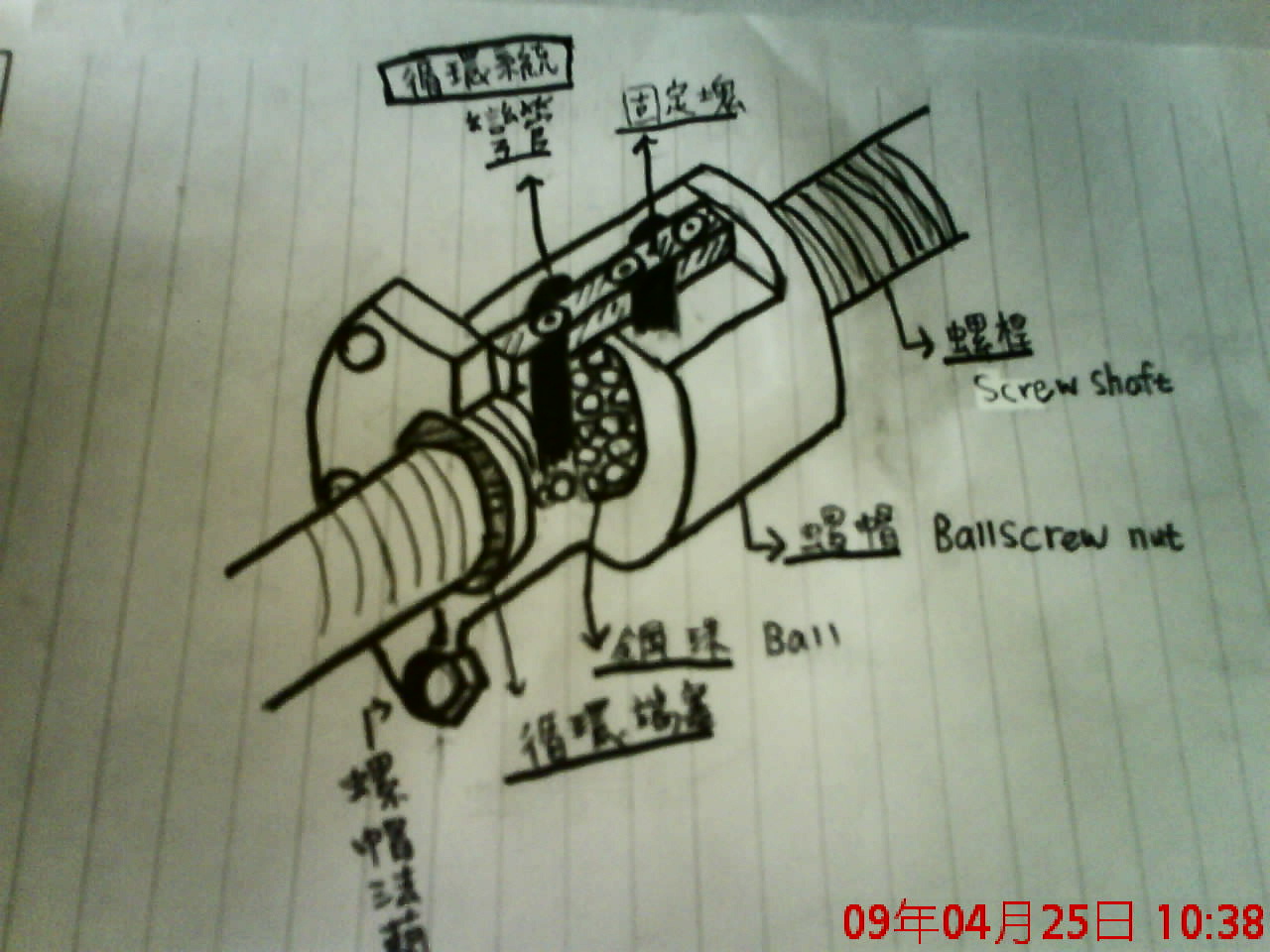
Short answer: A ball screw converts a motor's rotation into linear motion by rolling balls between a threaded shaft and nut — low friction, high efficiency and precise, repeatable positioning. Inside robots and their equipment you find them in vertical Z axes, lift columns, electric grippers and cylinders, presses and linear stages. Specifying one means choosing the accuracy grade (ground or rolled), the lead, the preload and the load and life ratings — and the sourcing questions follow directly from those four.
Where ball screws sit in a robot system
Rotary joints get the attention, but linear motion does much of the work around them. Scara and Cartesian robots move their Z axis on ball screws. Collaborative-robot workstations use screw-driven lift columns to set working height. Electric grippers close on small screws. Injection, pressing and dispensing equipment in robot cells feeds on them. The components sit inside the directory's core components section alongside the reducers and motors they are usually bought with — and they are a wear item in a way gearboxes are not, which shapes the spares thinking below.
Ground vs rolled: the grade decision
The shaft's thread is either ground or rolled. Ground screws are finished by precision grinding: the highest accuracy grades, the smoothest motion, the longest life — and the highest price and lead time. Rolled screws are formed by rolling dies: entirely adequate for transport and general positioning duty at a fraction of the cost, with accuracy grades below the ground range. The catalogue shorthand is the accuracy class (the C-series grades used by Japanese makers such as THK, the category's reference manufacturer, and the corresponding grades in ISO and DIN systems). Buy the grade the application can feel: a positioning axis that closes a control loop on a separate linear encoder can tolerate a rolled screw; an open-loop precision feed usually cannot.
Lead, preload and the numbers that interact
Lead — the distance travelled per revolution — trades speed against force and resolution: a high-lead screw moves fast but demands more motor torque and coarsens positioning per encoder count. Preload, set by ball oversizing or offset nut designs, removes backlash at the cost of friction, heat and wear; a lightly preloaded screw in a vertical axis and a heavily preloaded screw in a machining feed are different products wearing the same name. Dynamic load rating drives the life calculation, and life is quoted statistically, so ask what duty cycle and load spectrum the rating assumes. These interactions are why a screw cannot be specified from a single headline figure.
Ball screw, linear motor or belt?
The alternatives divide by physics. Linear motors offer the highest speed and zero mechanical wear in the drive itself, at the highest cost and with no force multiplication — and they need the encoder and control loop to hold position against load. Timing belts are cheap, fast and long-travel, but stretch limits their accuracy and stiffness. Rack and pinion covers very long axes where screws become impractical. Ball screws own the middle: high force, high stiffness, good accuracy, moderate travel and speed. Most robot-adjacent linear axes live in that middle, which is why the category persists despite thirty years of predictions of its replacement.
Sourcing and acceptance checks
Supplier types mirror the rest of the components market: the global precision brands, strong regional manufacturers (Japan, Germany, Taiwan and China all have deep benches), and white-label rolled product. Whatever the source, acceptance is measurable, which is this category's virtue. Check the accuracy report against the ordered grade, run the screw through its travel and feel or measure torque variation — tight spots reveal damage and contamination — verify backlash against the preload specification, and confirm the nut's recirculation type matches the drawing. Record the screw's serial and grade in the machine file: when it is replaced in year six, the replacement decision is only as good as this record. Finally, plan lubrication from the start: most robot-adjacent screws run on grease with relubrication intervals set by travel distance and duty, and a screw run dry loses its rated life quietly and early. The lubrication point's accessibility — whether a technician can reach it without dismantling the axis — is a legitimate question to ask while the machine is still on the drawing. Our sourcing guide to robot reducers applies the same acceptance logic to the gearbox category.
Frequently asked questions
Where are ball screws used in robotics?
In the linear axes around and inside robots: Z axes on SCARA and Cartesian machines, lift columns, electric grippers and cylinders, presses and linear stages. They convert a motor's rotation into precise straight-line motion with rolling balls between shaft and nut.
What is the difference between ground and rolled ball screws?
Ground screws are finish-ground for the highest accuracy grades, smoothest motion and longest life, at the highest price and lead time. Rolled screws are formed by dies and suit transport and general positioning duty at much lower cost, with lower accuracy grades.
How do I choose the lead of a ball screw?
Lead is the travel per revolution. A high lead moves faster but needs more motor torque and gives coarser positioning per encoder count; a low lead gives force and fineness. Choose it with the motor, load and speed requirement together, not in isolation.
What should I check when a ball screw delivery arrives?
Compare the accuracy report with the ordered grade, run the full travel and check for torque variation or tight spots, verify backlash against the preload specification, and record the serial number and grade in the machine file for the eventual replacement.